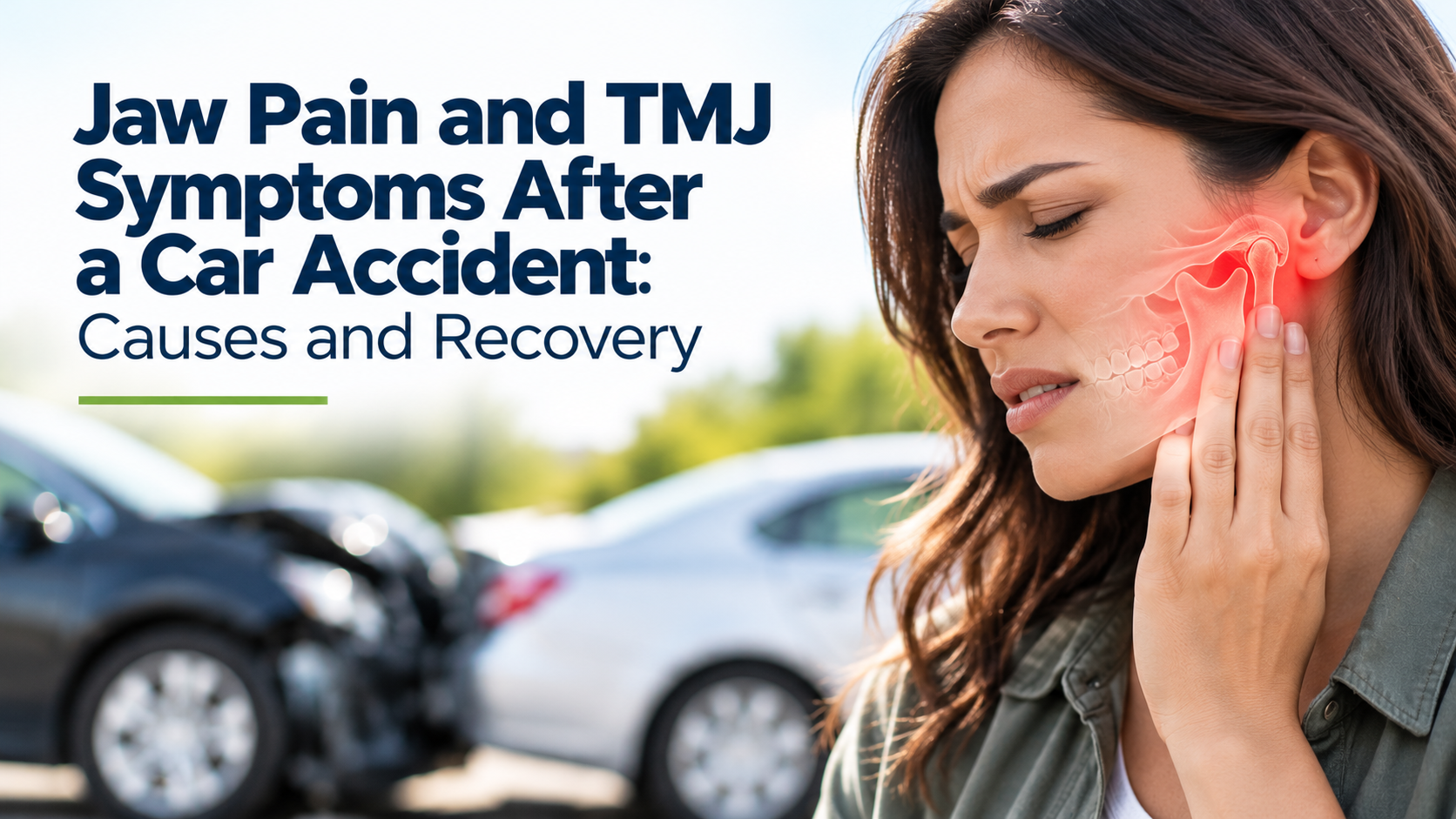
Jaw Pain and TMJ Symptoms After a Car Accident
Jaw pain and TMJ symptoms after a car accident can include pain while chewing, tenderness in front of the ear, jaw clicking, headaches, facial soreness, and difficulty opening the mouth. A collision may injure the jaw directly or produce muscle and joint symptoms alongside neck and head trauma. A changed bite, jaw deformity, inability to open or close the mouth normally, or significant facial swelling requires prompt medical or dental evaluation. Difficulty breathing, uncontrolled bleeding, or serious head injury symptoms require emergency care.
Can a Car Accident Cause TMJ Pain or Temporomandibular Disorders?
The temporomandibular joints (TMJs) connect the lower jaw to the skull. Trauma may affect the joint, chewing muscles, surrounding ligaments, teeth, or facial bones. Possible causes include:
- Direct facial or jaw impact: Contact with the steering wheel, airbag, dashboard, or another surface can injure soft tissues or bone.
- Jaw muscle strain or guarding: Sudden force or protective tightening may contribute to soreness when chewing.
- Temporomandibular joint irritation: The joint or nearby tissues may become painful or restricted.
- Dental trauma: A chipped, loosened, or displaced tooth can create jaw or facial pain.
- Fracture or dislocation: Significant trauma can damage facial bones or alter jaw alignment and requires prompt assessment.
Similar symptoms can occur with facial pain after a car accident, bruising after a car accident, or swelling after a car accident.
What Are Common Jaw Injury and TMJ Symptoms After a Crash?
Post-accident complaints may include jaw pain near the ear, stiffness, painful chewing, clicking or popping, headaches around the temples, facial tenderness, reduced mouth opening, or jaw locking. A click alone does not necessarily indicate a disorder, but new clicking combined with pain, locking, or a bite change deserves evaluation.
For overlapping symptoms, read headache after a car accident and difficulty swallowing after a car accident.
When Is Jaw Pain After a Car Accident an Emergency?
Seek emergency care for difficulty breathing, significant difficulty swallowing, uncontrolled bleeding, severe facial trauma, loss of consciousness, or new serious neurological symptoms. A suspected jaw fracture or dislocation, visible deformity, displaced teeth, inability to close the mouth, or a suddenly altered bite requires prompt emergency, medical, or dental assessment depending on severity.
Severe or worsening headache, confusion, repeated vomiting, weakness, or vision changes after facial or head trauma also requires urgent medical evaluation. See vision problems after a car accident and weakness after a car accident. Do not try to force a locked or displaced jaw back into position.
Can Whiplash Cause Jaw Pain or TMJ Symptoms?
Jaw discomfort and neck pain sometimes occur together after a collision. Sudden head and neck movement may affect the muscles involved in jaw function, but the presence of both symptoms does not establish that whiplash caused the TMJ problem. An examination should consider dental, jaw-joint, facial, neck, and neurological factors as appropriate.
Related musculoskeletal complaints include difficulty turning your head after a car accident, muscle spasms after a car accident, and difficulty looking down after a car accident.
Why Does My Jaw Click, Pop, or Lock After a Collision?
Clicking may be associated with movement of structures within the jaw joint, but not every painless click requires treatment. New painful popping, limited opening, a locked jaw, or changes in how the teeth meet should prompt dental or medical assessment. Avoid repeatedly opening the mouth wide to test symptoms, especially after significant trauma.
Why Does My Jaw Hurt When Chewing or Opening My Mouth?
Chewing activates the jaw muscles and joints, which may be tender following an impact or injury. Dental damage, temporomandibular joint irritation, muscle pain, or fracture can produce overlapping symptoms. A healthcare professional can examine jaw motion, bite alignment, tenderness, and the teeth to determine whether specialist care is needed.
Can Jaw Pain Cause Headaches, Ear Pain, or Ringing?
Jaw complaints can overlap with temple headaches and pain around the ear. However, headaches, dizziness, tinnitus, or hearing changes after a collision may also involve concussion or inner-ear injury. Do not assume a jaw disorder is the sole cause of these symptoms. Explore ringing in the ears after a car accident, dizziness after a car accident, and nausea after a car accident.
Can TMJ Symptoms Appear Days After a Car Accident?
Yes. Muscle soreness, joint discomfort, and facial tenderness may become more noticeable over time. Delayed symptoms do not automatically mean an injury is mild. New jaw locking, altered bite, significant swelling, or worsening pain should be assessed promptly. See delayed pain after a car accident.
How Do Doctors and Dentists Evaluate Post-Accident Jaw Pain?
Evaluation may include questions about facial impact, symptom onset, jaw clicking or locking, chewing discomfort, dental damage, headaches, and neck symptoms. A physician, dentist, or oral and maxillofacial specialist may examine bite alignment, mouth opening, facial sensation, teeth, and joint tenderness. Imaging may be needed when fracture, dislocation, or other structural injury is suspected.
For follow-up, consider medical documentation after an injury and questions to ask a personal injury care provider to record symptoms, changes in function, and referrals.
What Should You Avoid With Jaw Pain After an Accident?
Do not force a locked jaw open, attempt self-adjustment, use aggressive jaw stretches, or chew hard foods through significant pain before the injury is assessed. If a clinician rules out serious injury, individualized advice may include temporarily avoiding painful chewing and gradually returning to normal activity. Dental treatment and medical management remain important for tooth damage, fracture, or dislocation.
How Can Jaw and Facial Pain Affect Daily Activities?
Jaw discomfort may interfere with eating, speaking, sleeping, and daily comfort. When symptoms coexist with neck pain or headaches, work and computer use may also feel difficult. Read about difficulty sleeping after a car accident, difficulty using a computer after a car accident, and fatigue after a car accident. Significant swallowing or breathing problems require immediate medical attention rather than routine rehabilitation.
Can Chiropractic Rehabilitation Help With Jaw or TMJ Pain?
Chiropractic rehabilitation does not replace dental or maxillofacial diagnosis and treatment. Once serious jaw, dental, facial, and neurological injuries have been evaluated, T98 Rehab may assess associated neck, back, and other musculoskeletal complaints when conservative care is appropriate. A coordinated rehabilitation care plan and individualized recovery milestones can support functional goals without implying chiropractic treatment can fix fractures or dislocations.
When to Contact T98 Rehab in Austin
After urgent medical and dental concerns are addressed, T98 Rehab may evaluate additional accident-related neck and musculoskeletal symptoms. Read when to see a chiropractor after a car accident and how to choose an auto accident chiropractor in Austin. Jaw locking, tooth displacement, facial deformity, or serious head injury symptoms need appropriate medical or dental care first.
Frequently Asked Questions
Can a car accident cause TMJ problems?
A collision can injure the jaw joint or surrounding muscles, but the cause of new symptoms should be evaluated by an appropriate medical or dental professional.
Is jaw clicking after a car accident serious?
Painless clicking alone may not be serious. New clicking with pain, locking, swelling, restricted opening, or a changed bite warrants evaluation.
Can whiplash and TMJ pain happen at the same time?
Yes. Jaw and neck symptoms may coexist after trauma, but an examination is needed to determine whether and how they are related.
What if my teeth do not line up after a crash?
A newly altered bite may indicate dental, jaw-joint, or bone injury. Seek prompt medical or dental assessment, especially after direct facial trauma.
Should I see a chiropractor or dentist for jaw pain after an accident?
New jaw-joint, bite, dental, or facial symptoms should be evaluated by a dentist or appropriate medical specialist. Chiropractic rehabilitation may address separate musculoskeletal problems after necessary evaluation.
Related T98 Rehab Resources
- Facial Pain After a Car Accident
- Headache After a Car Accident
- Difficulty Swallowing After a Car Accident
Sources
National Institute of Dental and Craniofacial Research — Temporomandibular Disorders.
MedlinePlus — Jaw Injuries and Disorders.
Medical Disclaimer
This article provides general educational information and does not diagnose a condition or replace individualized dental, medical, specialist, or emergency care. T98 Rehab does not provide emergency services or guarantee treatment outcomes. Seek urgent or emergency care for jaw deformity, inability to open or close the mouth normally, a changed bite after trauma, uncontrolled bleeding, breathing or swallowing difficulty, or serious neurological symptoms.