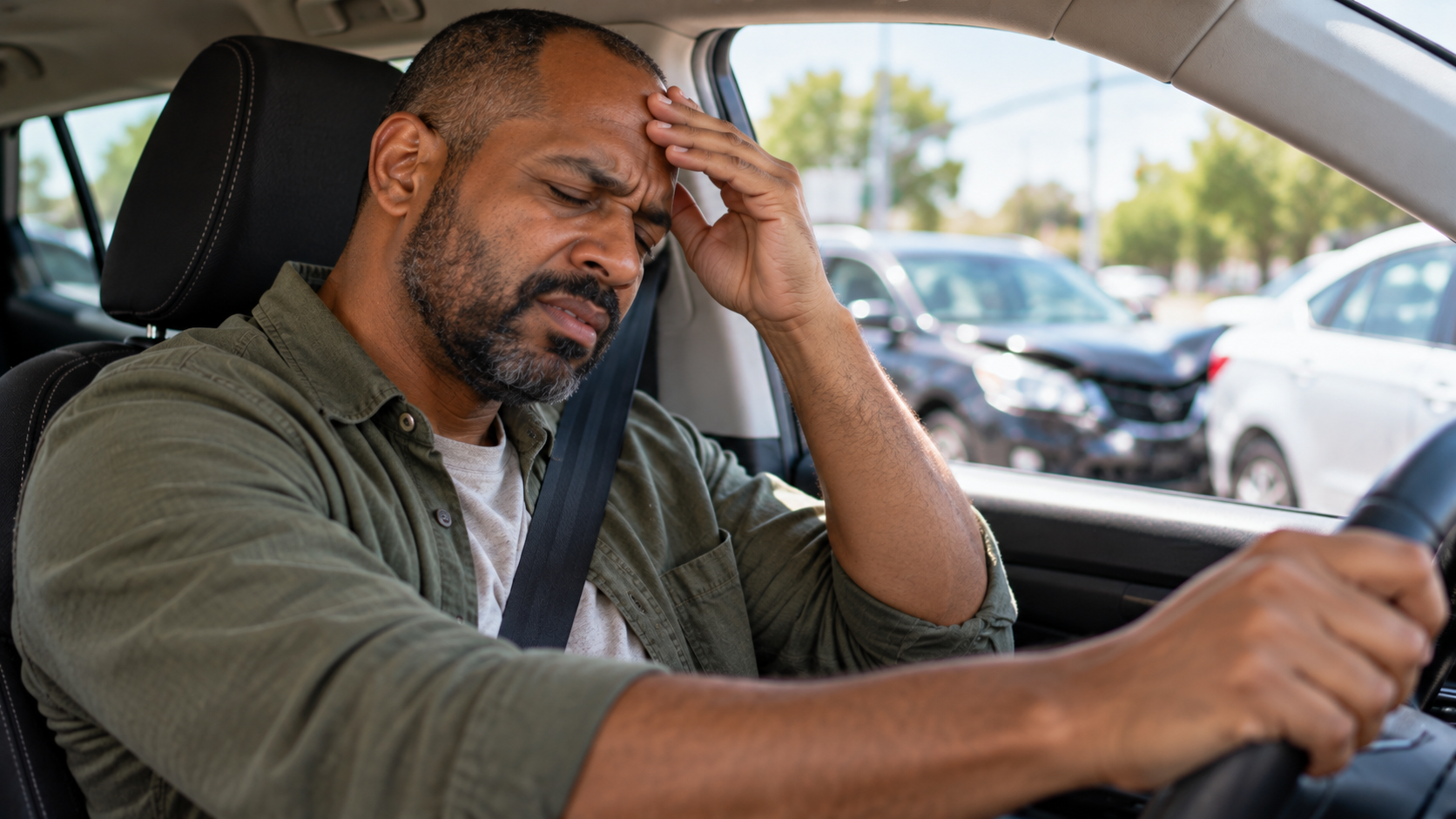
Dizziness After a Car Accident: Causes and Warning Signs
Dizziness after a car accident can feel like spinning, lightheadedness, unsteadiness, or a sensation that you may faint. Possible causes include concussion, inner-ear problems, neck injuries, medication effects, dehydration, and more serious neurological or vascular conditions. New or worsening dizziness after trauma deserves medical evaluation rather than being assumed to be whiplash. Dizziness with severe headache, weakness, confusion, fainting, or trouble walking warrants emergency assessment.
Why Am I Dizzy After a Car Accident?
Rapid acceleration, deceleration, rotation, or impact may affect the head, neck, inner ear, and other parts of the body. Causes can include:
- Concussion or traumatic brain injury: Dizziness may occur with headache, nausea, light sensitivity, or trouble concentrating.
- Inner-ear or vestibular injury: A disturbed balance system can cause vertigo, unsteadiness, or motion sensitivity.
- Neck injury: Neck pain may coexist with dizziness, but other potential causes must be assessed first.
- Medication effects or dehydration: Medicines and fluid or blood-pressure changes can cause lightheadedness.
- Serious neurological or vascular problems: Less common injuries can produce dangerous dizziness with other warning signs.
Associated symptoms are explored in headache after a car accident, nausea after a car accident, and fatigue after a car accident.
When Is Dizziness After a Car Accident an Emergency?
Seek emergency care immediately if dizziness comes with a sudden or worsening severe headache, repeated vomiting, seizure, increasing confusion, difficulty waking, slurred speech, new weakness or numbness, unequal pupils, fainting, or inability to walk normally. Chest pain or serious breathing difficulty also requires emergency assessment. Severe head or neck trauma raises concern for injuries needing urgent testing.
Read weakness after a car accident, numbness and tingling after a car accident, and difficulty walking after a car accident for other warning signs. Do not drive yourself to emergency care when dizziness affects your alertness, coordination, or vision.
What Is the Difference Between Dizziness, Vertigo, and Lightheadedness?
Vertigo is a false sense that you or the environment is spinning or moving. Lightheadedness can feel like you may faint. Imbalance means feeling unsteady while sitting, standing, or walking. These descriptions help a clinician assess possible causes, but none identifies a diagnosis on its own.
Can a Concussion Cause Dizziness Without a Head Impact?
Yes. A concussion may follow a direct blow or rapid head movement and does not always involve loss of consciousness. Dizziness, confusion, nausea, sleep changes, headache, and cognitive symptoms may occur. A qualified medical professional should evaluate suspected concussion rather than relying on symptoms alone.
Related guides include difficulty concentrating after a car accident, memory problems after a car accident, and sleep problems after a car accident.
Can Whiplash or Neck Pain Cause Dizziness?
Neck pain and dizziness may occur together following a collision. Some patients experience symptoms linked to neck movement, but post-traumatic dizziness should not automatically be classified as cervicogenic dizziness. Inner-ear, neurological, cardiovascular, medication-related, and other possible causes need appropriate evaluation first. Avoid forceful neck manipulation when serious injury has not been excluded.
See difficulty turning your head after a car accident, muscle spasms after a car accident, and full body soreness after a car accident.
Why Do I Feel Dizzy When I Turn My Head or Roll Over?
Position-triggered spinning can occur with certain vestibular conditions, including benign paroxysmal positional vertigo (BPPV), but symptoms after a crash may also involve concussion or neck injury. A clinician may perform appropriate eye-movement and positional testing after determining that neck and spinal safety concerns have been addressed. Do not attempt forceful head-position maneuvers on your own after significant trauma.
Can Dizziness Be Related to Ringing in the Ears or Hearing Changes?
Yes. Balance and hearing pathways involve structures in the inner ear, and some vestibular disorders cause dizziness together with hearing symptoms. New hearing loss, tinnitus, vertigo, or ear symptoms after trauma warrant evaluation. Learn more about ringing in the ears after a car accident.
Why Do I Have Dizziness and Blurry Vision After a Car Accident?
Visual disturbances and dizziness may occur together following head trauma, concussion, or vestibular problems. Sudden double vision, loss of vision, severe headache, or neurological symptoms require immediate medical attention. Review vision problems after a car accident.
Can Dizziness Start the Next Day After a Car Accident?
Yes. Some symptoms become apparent hours or days later, but delayed onset does not establish a harmless cause. New, persistent, or worsening dizziness deserves medical assessment, especially when accompanied by headache, vomiting, impaired balance, or cognitive changes. Read delayed pain after a car accident for broader post-accident symptom timing.
How Do Doctors Evaluate Dizziness After a Crash?
Evaluation may include questions about the collision, head or neck impact, whether sensations are spinning or faint-like, symptom duration, position triggers, medications, hearing changes, nausea, headache, and cognitive symptoms. A clinician may assess neurological function, eye movements, balance, walking, circulation, and the cervical spine. Imaging, vestibular testing, or specialist referral may be appropriate depending on the history and examination.
Prepare for a visit using questions to ask a personal injury care provider and medical documentation after an injury.
Is It Safe to Drive, Work, or Exercise When You Feel Dizzy?
Do not drive, climb ladders, operate machinery, or perform balance-demanding work while dizziness impairs vision, alertness, coordination, or reaction time. Avoid aggressive exercise or unsupervised balance challenges until the cause has been assessed. See difficulty driving after a car accident, difficulty standing after a car accident, and difficulty walking on uneven ground after a car accident.
What Can Help With Recovery From Post-Accident Dizziness?
Treatment depends on the diagnosed cause. Medical management for concussion, vestibular problems, medications, or other illnesses differs from musculoskeletal rehabilitation. Follow your treating clinician’s guidance on return to activities, hydration, medication use, and referrals. Once cleared, returning to activity after an injury and home exercise safety guidance can provide general context.
Can Chiropractic Rehabilitation Help With Dizziness After an Accident?
Chiropractic care is not a substitute for medical evaluation of dizziness, concussion, vestibular dysfunction, or neurological and vascular injury. After these possibilities have been assessed and treated as needed, T98 Rehab may evaluate separate neck, back, and joint complaints that interfere with movement. An individualized rehabilitation care plan may address appropriate musculoskeletal limitations using recovery milestones.
When to Contact T98 Rehab in Austin
Following appropriate medical evaluation of dizziness, T98 Rehab may assess residual musculoskeletal pain, stiffness, and functional limitations. Learn when to see a chiropractor after a car accident and how to choose an auto accident chiropractor in Austin. Sudden neurological symptoms, fainting, or severe dizziness after trauma should be treated as a medical priority.
Frequently Asked Questions
Is dizziness normal after a car accident?
Dizziness can occur after trauma, but it should not automatically be dismissed as normal. New, persistent, or worsening dizziness warrants medical assessment.
Can whiplash cause dizziness without a concussion?
Neck symptoms and dizziness can coexist, but several inner-ear, neurological, and cardiovascular conditions can produce similar complaints. Evaluation should establish the likely cause.
Why does the room spin when I turn my head after an accident?
Position-triggered vertigo can occur with inner-ear disorders such as BPPV, but after a crash a clinician should also consider head and neck injury before treatment.
Can dizziness start a day after a car crash?
Yes. Delayed symptoms occur, but new or worsening dizziness still requires assessment.
Should I see a chiropractor first for dizziness after an accident?
Seek appropriate medical evaluation for dizziness first, particularly when concussion, neurological symptoms, or significant trauma are possible. Rehabilitation may address separate musculoskeletal concerns afterward.
Related T98 Rehab Resources
- Headache After a Car Accident
- Vision Problems After a Car Accident
- Ringing in the Ears After a Car Accident
Sources
Centers for Disease Control and Prevention — Signs and Symptoms of Concussion.
MedlinePlus — Dizziness and Vertigo.
National Institute on Deafness and Other Communication Disorders — Balance Disorders.
Medical Disclaimer
This article provides general educational information, not an individual diagnosis or a substitute for personalized medical or emergency care. T98 Rehab does not provide emergency services or guarantee treatment outcomes. Seek emergency help for severe or worsening headache, new neurological deficits, fainting, repeated vomiting after head injury, chest pain, difficulty breathing, or inability to walk after trauma.