Elbow Pain After a Car Accident: Causes, Symptoms, and Recovery
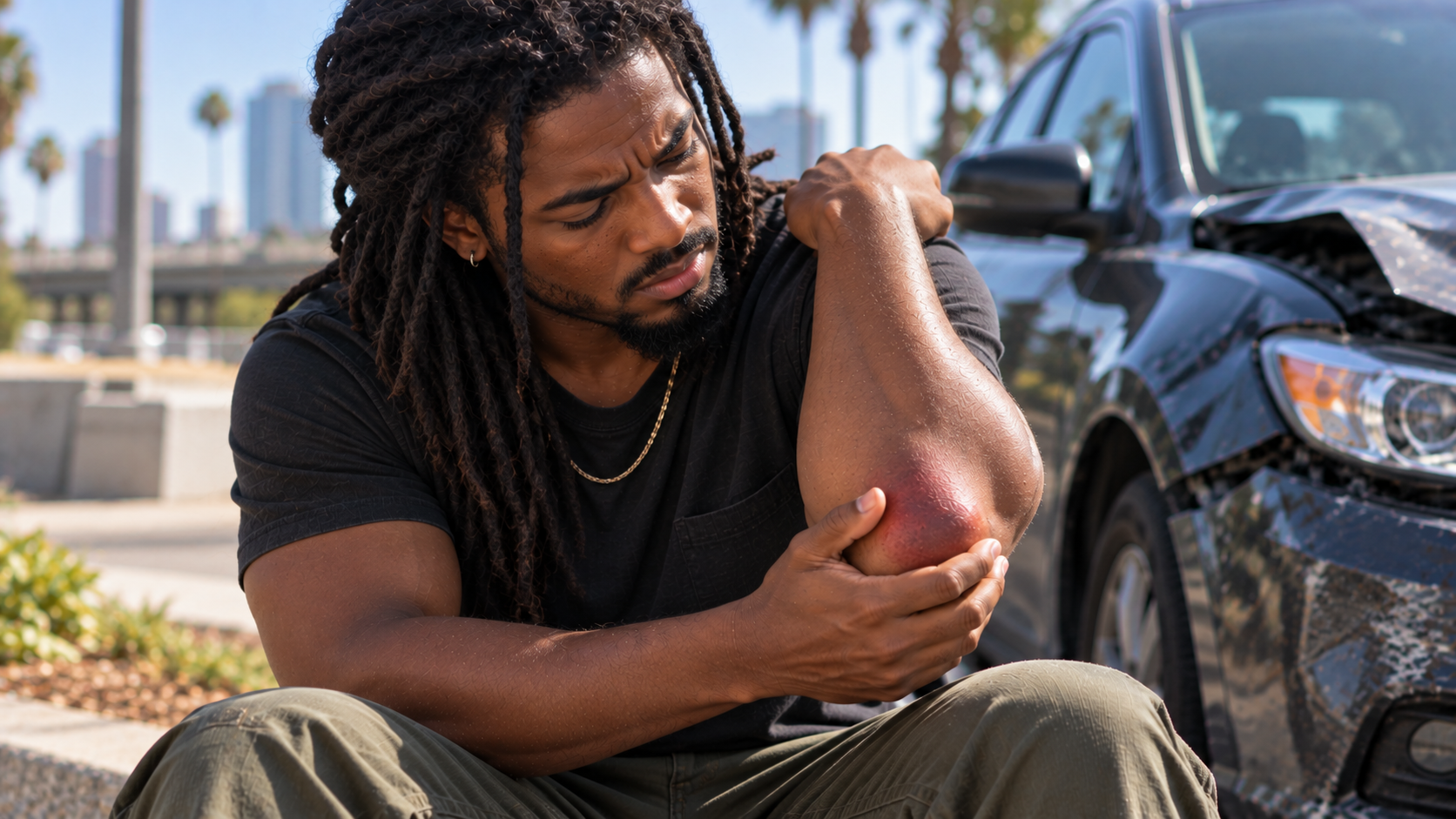
Elbow pain after a car accident may result from an elbow striking a door, center console, steering wheel, or dashboard, or from the arm absorbing sudden force during a collision. Symptoms can include tenderness, swelling, bruising, stiffness, pain with bending or straightening the elbow, and difficulty gripping or lifting. Some injuries involve bones, ligaments, tendons, or nerves rather than a simple bruise. Severe deformity, inability to move the elbow, rapidly worsening weakness, or a cold, pale, or blue hand needs immediate medical attention.
Why Does My Elbow Hurt After a Car Accident?
Collision forces may cause several kinds of injuries, sometimes affecting the elbow together with the shoulder, wrist, or neck. Possible causes include:
- Direct-impact bruising: Contact with the vehicle interior can injure soft tissue around the joint.
- Muscle or tendon strain: Bracing during a collision can overload muscles and tendons that move the elbow and wrist.
- Ligament sprain: A sudden bend or twist can stretch stabilizing tissues.
- Elbow fracture: Trauma may fracture part of the upper arm, radius, or ulna near the joint.
- Joint dislocation: Significant force can move the bones out of alignment, often causing obvious deformity and severe pain.
- Nerve injury: Pressure or impact can irritate nerves passing near the elbow and produce finger tingling or weakness.
Other post-collision symptoms are covered in bruising after a car accident, swelling after a car accident, and arm pain after a car accident.
What Are Common Elbow Injury Symptoms After a Crash?
Elbow injuries can make the joint tender, stiff, swollen, or painful with motion. You may have trouble turning your palm upward, straightening the elbow fully, carrying shopping bags, or gripping objects. Some people notice discomfort farther along the forearm or in the hand. Pain location alone cannot reliably distinguish a fracture from a strain, so persistent symptoms warrant evaluation.
Related functional problems include difficulty lifting after a car accident, difficulty carrying groceries after a car accident, and wrist and hand pain after a car accident.
When Is Elbow Pain After an Accident an Emergency?
Seek emergency medical evaluation for a visibly deformed elbow, suspected dislocation or open fracture, a cold or discolored hand, profound loss of sensation, severe or rapidly increasing swelling, uncontrolled bleeding, or intense pain with inability to move the arm. A very painful, tense, swollen forearm after trauma may signal compartment syndrome, a surgical emergency. Do not attempt to push a dislocated elbow back into place.
Sudden or progressive arm weakness also requires prompt assessment. See weakness after a car accident and numbness and tingling after a car accident. Arm pain with chest pressure, breathlessness, or other serious systemic symptoms warrants emergency care.
Can a Car Accident Cause an Elbow Fracture or Dislocation?
Yes. The elbow contains the distal humerus and the upper ends of the radius and ulna. Direct impact or bracing forces can injure these bones or move the joint out of alignment. A fracture may cause focal tenderness, swelling, bruising, or limited motion; a dislocation may cause marked deformity. X-rays are often appropriate when a fracture or dislocation is suspected. These injuries need medical treatment before a rehabilitation plan begins.
Why Do I Have Tingling in My Fingers With Elbow Pain?
The ulnar nerve passes near the inside of the elbow, where impact or swelling may cause tingling in the ring and little fingers. Other nerve injuries can affect different fingers or regions of the hand. Neck injuries can also produce radiating arm symptoms, so a clinician may assess the neck, elbow, wrist, strength, and sensation to identify the likely source.
For associated symptoms, see burning pain after a car accident, difficulty turning your head after a car accident, and numbness and tingling after a car accident.
Can Elbow Pain Start the Day After a Car Accident?
Yes. Bruising, inflammation, and soft-tissue tenderness may become more noticeable hours or days after impact. Delayed pain does not prove that an injury is minor. Increasing swelling, progressive pain, reduced motion, or new weakness and numbness should prompt medical assessment. Read more about delayed pain after a car accident.
Why Does Bending, Straightening, or Twisting My Arm Hurt?
Elbow movement loads several bones, joints, tendons, and ligaments. Pain when extending the elbow, rotating the forearm to turn a doorknob, or lifting with a bent arm may reflect different injuries. Do not repeatedly force a painful motion to determine what is wrong. Functional limitations may be discussed alongside difficulty opening heavy doors after a car accident and difficulty doing household chores after a car accident.
Can Elbow Pain Affect Driving and Computer Work?
Gripping a steering wheel, operating controls, using a mouse, or typing can aggravate an injured elbow or forearm. Avoid driving if arm pain, weakness, or restricted motion prevents safe vehicle control. For everyday limitations, see difficulty driving after a car accident and difficulty using a computer after a car accident.
How Do Doctors Evaluate Elbow Pain After a Car Crash?
A clinician may ask about the collision, the position of the arm, direct impact, pain onset, swelling, numbness, and functional changes. Examination can include tenderness, joint alignment, range of motion, grip strength, circulation, sensation, and screening of the wrist, shoulder, and neck. Imaging may be necessary for suspected fractures or dislocations; further testing may be considered for persistent soft-tissue or nerve symptoms.
Prepare for your appointment with questions to ask a personal injury care provider and medical documentation after an injury.
Should You Ice, Massage, Stretch, or Exercise an Injured Elbow?
Recommendations depend on the diagnosis. After uncomplicated injury has been assessed, a healthcare professional may suggest temporary activity modification, appropriate cold therapy, or gradual movement. Avoid forceful massage, aggressive stretching, heavy lifting, or attempts to reposition a joint when a fracture, dislocation, or serious nerve injury is possible. Do not use tight compression on a limb with impaired circulation or severe unexplained swelling.
After medical clearance, home exercise safety and when to stop and returning to activity after an injury can help frame safe rehabilitation choices.
How Long Does Elbow Pain Last After an Accident?
Recovery varies according to the cause: a mild contusion, ligament sprain, fracture, tendon injury, and nerve problem have different management and healing timelines. Changes in movement, strength, swelling, and ability to complete daily tasks can help the treating professional assess progress. Ongoing pain or loss of function should not be managed solely by waiting for a fixed recovery date.
Can Chiropractic Rehabilitation Help Accident-Related Elbow Pain?
Fractures, dislocations, major nerve injuries, and circulation problems require appropriate medical care first. When the injury has been evaluated and conservative rehabilitation is suitable, T98 Rehab may assess related musculoskeletal pain, movement restrictions, and functional limitations. An individualized rehabilitation care plan may address safe mobility, strength, and activity tolerance, with recovery milestones reflecting actual progress rather than guaranteed results.
When to Contact T98 Rehab in Austin
If urgent injuries have been ruled out or treated but pain and movement limitations persist, T98 Rehab may help assess suitable rehabilitation options. Learn when to see a chiropractor after a car accident and how to choose an auto accident chiropractor in Austin. Emergency warning signs should be evaluated medically rather than waiting for a chiropractic appointment.
Frequently Asked Questions
Why does my elbow hurt after a car accident?
Possible causes include bruising, strain, ligament injury, fracture, dislocation, or nerve irritation. An examination can determine whether imaging or additional care is needed.
Can elbow pain occur without visible bruising?
Yes. Tendon, ligament, joint, and nerve problems may cause pain without an obvious mark on the skin.
Can an accident cause numbness in my fingers?
Yes. Trauma or swelling around the elbow may irritate a nerve, but symptoms can also originate elsewhere in the arm or neck. New or worsening numbness needs assessment.
Is it normal for elbow pain to start the next day?
Symptoms can emerge later, but progressive pain, swelling, weakness, or impaired movement should be evaluated rather than dismissed.
Should I visit a chiropractor for elbow pain after a crash?
Medical evaluation comes first when fracture, dislocation, significant swelling, or neurological symptoms are possible. Rehabilitation may be appropriate for selected musculoskeletal injuries after clearance.
Related T98 Rehab Resources
- Arm Pain After a Car Accident
- Wrist and Hand Pain After a Car Accident
- Numbness and Tingling After a Car Accident
Sources
MedlinePlus — Elbow Injuries and Disorders.
American Academy of Orthopaedic Surgeons — OrthoInfo: Elbow and Upper-Extremity Injuries.
Medical Disclaimer
This article provides general educational information and is not a diagnosis or substitute for personalized medical or emergency care. T98 Rehab does not provide emergency services or guarantee treatment outcomes. Seek emergency help for suspected fracture or dislocation, major deformity, a cold or blue hand, rapidly worsening weakness or loss of sensation, severe swelling, or other serious symptoms following a collision.