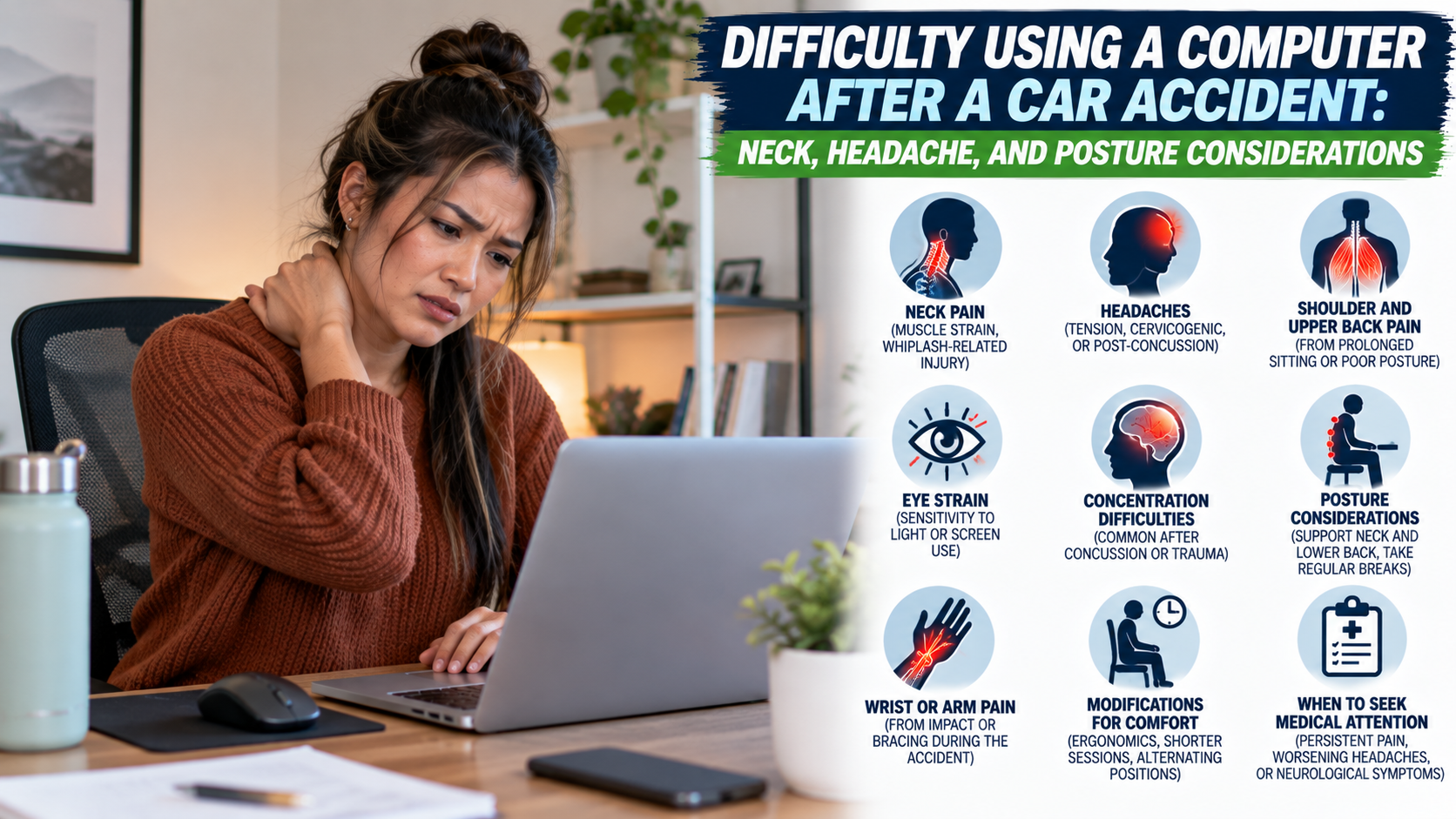
Computer work can become difficult after a car accident when neck pain, headache, shoulder discomfort, dizziness, visual symptoms, or reduced concentration make prolonged sitting and screen use uncomfortable. The goal is not simply to tolerate more screen time, but to identify what is limiting the activity and address it appropriately.
Why Can Computer Work Become Difficult?
- Sustained neck and upper-back posture
- Headache or eye strain
- Shoulder and arm discomfort
- Dizziness or visual sensitivity
- Reduced concentration
- Pain from prolonged sitting
What Should Be Evaluated?
A clinician may assess neck and shoulder movement, neurological symptoms, sitting tolerance, posture, headache characteristics, and whether dizziness or cognitive symptoms suggest the need for medical evaluation beyond routine musculoskeletal care.
Warning Signs
Seek appropriate medical evaluation for worsening headache, confusion, repeated vomiting, new weakness or numbness, significant vision changes, severe dizziness, or other neurological symptoms after trauma.
Adjusting the Workstation
Simple changes such as bringing the monitor closer to eye level, supporting the arms, changing positions, and using shorter work intervals may reduce unnecessary strain. Ergonomic changes should support recovery rather than substitute for evaluation of persistent symptoms.
Returning to Work
A graded return may be appropriate when symptoms increase with prolonged screen use or sitting. Document which tasks are difficult and how long they can be performed before symptoms increase. Work restrictions or accommodations should be based on clinical findings and job demands.
How T98 Rehab Fits Into Care
T98 Rehab can assess musculoskeletal limitations affecting desk and computer work after an auto accident. Symptoms suggesting concussion, significant visual disturbance, or another medical condition should be evaluated by the appropriate clinician.
Frequently Asked Questions
Should I push through worsening headache at the computer? No. Persistent or worsening symptoms deserve evaluation and activity should be adjusted according to professional guidance.
Can posture alone explain all symptoms? No. Posture can influence comfort, but post-accident headache, dizziness, visual symptoms, or neurological changes require broader consideration.
Can T98 document work limitations? Clinical documentation can describe findings and functional limitations when appropriate.
Related Patient Resources
This article is educational and is not a diagnosis or substitute for medical care.