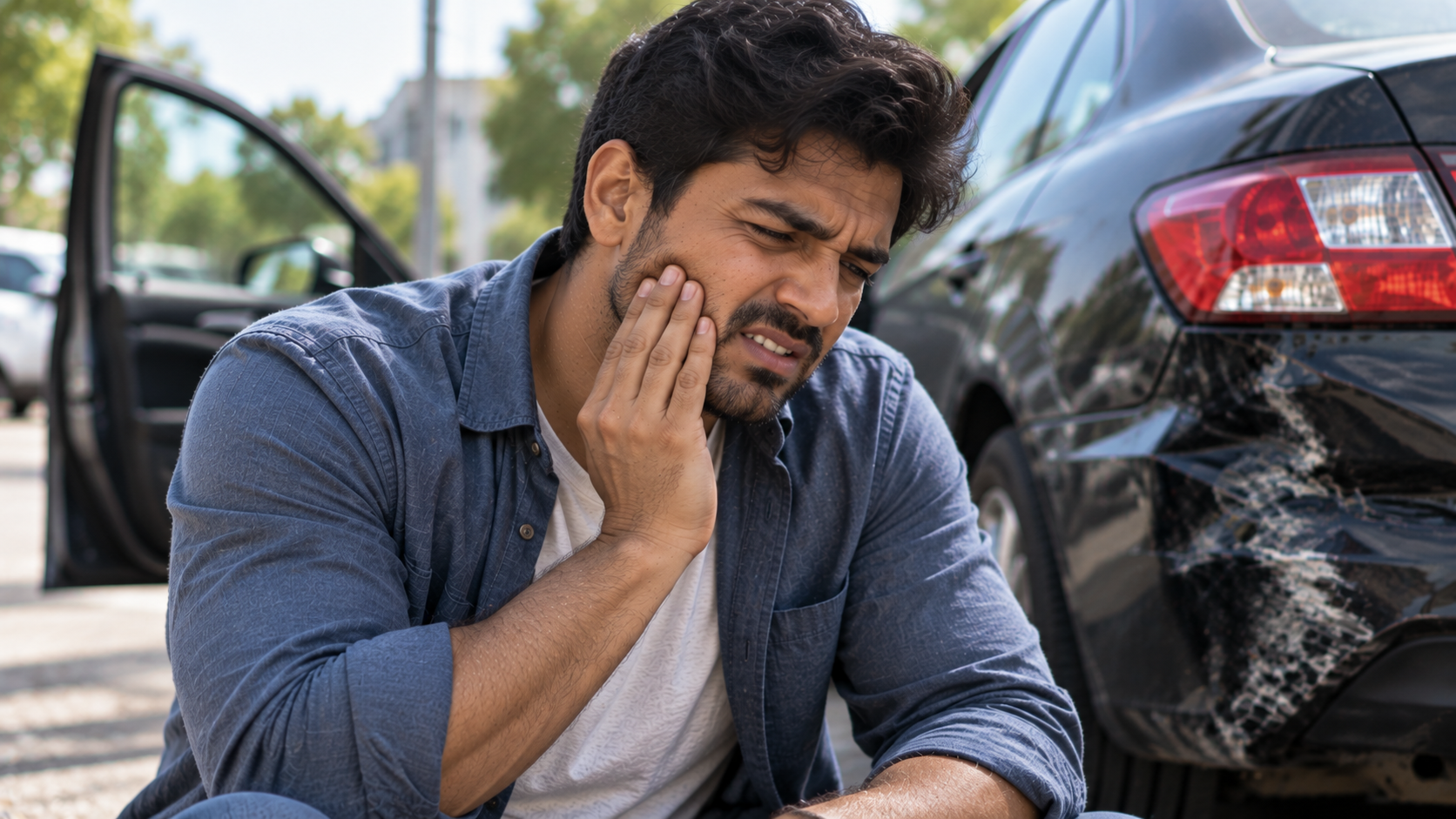
Facial Pain After a Car Accident: Causes and Evaluation
Facial pain after a car accident can involve bruising, airbag impact, jaw or dental injury, facial-bone trauma, or irritation of nerves. Symptoms may include cheek tenderness, jaw pain, headache, swelling, numbness, or difficulty chewing. Because serious eye, head, and facial injuries can produce similar symptoms, new or significant facial pain after a collision warrants appropriate medical or dental evaluation. Call emergency services for breathing difficulty, uncontrolled bleeding, sudden vision loss, loss of consciousness, or severe neurological changes.
What Causes Facial Pain After a Car Accident?
The face can be injured by a deploying airbag, contact with the steering wheel or another surface, seat-belt restraint forces, or rapid movement of the head and jaw. Potential causes include:
- Bruises and abrasions: Direct impact may cause surface tenderness, discoloration, or skin injury.
- Jaw or TMJ injury: Jaw clenching or traumatic force may affect the jaw joint and chewing muscles.
- Dental trauma: A chipped, cracked, loose, or displaced tooth requires dental assessment.
- Nasal or facial-bone fracture: Injury to the nose, cheekbone, or eye socket may cause swelling, tenderness, or facial asymmetry.
- Nerve injury: Facial numbness, tingling, or altered sensation can indicate nerve involvement.
- Head or eye injury: Concussion symptoms and vision changes need careful medical evaluation.
Patients with facial symptoms may also notice headaches after a car accident or difficulty turning the head after a car accident. Multiple injuries can occur in the same collision.
When Is Facial Pain After an Accident an Emergency?
Seek emergency medical care for severe facial trauma, uncontrolled bleeding, difficulty breathing, sudden or major vision changes, severe eye pain, loss of consciousness, worsening confusion, seizures, significant facial deformity, or rapidly increasing swelling. New facial weakness or numbness accompanied by other neurological symptoms also requires immediate assessment.
A knocked-out permanent tooth is a time-sensitive dental emergency. Contact an emergency dentist immediately; prompt treatment can sometimes save the tooth. Do not delay urgent medical care for potentially serious head, eye, or airway injuries.
Can an Airbag Cause Face Pain or Swelling?
Yes. Airbags can cause abrasions, bruising, irritation, or impact injuries around the face. However, not every facial symptom is caused by the airbag itself. A clinician may need to examine the nose, jaw, eyes, teeth, and surrounding bones to identify the actual source of pain. See delayed pain after a car accident if bruising or soreness becomes more noticeable later.
Jaw Pain, TMJ Symptoms, and Difficulty Chewing After a Crash
Trauma may irritate the temporomandibular joint (TMJ), chewing muscles, teeth, or jawbone. Symptoms can include facial or ear-area pain, clicking, limited mouth opening, or discomfort while chewing. Explore jaw pain and TMJ symptoms after a car accident for related information.
Difficulty with daily activities, including brushing your teeth after a car accident, may indicate ongoing pain or restricted jaw motion. Significant changes in the bite, inability to close or open the mouth, or suspected jaw fracture require medical or dental evaluation.
Could Facial Numbness After a Car Accident Mean Nerve Injury?
New numbness or tingling around the cheek, lips, or jaw can sometimes reflect facial nerve or sensory-nerve injury. It can also accompany swelling or facial-bone trauma. Persistent or spreading numbness, facial weakness, or other neurological changes should not be treated as routine muscle soreness. For broader neurological symptom information, review numbness and tingling after a car accident.
Can a Car Accident Cause Facial Pain Without a Direct Hit?
Yes. Sudden head movement, jaw clenching, or associated neck and chewing-muscle problems can contribute even when you do not remember your face striking an object. Nevertheless, pain location alone does not identify the injury, and significant symptoms should be evaluated. Associated neck and back movement restrictions can also affect daily function.
How Is Facial Pain Evaluated After a Car Crash?
A medical or dental professional may review the crash mechanism, symptom onset, bruising, jaw motion, dental changes, eye symptoms, facial sensation, and neurological findings. The examination may include the eyes, nose, facial bones, mouth, teeth, jaw joint, and neck. Imaging, dental X-rays, CT scans, or specialist referral may be needed when fracture, eye injury, significant dental trauma, or nerve injury is suspected.
To prepare for follow-up appointments, use questions to ask a personal injury care provider and medical documentation after an injury to organize symptoms and records.
Can Facial Pain Appear a Day or Two After a Car Accident?
Yes. Bruising, swelling, muscle tenderness, or jaw discomfort can become more noticeable after the initial impact. Do not dismiss symptoms that worsen, interfere with vision or chewing, or are accompanied by headache, confusion, or numbness. Learn more about full body soreness after a car accident and when medical assessment is important.
Chiropractic Rehabilitation for Associated Neck and Musculoskeletal Pain
Facial fractures, eye injuries, dental trauma, and significant neurological conditions require appropriate medical, dental, or specialist care rather than routine chiropractic treatment. After urgent conditions have been evaluated and addressed, a rehabilitation care plan may be appropriate for related neck, upper-back, or other musculoskeletal symptoms. Treatment should be tailored to examination findings, with recovery milestones reviewed over time.
How T98 Rehab Can Help in Austin
T98 Rehab can assess musculoskeletal limitations that accompany an auto accident and help coordinate appropriate referrals. For patients considering follow-up care, learn when to see a chiropractor after a car accident or how to choose an auto accident chiropractor in Austin. Emergency, dental, eye, and facial-bone injuries must be assessed by the appropriate medical professional first.
Frequently Asked Questions
Why does my face hurt after a car accident?
Possible causes include bruising, airbag impact, jaw or dental injury, facial-bone trauma, nerve irritation, or head injury. A clinician can evaluate the source of symptoms.
Can an airbag cause cheek or jaw pain?
Yes. Airbag contact can cause pain or bruising, but fracture, dental injury, or other facial trauma may need to be ruled out.
Is facial numbness after a crash serious?
New or persistent facial numbness deserves medical assessment, particularly if accompanied by weakness, vision changes, headache, or other neurological symptoms.
Can TMJ problems start after a car accident?
Yes. Jaw joint and chewing-muscle symptoms can follow trauma. Persistent pain, bite changes, or reduced jaw opening warrants evaluation.
When should I see T98 Rehab for facial pain?
Seek medical or dental evaluation first for significant facial symptoms. Once urgent conditions are addressed, T98 Rehab may evaluate associated musculoskeletal complaints within its scope.
Related T98 Rehab Resources
- Headache After a Car Accident: Causes and Warning Signs
- Jaw Pain and TMJ Symptoms After a Car Accident
- Difficulty Swallowing After a Car Accident
Sources
MedlinePlus — Facial Injuries and Disorders.
National Institute of Dental and Craniofacial Research — Temporomandibular Disorders.
National Eye Institute — First Aid for Eye Injuries.
Medical Disclaimer
This article is for general educational purposes only and is not an individual diagnosis or a substitute for emergency, medical, dental, or eye care. T98 Rehab does not provide emergency services or guarantee treatment outcomes. Seek immediate medical evaluation for severe facial trauma, vision changes, breathing difficulty, uncontrolled bleeding, or neurological symptoms following a collision.