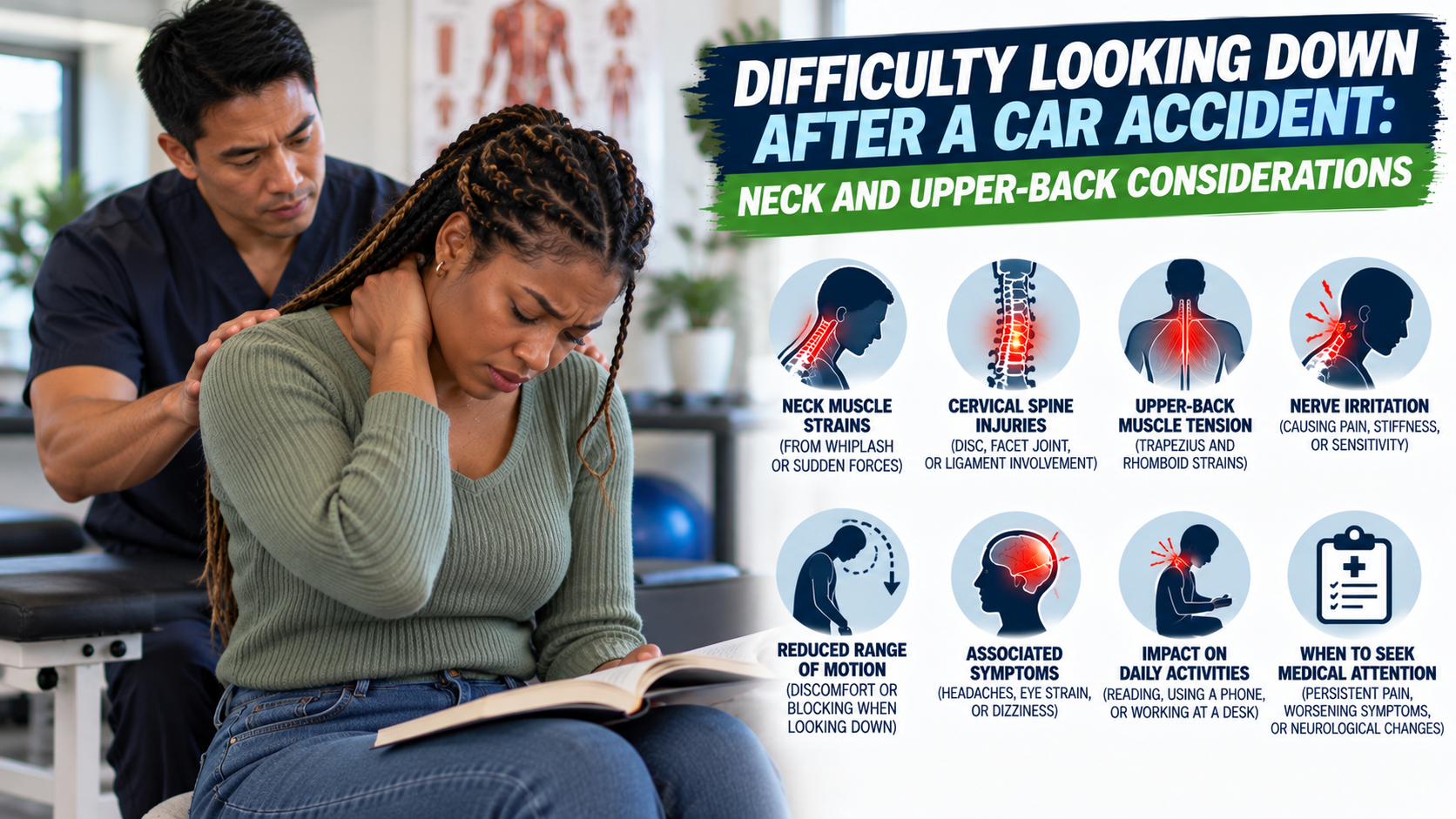
Difficulty looking down after a car accident may reflect pain, stiffness, muscle guarding, or irritation involving the neck and upper back. The symptom can interfere with reading, phone use, desk work, dressing, and other daily tasks. Evaluation is important when motion remains limited, pain is significant, or neurological symptoms are present.
Why Can Looking Down Hurt?
A collision can rapidly move the head and torso, stressing muscles, joints, and other tissues. Looking down places the neck into flexion and can make injured or guarded tissues more noticeable.
Symptoms to Track
- Neck or upper-back pain
- Stiffness or reduced range of motion
- Headache
- Shoulder or arm symptoms
- Numbness, tingling, or weakness
- Pain that increases with phone or computer use
When Is Medical Evaluation More Urgent?
Seek prompt medical attention for severe neck pain after significant trauma, new arm or leg weakness, progressive numbness, loss of coordination, bowel or bladder changes, severe headache with neurological symptoms, or other concerning changes.
How Is Restricted Neck Motion Evaluated?
A clinician may review the crash mechanism and assess comfortable neck movement, posture, tenderness, strength, sensation, reflexes, and functional tasks. Imaging may be appropriate when the history or examination raises concern for fracture or another structural injury.
Phone and Desk Activities
Repeatedly forcing the neck downward to test motion can aggravate symptoms. Adjust screen height and task duration as needed, and follow individualized guidance about activity. Avoid prolonged positions that clearly worsen symptoms.
Rehabilitation
When serious injury has been excluded, rehabilitation may use graded movement, exercise, education, and other conservative strategies based on the diagnosis. The goal is to restore useful movement and function without forcing painful motion.
How T98 Rehab Fits Into Care
T98 Rehab evaluates musculoskeletal symptoms after auto accidents and can develop an individualized rehabilitation plan when appropriate. Findings requiring medical imaging or specialty evaluation should be referred accordingly.
Frequently Asked Questions
Should I stretch through sharp pain? No. Do not force painful neck motion after trauma.
Why is looking down worse than looking straight ahead? Different positions load tissues differently, so certain directions may expose stiffness or irritation more clearly.
Can this improve with rehabilitation? Many musculoskeletal limitations improve, but treatment and timing depend on the diagnosis and individual findings.
Related Patient Resources
This article is educational and is not a diagnosis or substitute for medical care.