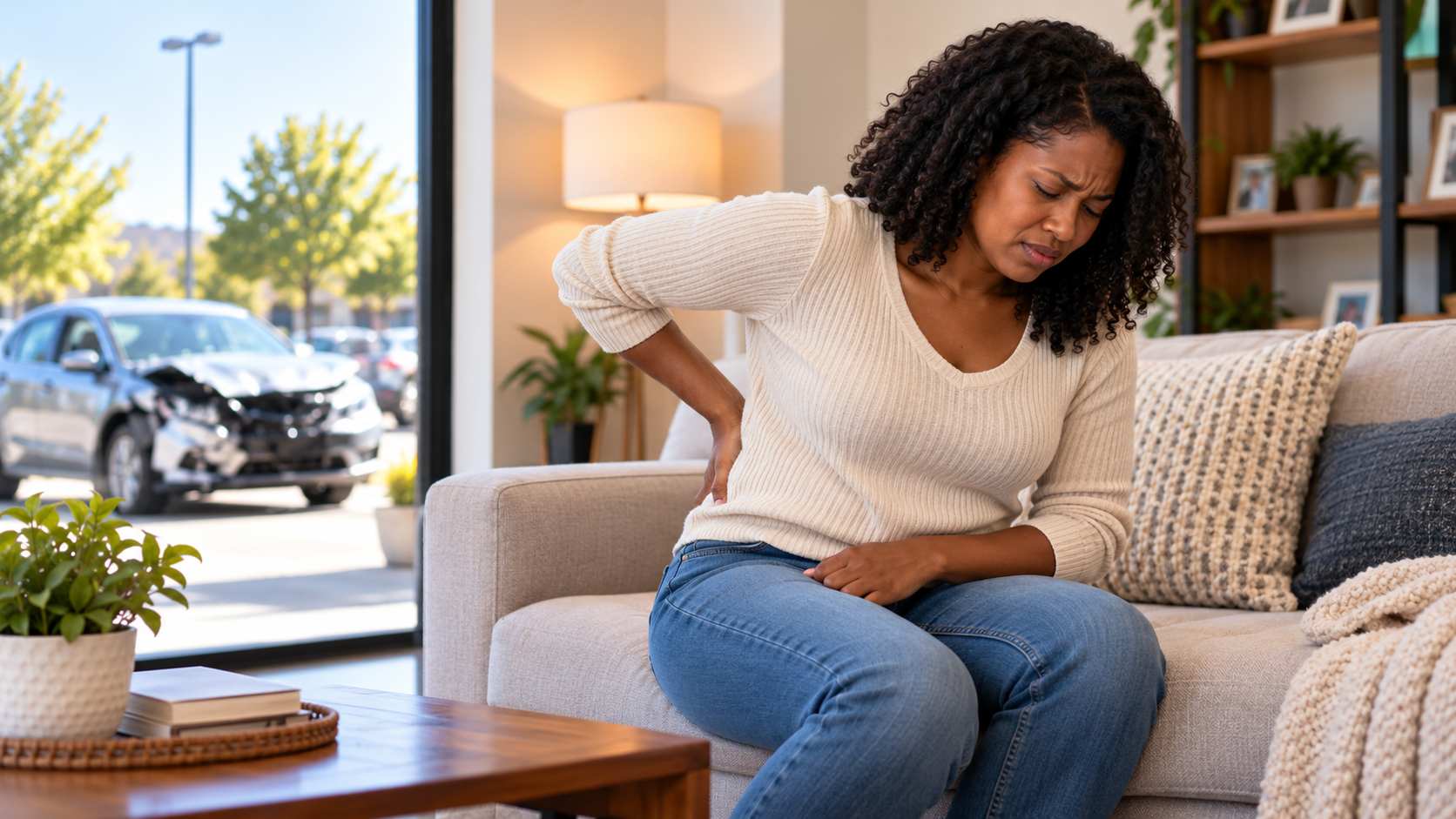
Pelvic Pain After a Car Accident: Causes and Warning Signs
Pelvic pain after a car accident may come from bruising, soft-tissue strain, hip or sacroiliac (SI) joint irritation, or a more serious pelvic injury. The pelvis also supports major blood vessels and internal organs, so severe pain following a collision should never be treated as a routine muscle strain without medical evaluation. Seek emergency care for severe pelvic pain, inability to bear weight, fainting, heavy bleeding, blood in the urine, or neurological symptoms.
What Causes Pelvic Pain After a Car Accident?
Seat belts, dashboard contact, side impact, and sudden changes in body position can transmit force through the hips, lower back, and pelvic ring. Possible causes include:
- Seat belt bruising: The lap belt may cause tenderness and visible bruising over the lower abdomen or pelvis.
- Muscle or ligament strain: Sudden loading may cause soft-tissue soreness around the hip and pelvic region.
- Hip or sacroiliac joint irritation: Pain may be felt near the buttock, groin, or lower back.
- Tailbone or sacral injury: Sitting and transitions between positions may be uncomfortable.
- Pelvic fracture: A serious bone injury can produce pain with movement or inability to bear weight.
- Internal injury: Bladder, abdominal, vascular, or reproductive-organ trauma may require urgent medical treatment.
Associated symptoms may include back pain after a car accident or seat belt injuries after a car accident. Pain location by itself cannot rule out a fracture or internal injury.
When Is Pelvic Pain After a Crash an Emergency?
Call emergency services or seek emergency medical care for severe or rapidly worsening pelvic pain, inability to stand or bear weight, fainting, heavy bleeding, significant abdominal pain, blood in the urine, major leg weakness, saddle-area numbness, or loss of bladder or bowel control. These findings can indicate fracture, internal bleeding, organ injury, or neurological compromise. If a pelvic fracture is suspected, avoid unnecessary movement or attempting to walk.
Can a Seat Belt Cause Hip or Pelvic Pain?
Yes. The lap portion of a seat belt may bruise the lower abdomen, hip bones, and surrounding tissues. However, significant belt-related pain or bruising after a forceful crash can also accompany deeper injuries. A medical assessment may be needed even when there is no obvious deformity. Learn more about delayed pain after a car accident when discomfort develops after the initial collision.
What Is the Difference Between Pelvic Pain and Hip Pain?
The hip joint connects the thigh bone to the pelvis; the pelvic region also includes the sacrum, sacroiliac joints, muscles, nerves, and internal organs. Hip-related symptoms may be felt in the groin or front of the thigh, whereas sacroiliac or lower-back problems can cause pain farther behind. Symptoms overlap, so a clinician must evaluate the affected structures rather than relying on pain location alone.
For related movement problems, read about difficulty bending after a car accident and pain when twisting after a car accident.
Why Does Pelvic Pain Make Standing, Walking, and Climbing Stairs Difficult?
The pelvis transfers body weight between the trunk and legs. Injuries in this region may make it painful to shift weight, rise from a chair, or climb steps. Functional symptoms can resemble difficulty standing after a car accident, difficulty walking after a car accident, or difficulty climbing stairs after a car accident. Do not force these activities when fracture or instability is possible.
How Do Doctors Diagnose Pelvic Injuries After a Collision?
A medical professional may review the impact, seat belt position, bruising, pain location, ability to bear weight, abdominal or urinary symptoms, and neurological changes. Evaluation can include examination of the hips and lower back, circulation and nerve function, and imaging such as X-ray or CT when indicated. Some injuries may require emergency or specialist assessment before any rehabilitation.
To prepare for follow-up care, review questions to ask a personal injury care provider and medical documentation after an injury.
Can Pelvic Pain Appear a Day or Two After an Accident?
Yes. Bruising, muscle soreness, and movement-related discomfort can become more noticeable after the crash. However, new severe or progressive pain, weakness, abdominal symptoms, or difficulty bearing weight must be assessed promptly. A delayed onset does not automatically make a pelvic injury minor.
What Should You Avoid Before a Medical Evaluation?
Do not stretch aggressively, attempt heavy lifting, undergo pelvic or spinal manipulation, or force walking when a fracture or internal injury is possible. Follow urgent-care instructions and use appropriate assistance if movement is unsafe. Normal activity should resume only when the injury has been appropriately assessed.
Recovery and Chiropractic Rehabilitation After Pelvic Injury
Recovery depends on the diagnosis. A soft-tissue bruise may be managed differently from a fracture, internal injury, or neurological condition. After serious injuries have been excluded or appropriately treated, an individualized rehabilitation care plan may address comfortable hip and trunk movement, balance, leg strength, and return to normal activities. Recovery milestones should reflect function and examination findings rather than an assumed timetable.
Examples of activities affected include pain getting out of bed after a car accident, pain when squatting after a car accident, and difficulty getting up from the floor after a car accident.
When to Contact T98 Rehab in Austin
Once urgent pelvic, abdominal, urinary, and neurological injuries have been medically addressed, T98 Rehab can evaluate appropriate musculoskeletal symptoms affecting mobility and daily function. See when to see a chiropractor after a car accident or how to choose an auto accident chiropractor in Austin for additional patient guidance. Suspected fracture, internal bleeding, or organ injury requires emergency medical care first.
Frequently Asked Questions
Can a car accident injure the pelvis without breaking a bone?
Yes. Bruising and muscle or ligament injuries are possible, but significant pelvic pain should be evaluated because fractures and internal injuries can produce overlapping symptoms.
Is pelvic pain after a car accident an emergency?
Severe or worsening pain, inability to bear weight, fainting, blood in the urine, heavy bleeding, abdominal symptoms, or neurological changes require urgent or emergency assessment.
Can seat belt pressure cause pelvic pain?
Yes. The lap belt can bruise soft tissues, but deeper injury is also possible following substantial impact.
Can I walk if my pelvis hurts after a crash?
Do not force weight-bearing or attempt to walk through severe pain or instability before a significant injury has been ruled out.
Can chiropractic care help pelvic pain after a car accident?
It may be considered for selected musculoskeletal symptoms only after emergency, fracture, internal, and neurological conditions have been appropriately evaluated.
Related T98 Rehab Resources
- Difficulty Walking Long Distances After a Car Accident
- Pain Getting In and Out of a Car After an Accident
- Returning to Activity After an Injury
Sources
American Academy of Orthopaedic Surgeons — Pelvic Fractures.
MedlinePlus, U.S. National Library of Medicine — information on fractures, trauma, and musculoskeletal injuries.
Medical Disclaimer
This article is for educational purposes and is not an individual diagnosis or a replacement for emergency or individualized medical care. T98 Rehab does not provide emergency services or guarantee recovery outcomes. Severe pelvic pain, inability to bear weight, bleeding, blood in the urine, abdominal symptoms, or neurological changes after a collision require immediate medical assessment.