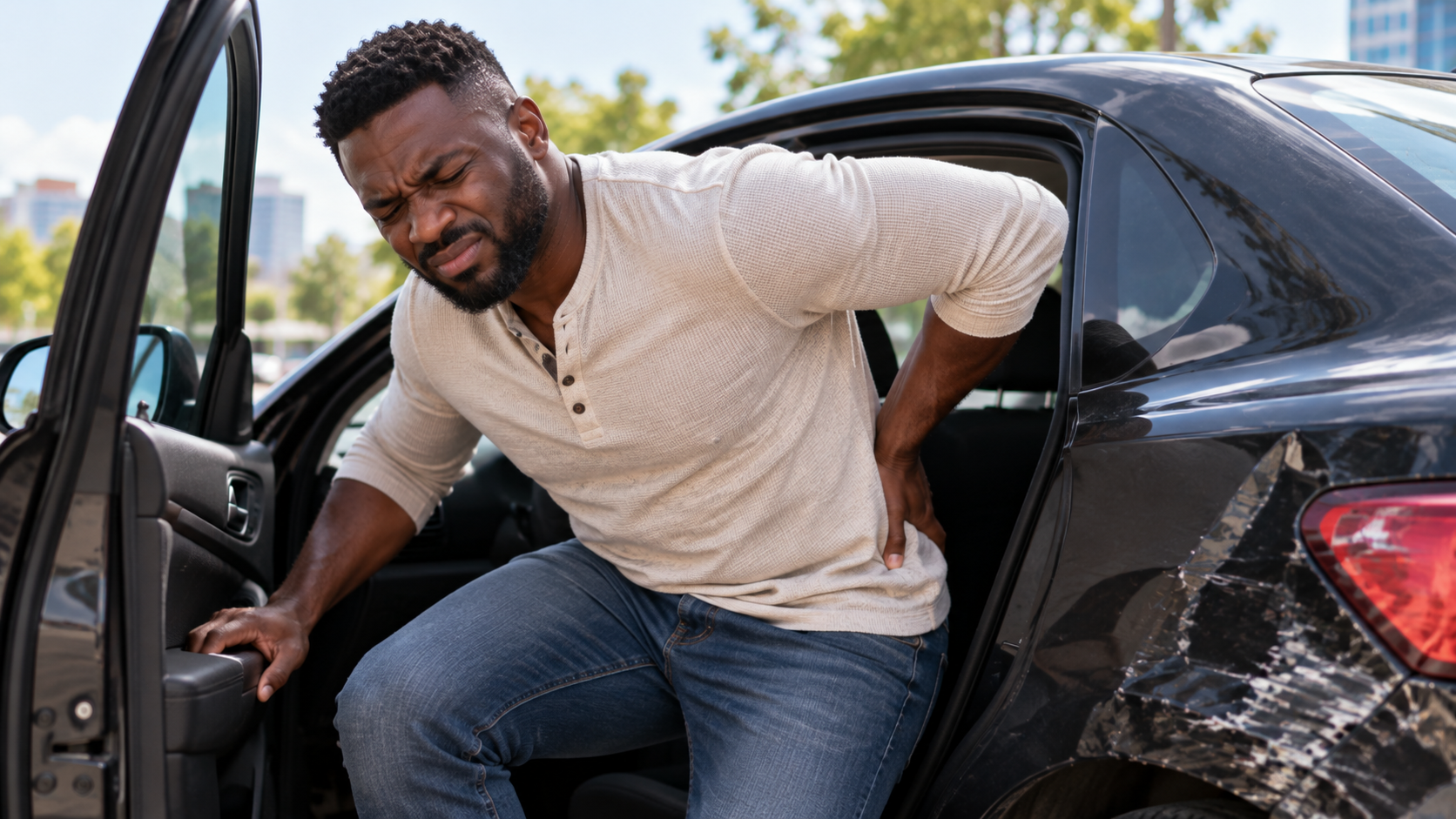
Pain when getting into or out of a car after an accident often reflects limitations in the hip, pelvis, lower back, knee, or trunk. The movement combines bending, twisting, weight shifting, and stepping, so several injuries can make it difficult. Severe pain, inability to bear weight, major weakness or numbness, or other warning signs should be evaluated before repeatedly forcing the movement.
Why Can Getting Into a Car Hurt After a Crash?
Entering a vehicle usually requires bending at the hips and knees, rotating the trunk, lifting one or both legs, and shifting body weight into the seat.
- Possible causes of pain include:
- Hip or pelvic injury
- Lower-back pain
- Knee pain or swelling
- Muscle strain
- Sacroiliac-region pain
- Leg weakness or nerve-related symptoms
- Bruising from the collision or seat belt
The movement may expose limitations that are less noticeable during short periods of standing or walking.
What Symptoms Need Prompt Medical Evaluation?
Seek prompt care for inability to bear weight, major hip or leg deformity, severe or rapidly worsening pain, new weakness or numbness, a cold or discolored leg, loss of bladder or bowel control, saddle-area numbness, or significant abdominal or pelvic symptoms after trauma.
Do not repeatedly practice vehicle transfers when a fracture or major joint injury is possible.
Which Body Areas Are Most Involved?
The hips and knees flex while the trunk rotates and the legs move across the door opening. The lower back and abdominal muscles help control the transfer, while the arms may assist by pushing from the seat or holding a stable support.
Pain can therefore come from more than one injured region.
Why Is Getting Out Sometimes Harder Than Getting In?
Exiting may require pushing upward against body weight while rotating and stepping onto the ground. Weakness, stiffness, a low seat, or pain when loading one leg can make this direction more difficult.
How Is This Problem Evaluated?
A clinician may assess hip and knee motion, lower-back movement, strength, balance, walking, and the specific positions that reproduce symptoms. The examination can help determine whether the limitation is primarily joint, muscle, nerve, or movement related.
Imaging may be appropriate when fracture or significant structural injury is suspected.
Safer Movement During Recovery
Avoid twisting sharply through a painful area. When medically appropriate, it may be easier to sit first and then move the legs into the vehicle together, reversing the sequence when exiting. The safest strategy depends on the injury and the vehicle.
Recovery and Rehabilitation
Rehabilitation may work on hip and trunk mobility, leg strength, balance, and functional transfer practice. Progress should be based on safe movement and improving function rather than repeatedly forcing painful transfers.
How T98 Rehab Can Help
T98 Rehab can evaluate musculoskeletal limitations that make vehicle transfers difficult after an auto accident and develop a plan to restore comfortable daily movement. Suspected fractures, neurological deficits, or significant pelvic and abdominal injuries require appropriate medical evaluation first.
Frequently Asked Questions
Why does my hip hurt only when getting into the car? Vehicle entry requires a combination of hip bending, rotation, and leg lifting that may stress an injured area differently from normal walking.
Can lower-back pain make car transfers difficult? Yes. Bending and rotating the trunk can reproduce lower-back symptoms, and nerve-related leg symptoms may also interfere.
Should I keep practicing the movement if it hurts? Do not repeatedly force a movement that causes sharp, severe, or worsening pain. The underlying injury should guide activity.
Can seat height make a difference? Yes. Very low seats often require more hip and knee motion and greater effort to stand back up.
When should I contact T98 Rehab? After urgent injuries have been excluded, contact T98 Rehab if pain or restricted movement continues to make getting into or out of a vehicle difficult.
Sources
MedlinePlus, U.S. National Library of Medicine, hip, back, and mobility information. American Academy of Orthopaedic Surgeons (OrthoInfo), patient information on hip, knee, and musculoskeletal injuries.
This article is educational and does not provide an individual diagnosis or replace emergency or individualized medical care.
Related T98 Rehab Resources
- difficulty driving after a car accident
- back pain after a car accident
- pain getting out of bed after a car accident causes and safer movement
Browse the Resource and Help Center for additional patient education.