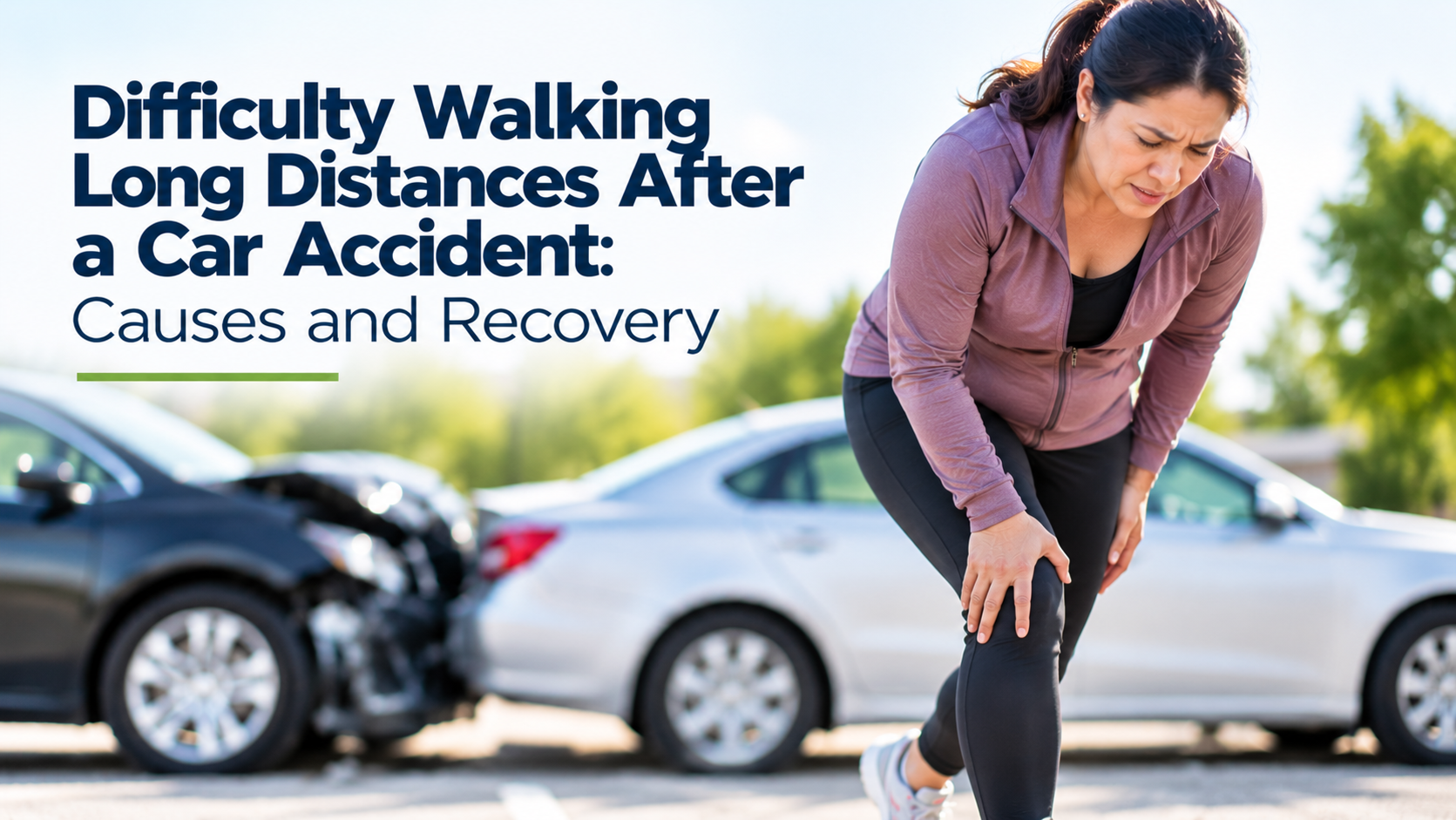
Difficulty Walking Long Distances After a Car Accident: Causes and Recovery
Difficulty walking long distances after a car accident can result from pain, weakness, reduced endurance, joint stiffness, balance problems, or injuries involving the back, pelvis, hips, knees, ankles, or feet. A person may manage short household distances but develop symptoms as walking time increases. Inability to bear weight, rapidly worsening weakness, severe swelling, major numbness, or other neurological warning signs requires prompt medical evaluation.
Why Can Longer Walks Be Difficult After a Crash?
Walking repeatedly loads the legs, pelvis, and spine. Problems that are subtle during a few steps can become more noticeable with time and repetition. Our guide to difficulty walking after a car accident explains related functional concerns.
- Hip or pelvic pain
- Knee injury or swelling
- Ankle or foot pain
- Lower back pain
- Nerve-related leg symptoms
- Muscle weakness or reduced endurance
- Balance problems or dizziness
- Changes in walking pattern caused by pain
Where symptoms begin and how they change with distance can provide useful information during evaluation. Explain whether level ground, walking uphill, or walking downhill brings on symptoms first. Different surfaces and slopes change the demands of the task.
When Is Walking Difficulty a Warning Sign?
Seek urgent medical evaluation for inability to bear weight, a cold or discolored foot, severe swelling, or significant balance loss after trauma. Rapidly worsening weakness, major numbness, new loss of bladder or bowel control, or numbness around the groin requires emergency evaluation. Do not test your walking endurance while serious injuries remain possible.
New calf swelling, warmth, redness, or unexplained pain needs prompt medical assessment for a possible blood clot, even without chest symptoms. Call 911 for sudden shortness of breath, chest pain, fainting, or coughing up blood. Do not try to walk off these symptoms.
Why Does Walking Long Distances Hurt When Short Walks Feel Fine?
Longer walking increases repetition and endurance demands. An injured joint or muscle may tolerate a small number of steps but become painful or fatigued as loading continues.
This pattern does not identify the injury by itself. The affected region, neurological findings, swelling, and examination remain important. Difficulty carrying groceries or doing household chores can add useful context because these tasks combine walking with other demands.
How Is Walking Tolerance Evaluated?
A clinician may assess gait, balance, joint motion, strength, sensation, reflexes, swelling, and the distance or duration that brings on symptoms. The spine, pelvis, hips, knees, ankles, and feet may all be considered depending on the presentation. At your first chiropractic visit, describe the collision, symptom timing, existing restrictions, and changes in your walking pattern. Bring available emergency-care reports and other medical records.
Should You Push Through Pain to Build Endurance?
Do not push through sharp, rapidly worsening, or neurological symptoms. When serious injuries have been excluded, walking may often be progressed gradually using tolerable distances and appropriate rest rather than large sudden increases.
Recovery and Rehabilitation for Walking Long Distances
Rehabilitation may address joint mobility, leg and trunk strength, balance, gait mechanics, and cardiovascular tolerance. An individualized rehabilitation care plan can guide changes in walking distance as symptoms and function allow. There is no single distance target or recovery deadline that fits every patient.
How to Track Walking Tolerance
Record approximate walking time or distance, terrain, rest breaks, where symptoms start, and how you feel afterward. Use consistent, safe conditions when your clinician permits it rather than repeatedly walking to the point of significant pain. These details help assess recovery progress.
Report falls, persistent limping, or a need to hold onto furniture. Discuss any problems walking on uneven ground before trying more demanding routes. Ask whether an assistive device or another provider’s evaluation is appropriate; do not assume you must manage without support.
How T98 Rehab Can Help
T98 Rehab can evaluate musculoskeletal limitations that reduce walking tolerance after an auto accident and develop a progressive rehabilitation plan based on the examination. Treatment recommendations and recovery vary by patient; no outcome is guaranteed. Suspected fractures, significant neurological deficits, vascular warning signs, or severe balance problems require appropriate medical evaluation first.
For non-emergency concerns, request an appointment to discuss your walking limitations.
Frequently Asked Questions
Why can I walk around the house but not through a large store?
Longer distances require greater endurance and repeated loading, which can reveal limitations that are not obvious during short walks.
Can back pain reduce walking distance?
Yes. Back pain and some nerve-related conditions can affect walking tolerance, although hip, knee, ankle, and foot injuries can cause similar problems.
Should I track how far I can walk?
Yes. Approximate time or distance, symptom onset, and recovery afterward can help show functional progress.
Is limping something I should ignore?
Persistent limping can indicate pain, weakness, or restricted motion and is worth discussing during evaluation.
When should I contact T98 Rehab?
After urgent conditions have been excluded, contact T98 Rehab if pain, weakness, stiffness, or reduced endurance continues to limit normal walking.
Sources
- MedlinePlus — Walking Problems
- MedlinePlus — Walking Abnormalities
- National Heart, Lung, and Blood Institute — Venous Thromboembolism Symptoms
Medical Disclaimer
This article is for general education and does not provide an individual diagnosis, treatment plan, or prognosis. It does not replace evaluation or advice from a qualified healthcare professional. Walking and activity recommendations depend on your injury and examination findings. T98 Rehab does not provide emergency care or guarantee recovery. Seek urgent or emergency medical attention for serious or worsening symptoms after a car accident.