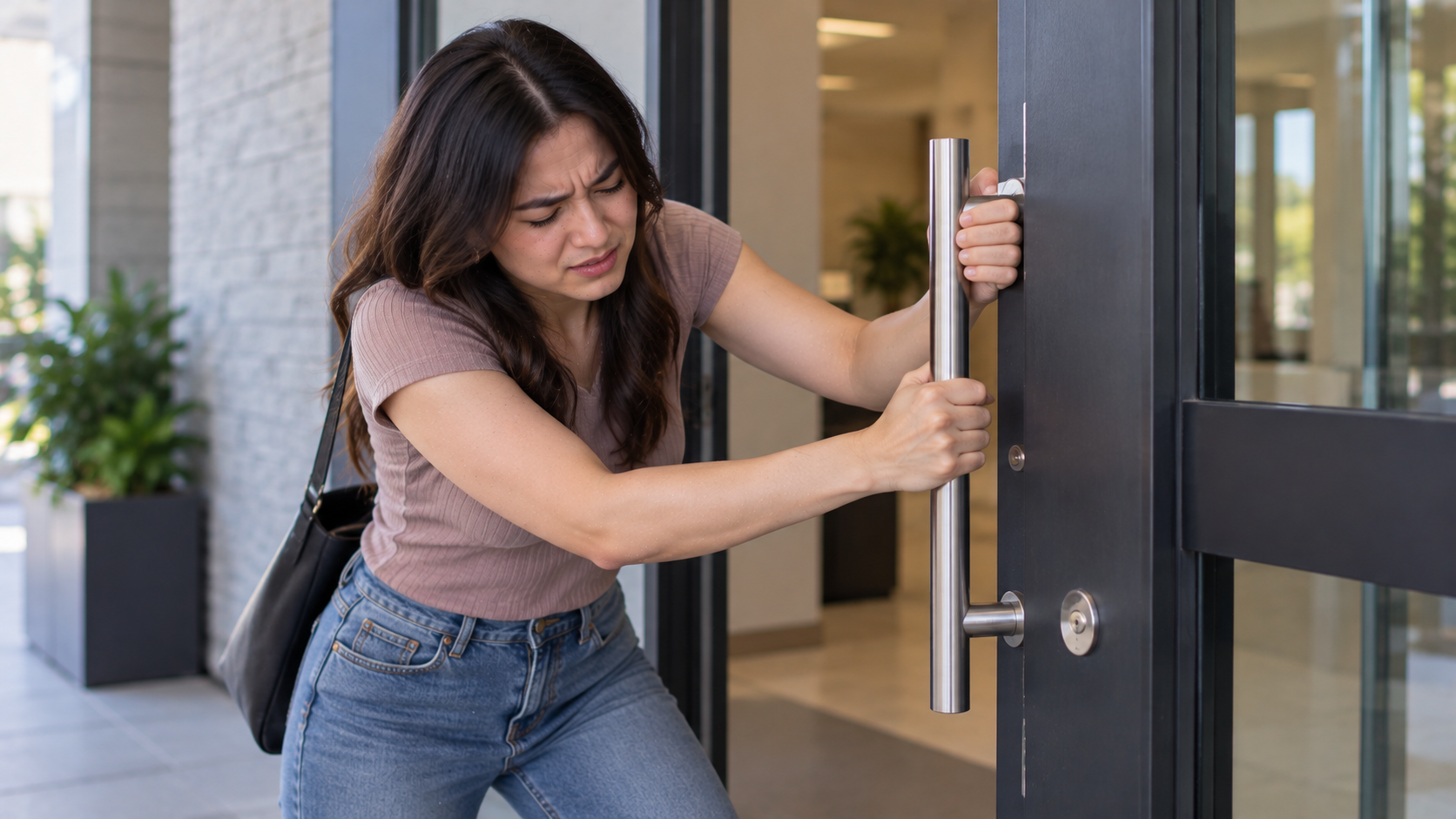
Difficulty opening or pulling a heavy door after a car accident can reveal limitations in the shoulder, arm, elbow, wrist, hand, neck, back, or lower body. The task combines grip, pulling or pushing force, trunk control, and balance. New major weakness, significant numbness, severe pain, or inability to use an arm normally after trauma should be medically evaluated.
Why Can Opening a Heavy Door Hurt After a Crash?
Possible contributors include:
Shoulder pain or weakness
Elbow or forearm injury
Wrist or hand pain that reduces grip
Neck pain or nerve-related arm symptoms
Upper- or lower-back pain
Pain with trunk rotation
Reduced balance or leg strength
General muscle soreness after the collision
Whether pushing and pulling feel different can provide useful information during evaluation.
When Is This Difficulty a Warning Sign?
Seek prompt medical care for new or worsening arm weakness, major numbness, obvious deformity, severe swelling, loss of normal hand function, a cold or discolored hand, or severe neck pain with neurological symptoms.
Do not repeatedly test a painful arm against a heavy resistance when a fracture or significant joint or nerve injury has not been excluded.
How Is the Problem Evaluated?
A clinician may assess grip, wrist and elbow function, shoulder motion and strength, neck movement, sensation, reflexes, trunk movement, and balance. The examination can help determine whether symptoms are primarily local to the arm or related to another region.
Why Can Pulling Be Harder Than Pushing?
Pushing and pulling recruit the shoulder, arm, trunk, and grip differently. The direction that hurts more may depend on the injured tissues and the position of the arm.
Should You Keep Testing Heavy Doors During Recovery?
No. Use lighter, manageable tasks when appropriate rather than repeatedly provoking symptoms with a heavy door. Activity can be progressed as strength, motion, and control improve.
Recovery and Rehabilitation
Rehabilitation may address grip, arm and shoulder strength, mobility, trunk control, and functional pushing and pulling. Resistance can be increased gradually based on symptoms and clinical findings.
How T98 Rehab Can Help
T98 Rehab can evaluate musculoskeletal limitations that make pushing, pulling, and other daily tasks difficult after an auto accident. Significant neurological symptoms, suspected fractures, or vascular warning signs require appropriate medical evaluation first.
Frequently Asked Questions
Why can I carry something but struggle to open a heavy door?
Carrying and pulling use different muscle patterns and joint positions, so an injury may affect one task more than the other.
Can neck problems affect my ability to pull a door?
Yes. Some neck and nerve-related problems can affect arm strength or sensation, although local shoulder, elbow, wrist, or hand injuries can cause similar symptoms.
Can grip weakness make opening doors difficult?
Yes. A secure grip is needed to transfer force through a handle.
Should I use the other arm instead?
Temporary modification may help, but persistent weakness or pain should still be evaluated rather than simply avoided.
When should I contact T98 Rehab?
After urgent injuries have been excluded, contact T98 Rehab if pain, weakness, or restricted movement continues to interfere with pushing, pulling, or normal daily activities.
Sources
American Academy of Orthopaedic Surgeons (OrthoInfo), patient information on shoulder, elbow, wrist, and hand injuries.
MedlinePlus, U.S. National Library of Medicine, musculoskeletal and nerve injury information.
This article is educational and does not provide an individual diagnosis or replace emergency or individualized medical care.
Related T98 Rehab Resources
Learn about back pain after a car accident, explore the Resource & Help Center, or schedule a consultation.