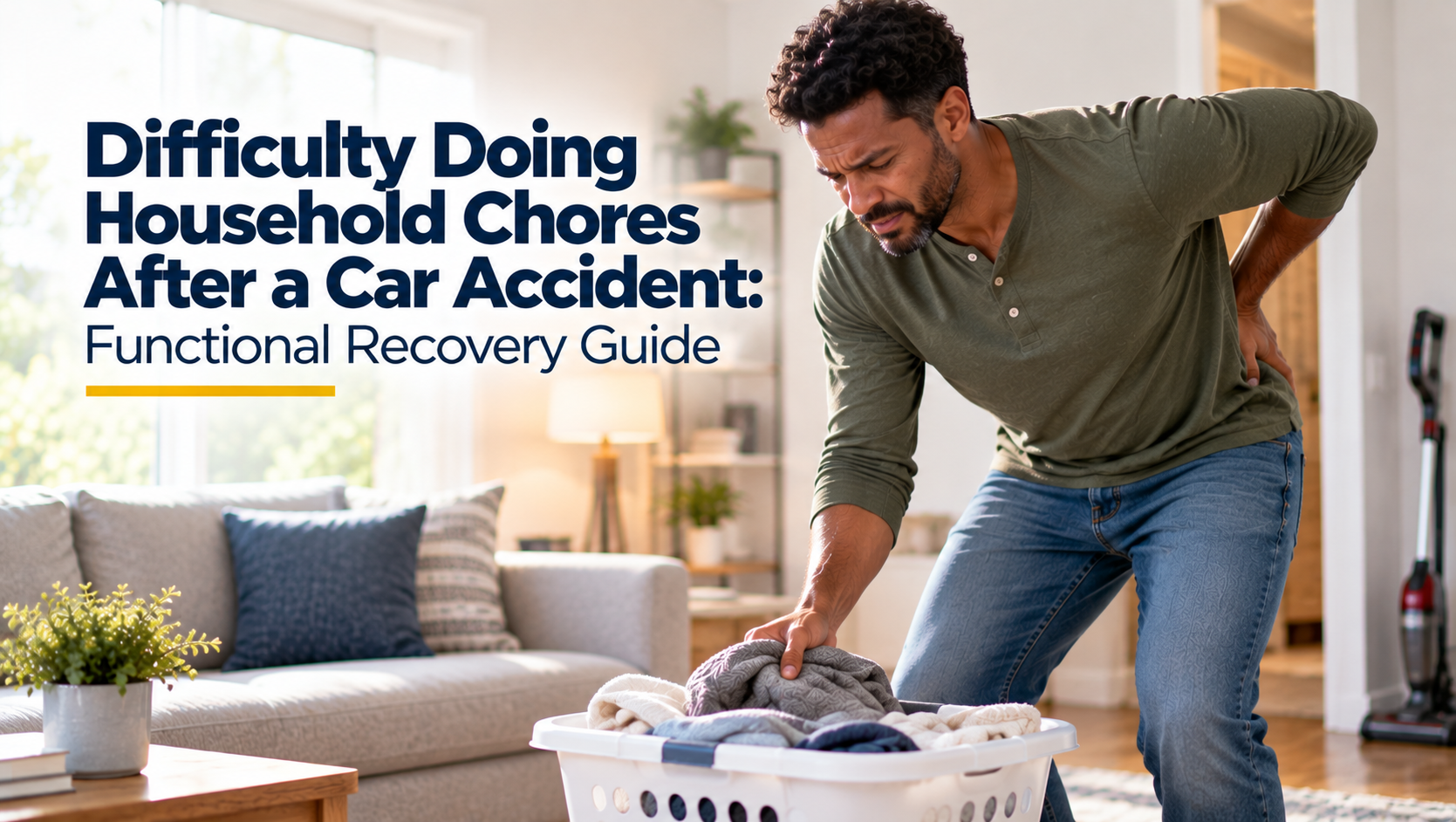
Difficulty Doing Household Chores After a Car Accident: Functional Recovery Guide
Difficulty doing household chores after a car accident can affect cooking, laundry, cleaning, and other everyday responsibilities. These tasks combine bending, reaching, lifting, carrying, pushing, pulling, standing, and walking. Pain, stiffness, weakness, or reduced endurance can make them harder even when basic self-care remains manageable. Persistent limitations deserve an individualized evaluation; serious symptoms after trauma require medical attention first.
Why Can Household Chores Become Difficult After a Car Accident?
Different chores place different demands on the body. The task that causes difficulty can help your provider understand which movements need evaluation, although symptoms alone cannot establish a diagnosis. Common examples include:
- Back or hip pain with bending to load laundry or a dishwasher.
- Back or shoulder discomfort when vacuuming or pushing cleaning equipment.
- Hand, wrist, shoulder, or back pain when carrying groceries, baskets, or trash.
- Shoulder or neck pain when reaching for cookware or putting dishes away.
- Knee or ankle pain with repeated standing and walking.
- General soreness, reduced endurance, dizziness, or balance problems during longer tasks.
Tell your provider whether symptoms begin immediately or build over time, whether one side is affected, and whether you drop objects or need assistance. Report changes accurately rather than repeatedly performing a painful movement to demonstrate it.
When Should Difficulty Doing Household Chores Be Evaluated?
Arrange an evaluation if limitations interfere with independence, keep returning, worsen, or are not improving. During your first chiropractic visit, explain how your abilities have changed since the collision and share any emergency-care findings or existing activity restrictions.
Seek emergency care for new or progressive major weakness, loss of bladder or bowel control, numbness around the groin, inability to bear weight after trauma, or severe symptoms suggesting a serious injury. Call 911 for potentially life-threatening symptoms such as chest pain, breathing difficulty, or loss of consciousness. Do not wait for a routine rehabilitation appointment.
How Can You Modify Housework During Recovery?
When medically appropriate, temporary changes can reduce unnecessary strain. Follow your clinician’s restrictions rather than assuming that every household task is safe.
- Break larger jobs into shorter sessions and rest before symptoms escalate.
- Use smaller loads and ask for help with heavy or awkward objects.
- Keep frequently used items within comfortable reach.
- Sit for selected tasks if prolonged standing is difficult and sitting is safe.
- Avoid combining heavy lifting with twisting.
- Keep walkways clear and avoid stools or ladders if you feel dizzy or unsteady.
Discuss safe lifting with your provider before resuming loaded chores. A lighter object is not automatically safe if gripping, bending, or balance remains impaired. Modification should support recovery and should not replace assessment of persistent symptoms.
Should You Push Through Pain While Cleaning?
Forcing a painful task is not required to prove recovery. Complete avoidance of all activity is not always necessary either. An individualized rehabilitation care plan can identify appropriate activities, temporary restrictions, and when to reassess them.
Stop the task and seek guidance if it causes sharp or escalating pain, new numbness, weakness, dizziness, or loss of balance. Do not use repeated housework as a substitute for prescribed rehabilitation. Your provider can help determine whether symptoms call for a change in activity or additional medical evaluation.
How Are Household Activities Used to Measure Recovery?
Daily tasks provide practical benchmarks for recovery progress. Examples include preparing a meal, loading a dishwasher, or carrying a manageable laundry load. Track the task, duration, load, symptoms, and help required rather than judging progress only by whether you finished.
Bring these observations to appointments so they can be included in your medical records. Being able to perform a task once does not necessarily mean you can repeat it safely throughout the day. Goals should reflect your normal responsibilities and be reassessed as your function changes.
Rehabilitation for Household Chores After a Car Accident
Rehabilitation may address mobility, strength, balance, endurance, and movement control according to examination findings. Tasks can be reintroduced gradually with attention to load, repetition, duration, and technique. There is no single recovery schedule that fits every injury.
Ask your provider which movements are appropriate now, which need modification, and what would justify a referral. Use these questions about personal injury care to discuss treatment options, risks, records, and reassessment.
How T98 Rehab Can Help
T98 Rehab can evaluate musculoskeletal limitations affecting household activities after an auto accident and plan rehabilitation around meaningful daily goals. Suspected fractures, significant neurological findings, or other urgent conditions require appropriate medical evaluation first. Treatment recommendations depend on the patient’s history and examination; recovery is not guaranteed.
For non-emergency concerns, contact T98 Rehab or call 512-614-2330 to discuss an appointment.
Frequently Asked Questions
Why are chores harder than basic walking?
Many chores combine several movements and involve loads, reaching, bending, or sustained activity. A provider can assess which demands are contributing to your limitations.
Should I stop doing housework completely?
Not necessarily. Temporary modification may be appropriate, depending on the injury and medical guidance. Follow specific restrictions and ask for help with tasks beyond your current capacity.
Can carrying laundry make back pain worse?
It can. The load, carrying position, stairs, and bending needed to pick up or set down a basket may affect symptoms. Ask your provider whether smaller loads, assistance, or a different approach would be appropriate.
What should I tell my provider about household chores?
Describe the tasks you cannot do, where symptoms occur, how long you can work, and what assistance you need. Specific examples help guide assessment and rehabilitation goals.
When should I contact T98 Rehab?
After urgent injuries have been excluded, contact T98 Rehab if pain, stiffness, weakness, or reduced endurance continues to interfere with household activities. New or worsening serious symptoms require medical attention rather than waiting for a routine visit.
Sources
- American Academy of Orthopaedic Surgeons — Lifting Techniques for Home Caregivers
- MedlinePlus — Pain and Your Emotions (background on pain and limitations in daily activities).
Medical Disclaimer
This article is for general education and does not provide an individual diagnosis, treatment plan, or prognosis. It does not replace an examination or advice from a qualified healthcare professional. Activity recommendations depend on your injury and clinical findings. T98 Rehab does not provide emergency care or guarantee recovery. Seek urgent or emergency medical attention for serious or worsening symptoms after a car accident.