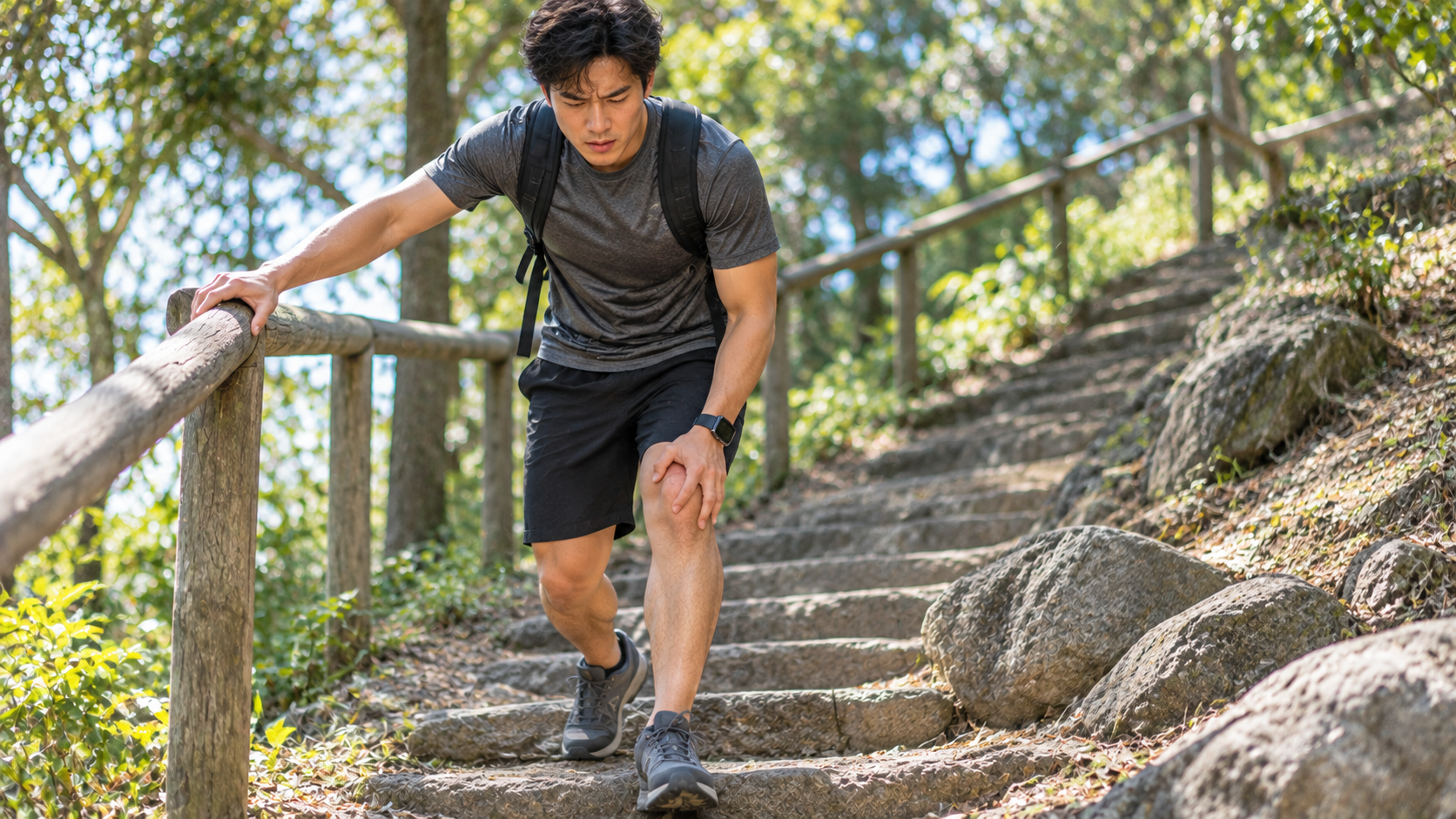
Difficulty Walking Downhill After a Car Accident: Knee, Ankle, and Balance Considerations
Difficulty walking downhill after a car accident can involve knee, ankle, hip, back or balance problems. Going down a slope requires control of the body’s forward and downward movement, so symptoms may be more noticeable than during level walking. Report persistent difficulty, and seek prompt medical assessment for inability to bear weight, a joint giving way, major swelling, worsening weakness or significant balance loss.
Why Can Walking Downhill Hurt After a Car Accident?
Descending places different demands on the lower body. The knee, ankle, hip, and trunk work together to manage the body’s movement down the slope. The supporting leg must accept weight while controlling the descent, and the next foot must be positioned securely on a surface that is lower than the previous step.
Possible contributors include:
- Knee pain or instability
- Ankle or foot injury
- Hip or pelvic pain
- Reduced leg strength
- Lower back pain or nerve-related symptoms
- Balance problems or dizziness
- Pain-related changes in gait
- Reduced confidence after injury
A steeper or uneven slope can increase the challenge. Slope angle changes how much controlled lowering is required with each step. Uneven ground can add unexpected changes in foot position and require faster balance corrections.
When Downhill Walking Difficulty Needs Medical Care
Seek prompt medical assessment for inability to bear weight, a joint that repeatedly gives way, major swelling or deformity, new or worsening weakness, significant numbness, a cold or discolored foot, or severe balance problems after trauma. Do not treat these changes as ordinary hesitation on a hill. Call 911 for severe or rapidly worsening neurological changes, loss of consciousness, chest pain, breathing difficulty or another potentially life-threatening symptom.
Do not use a steep hill to test an injured knee or ankle before significant injury has been excluded. A steep hill increases the same lowering and balance demands that may already be difficult on a mild slope. Using it as a test can expose an injured knee, ankle, or hip to greater force and can increase fall risk if the joint gives way or balance is impaired.
Why Is Walking Downhill Harder Than Going Uphill?
Downhill walking requires the leg muscles to control descent while the knees and ankles manage changing forces. Some knee or balance problems are therefore more noticeable during descent, while other injuries may be harder during uphill walking. Going uphill and downhill require different movement strategies.
How Is Difficulty Walking Downhill Evaluated?
A clinician may assess gait, knee stability, ankle and hip motion, leg strength, balance, sensation, reflexes, and whether pain or instability appears during controlled step-down movements. The assessment can relate these findings to the specific phases of downhill walking. Knee stability and leg strength influence controlled lowering, ankle and hip motion affect how the body adapts to the slope, and gait assessment can show whether steps become shorter, uneven, or guarded. Bring available medical records and restrictions. If chiropractic assessment is appropriate, review your first chiropractic visit and prepare questions to ask your chiropractor.
When Can You Practice Slopes During Recovery?
Practice slopes only after the underlying injury has been evaluated, level walking is safe and your provider considers progression appropriate. Early work may use controlled step-down tasks or small, predictable surface changes. Follow any restrictions on weight bearing or movement, and avoid using a steep hill to test your knee or ankle.
Use secure handrails or other professionally recommended support when appropriate. Support should help an already suitable activity; it does not make a slope safe when a joint gives way or balance remains seriously impaired.
Rehab for Walking Downhill Safely
An individual treatment plan may address knee and hip strength, ankle movement, balance, walking control and controlled lowering. Appropriate injury rehab should progress toward the real-world surfaces you need to manage. Track recovery progress through steadier steps, better control and less difficulty on suitable terrain. Slope, duration and surface complexity can change separately under provider guidance. Ask which home exercises fit your condition and when to stop. A gradual return to exercise after an injury should follow your findings and response rather than a guaranteed date.
How T98 Rehab Can Help
T98 Rehab evaluates non-emergency muscle, joint and functional limitations affecting walking after an accident. Significant instability, suspected fractures, neurological symptoms or severe balance problems require appropriate medical assessment first. If chiropractic care is proposed, discuss alternatives and chiropractic safety for your health and the technique.
Frequently Asked Questions
Why does my knee hurt more going downhill?
Descending increases the need for controlled knee bending and muscular braking, which can make some knee injuries more noticeable. Downhill walking generally requires the knee to bend while the leg muscles control the body’s downward movement. Pain, weakness, swelling, or instability can make that controlled lowering more difficult.
Can ankle problems affect downhill walking?
Yes. Ankle mobility, strength, and control help adapt the foot to a slope. The ankle helps position the foot as the body moves over a sloped surface and contributes to controlled progression from one step to the next.
Why do I feel unsteady on slopes but not flat ground?
Slopes change body position and require more continuous balance adjustments than a level surface. A slope changes the relationship between the body and the ground with every step, so balance must adjust continuously as the person moves downward. Uneven terrain can add side-to-side corrections and unpredictable foot placement.
Should I use a railing on ramps or stairs?
Appropriate support can improve safety while balance or strength is limited. A railing or other appropriate support can reduce the consequences of a temporary loss of balance while strength or control is limited. The need for support can also be useful functional information during recovery.
When should I contact T98 Rehab?
After urgent injuries have been excluded, contact T98 Rehab if pain, instability, weakness, or balance limitations continue to interfere with normal walking. Continued difficulty with downhill walking is useful to report because it reflects how pain, joint stability, strength, ankle mobility, gait control, and balance are affecting real-world mobility. Describing whether symptoms appear with steeper slopes, uneven ground, longer descents, or specific step-down movements can help focus the evaluation on the functions that remain limited. Also report difficulty standing at a counter or getting into a bathtub, because different tasks can reveal different limits. Call 512-614-2330 or book an appointment for persistent non-emergency limitations and confirm chiropractic costs before care.
Sources
- NHS: Knee Pain — symptoms requiring urgent assessment, including inability to bear weight and a knee that gives way.
- MedlinePlus: Sprains and Strains — general background on muscle, tendon and ligament injuries.
- MedlinePlus: Recognizing Medical Emergencies — emergency warning signs and when to call for help.
Medical Disclaimer
This article provides general education and does not establish a clinician-patient relationship or replace emergency care, diagnosis or individualized medical advice. Difficulty on a slope does not identify a diagnosis. T98 Rehab provides non-emergency care. Exercise, terrain progression and walking support should reflect your injuries, restrictions and professional assessment. Do not use a steep hill to test an unassessed injury. Call 911 for serious or rapidly worsening symptoms.