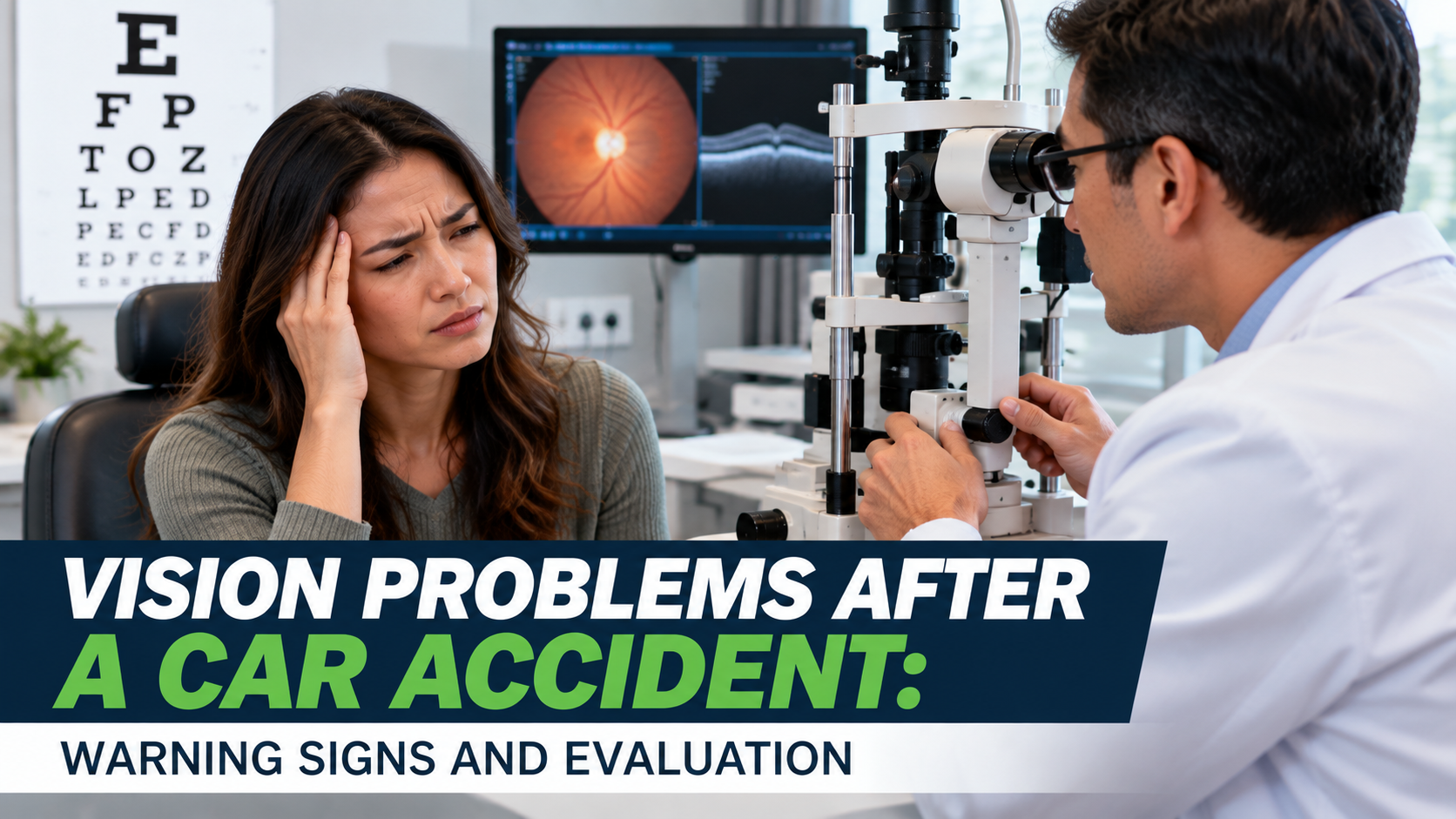
Vision Problems After a Car Accident: Warning Signs and Evaluation
Vision problems after a car accident can include blurry vision, double vision, sensitivity to light, eye pain, flashes, floaters, or difficulty focusing. These changes may follow a concussion, direct eye injury, facial trauma, or another neurological condition. New vision changes after trauma need prompt medical assessment. Sudden vision loss, a dark curtain across vision, severe eye pain, or vision changes with major neurological symptoms require emergency care. Do not assume that visual symptoms are simply caused by neck tension or whiplash.
What Vision Symptoms Can Happen After a Car Accident?
Vision disturbances may occur immediately after impact or become apparent when reading, working, or using screens. Patients may experience:
- Blurred vision: Objects appear out of focus or less clear than usual.
- Double vision (diplopia): A single object appears as two images.
- Light sensitivity: Bright lights or screens cause discomfort.
- Eye pain or redness: May indicate direct injury, inflammation, or other eye problems.
- Flashes, new floaters, or shadows: Can signal a serious retinal problem.
- Difficulty focusing or tracking: Reading and shifting attention between objects become difficult.
- Visual symptoms with headache or dizziness: May occur with concussion or other injuries.
Related complaints include headaches after a car accident, dizziness after a car accident, and memory problems after a car accident.
When Are Blurred Vision or Eye Symptoms an Emergency?
Seek emergency medical attention for sudden vision loss, a dark curtain or shadow across vision, severe eye pain, penetrating eye trauma, major facial or head injury, unequal pupils with neurological symptoms, worsening confusion, weakness, repeated vomiting, or a severe worsening headache. New flashes and floaters, especially with a shadow in the field of vision, require immediate eye evaluation because retinal tears or detachment can threaten sight.
Sudden double vision or other new neurological visual symptoms also require urgent medical assessment. Do not drive yourself to emergency care if your vision is impaired.
Can a Concussion Cause Blurry Vision or Light Sensitivity?
Yes. A concussion or traumatic brain injury can affect eye movements, visual attention, focusing, and tolerance for light. A person does not need to lose consciousness to have a concussion. Associated symptoms can include difficulty concentrating after a car accident, dizziness, headache, nausea, and fatigue. However, blurred vision does not establish a concussion diagnosis, and direct eye or neurological injury must also be considered.
Can Whiplash Cause Vision Problems After a Crash?
Neck injuries sometimes coexist with headaches, dizziness, and visual complaints. But vision problems should not automatically be attributed to whiplash or treated first with neck manipulation. Medical or eye evaluation is needed to rule out potentially serious causes. For related neck symptoms, read about difficulty turning your head after a car accident.
Can Airbag Deployment Damage the Eyes?
Airbag deployment can be associated with blunt eye trauma, irritation, or exposure to particles. Pain, redness, blurred vision, or other persistent symptoms after airbag contact should be assessed promptly. For more on nearby injury patterns, see facial pain after a car accident. Avoid rubbing an injured eye or putting unprescribed substances into it.
Why Do I See Flashes, Floaters, or a Shadow After an Accident?
New flashes of light, many new floaters, or a curtain-like shadow can indicate a retinal tear or detachment, particularly after trauma. These are urgent warning signs and should not be monitored at home without professional advice. Seek immediate evaluation by an emergency department or an eye specialist equipped to assess retinal injuries.
How Are Vision Changes After a Car Accident Evaluated?
A healthcare professional may ask about head impact, airbag exposure, symptom onset, visual changes in one or both eyes, headache, dizziness, and neurological concerns. Evaluation may include visual acuity, pupil reactions, eye movements, examination of the eye, and neurological testing. Depending on the findings, an ophthalmologist, emergency physician, neurologist, or other specialist may recommend imaging or additional studies.
Patients preparing for follow-up care can use questions to ask a personal injury care provider and medical documentation after an injury to record changes accurately.
Can Blurred Vision Start Hours or Days After a Collision?
Yes. Some symptoms are noticed later, especially during activities that demand sustained visual attention. Delayed symptoms after a car accident should still be medically assessed when they involve vision. Sudden or worsening changes should never be dismissed as routine soreness or fatigue.
Is It Safe to Drive With Blurry Vision or Dizziness?
No. Avoid driving when blurred or double vision, dizziness, impaired concentration, or slowed reactions affect traffic judgment and safety. See difficulty driving after a car accident and seek appropriate medical guidance before resuming driving. Similar safety concerns may affect daily activities after a car accident.
Can Chiropractic Rehabilitation Help After Vision Problems?
Visual changes, eye injury, and suspected concussion require medical or eye-specialist evaluation first. Chiropractic rehabilitation is not a substitute for eye or neurological treatment. Once urgent conditions have been ruled out or treated, T98 Rehab may evaluate separate musculoskeletal neck, back, or mobility complaints and develop a suitable rehabilitation care plan. Functional goals can follow recovery milestones rather than a promised recovery timetable.
How T98 Rehab Can Help Austin Car Accident Patients
After appropriate medical assessment of visual symptoms, T98 Rehab may address associated muscle, joint, and spinal movement limitations. Learn when to see a chiropractor after a car accident and how to choose an auto accident chiropractor in Austin. New vision loss or serious eye symptoms should be evaluated by a medical professional, not a routine chiropractic appointment.
Frequently Asked Questions
Why is my vision blurry after a car accident?
Blurred vision may have several causes, including concussion, direct eye injury, or neurological problems. New visual symptoms after trauma warrant medical assessment.
Can a concussion cause double vision?
Concussion can be associated with visual disturbances, but new double vision also may signal another significant problem and requires prompt evaluation.
Can an airbag cause eye damage?
Yes. Airbag-related force or particles can affect the eyes. Persistent pain, redness, or visual changes require assessment.
What if I see flashing lights or new floaters after a crash?
Seek immediate eye evaluation, especially with a shadow or curtain across vision. These may be signs of retinal injury.
Should I see a chiropractor first for vision problems?
No. New vision problems after a collision require medical or eye-specialist assessment first. Chiropractic care may address separate musculoskeletal symptoms when appropriate.
Related T98 Rehab Resources
- Dizziness After a Car Accident: Causes and Warning Signs
- Headache After a Car Accident: Causes and Warning Signs
- Difficulty Driving After a Car Accident
Sources
National Eye Institute — Retinal Detachment.
Centers for Disease Control and Prevention — Signs and Symptoms of Concussion.
Medical Disclaimer
This article is for general education and does not diagnose eye, head, or neurological injuries or replace emergency or individualized medical care. T98 Rehab does not provide emergency services or guarantee recovery outcomes. Seek urgent medical assessment for new vision changes after trauma and immediate care for vision loss, severe eye pain, retinal warning signs, or serious neurological symptoms.