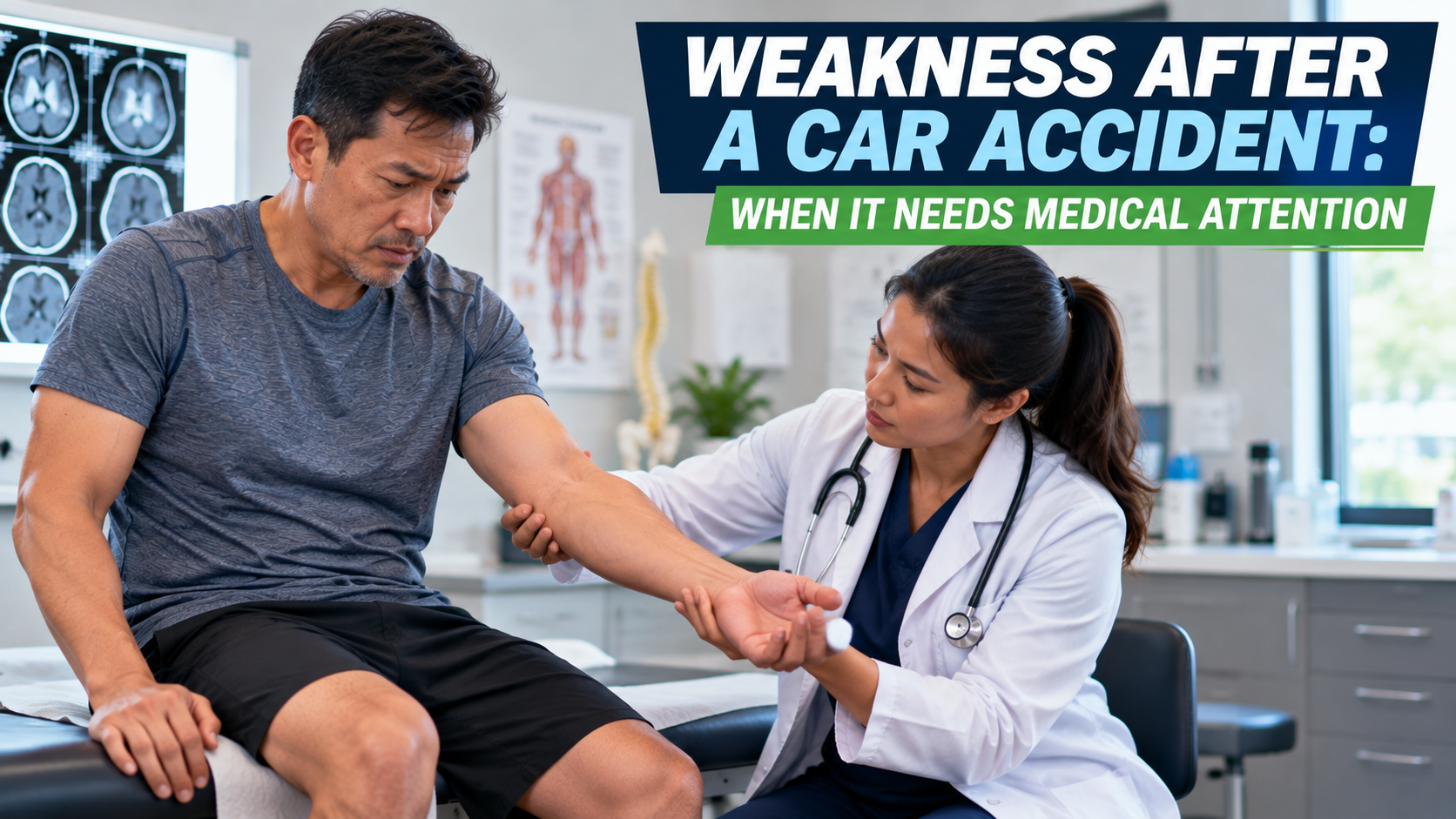
Weakness After a Car Accident: When It Needs Medical Attention
Weakness after a car accident may mean trouble gripping, lifting an arm, standing, walking, or moving a leg normally. Sometimes painful muscles or joints limit movement, but new loss of strength can also signal a nerve, spinal cord, brain, bone, or blood-circulation injury. Sudden, one-sided, or worsening weakness after a collision requires emergency medical evaluation—especially with facial drooping, speech changes, severe headache, or difficulty walking.
What Causes Muscle Weakness After a Car Accident?
The forces of a collision may injure multiple areas, including the neck, back, shoulders, arms, hips, or legs. Possible explanations include:
- Pain-limited movement: An injured muscle or joint may feel weak because trying to move it hurts.
- Muscle or tendon damage: Strains and tears may reduce movement and functional strength.
- Peripheral nerve injury: Trauma can injure nerves that control sensation and muscle movement.
- Pinched or irritated spinal nerve: Some neck or back injuries may cause arm or leg weakness.
- Brain or spinal cord injury: Neurological trauma can produce significant or progressive loss of strength.
- Fracture or vascular injury: Bone or blood-flow problems can impair safe limb function.
Related symptoms may include numbness and tingling after a car accident, arm pain after a car accident, or back pain after a car accident. These overlapping symptoms do not establish the diagnosis.
When Is Weakness After a Crash an Emergency?
Call 911 or seek emergency care immediately for sudden or rapidly worsening weakness, weakness affecting one side, facial drooping, trouble speaking, loss of balance or ability to walk, new confusion, seizures, or severe headache with neurological symptoms. Also seek emergency care for loss of bowel or bladder control, numbness in the groin or saddle area, or new significant weakness after neck or back trauma.
A cold, pale, or blue arm or leg with numbness or weakness can indicate impaired circulation and also needs emergency assessment. Do not wait for a chiropractic visit or attempt forceful stretching or spinal manipulation when these signs are present.
Is Weakness Different From Fatigue or Soreness?
Yes. Fatigue means low energy or exhaustion, while true muscle weakness means difficulty generating expected strength. Pain can also prevent an otherwise strong muscle from moving comfortably. A clinician may need to test individual muscle groups, reflexes, and sensation to distinguish these experiences.
Explore fatigue after a car accident and full body soreness after a car accident to understand related but different complaints.
Can a Neck or Back Injury Cause Weak Arms or Legs?
Yes. A nerve problem affecting the cervical or lumbar spine can sometimes cause weakness along with radiating pain, tingling, or sensory changes. More extensive spinal cord injuries may affect walking, hand coordination, or bladder and bowel function. These symptoms require medical evaluation, with urgent attention for progressive or widespread deficits.
For other movement-related problems, see difficulty turning your head after a car accident, when sciatica needs medical evaluation, and difficulty walking after a car accident.
Why Does My Arm Feel Weak After a Car Accident?
Arm weakness may occur with a shoulder or elbow injury, painful muscle strain, peripheral nerve damage, or a neck-related neurological problem. A person may have trouble reaching, gripping, carrying, or lifting. The pattern and severity of weakness, associated numbness, and examination findings help clinicians determine whether urgent testing is needed.
For functional examples, read difficulty lifting after a car accident, difficulty carrying groceries after a car accident, and difficulty opening heavy doors after a car accident. These resources are not substitutes for evaluating true loss of strength.
Why Does My Leg Feel Weak After a Collision?
Leg weakness can result from pain-limited motion, hip or knee injury, nerve damage, or a problem involving the lower back or spinal cord. Depending on the cause, a person may have difficulty bearing weight, rising from a chair, or climbing steps. New or progressive neurological weakness should be medically evaluated promptly.
Related guidance includes difficulty standing after a car accident, difficulty climbing stairs after a car accident, and difficulty getting up from the floor after a car accident.
Can Weakness Appear Hours or Days After a Car Accident?
Yes. Some symptoms may not become noticeable until later, or they may worsen over time. However, new weakness is not routine delayed soreness. Seek urgent evaluation rather than assuming it will go away with rest. Learn about delayed pain after a car accident while recognizing that new neurological symptoms require separate medical attention.
How Do Doctors Evaluate Weakness Following a Car Crash?
A clinician may review the accident mechanism and symptom timing, then assess muscle strength, reflexes, sensation, coordination, balance, circulation, joint motion, and spinal or limb tenderness. Based on those findings, imaging, neurological testing, or emergency or specialist referral may be needed. Pain-limited movement and neurological loss of strength are treated differently.
Bring a symptom timeline and relevant medical records. The guides on medical documentation after an injury and questions to ask at a personal injury care visit may help with nonemergency follow-up.
Should You Exercise or Stretch a Weak Arm or Leg?
Do not force exercise, resistance training, or spinal manipulation through unexplained new weakness, especially if there is worsening numbness, instability, or loss of coordination. After serious injury has been ruled out or managed, activity can follow the treating clinician’s diagnosis and recommendations. See home exercise safety and when to stop and returning to activity after an injury.
Can Chiropractic Rehabilitation Help With Post-Accident Weakness?
Chiropractic care is not a substitute for emergency neurological evaluation. If testing excludes serious neurological, structural, and vascular causes, appropriate musculoskeletal rehabilitation may address pain, movement restrictions, and gradual restoration of function. An individualized rehabilitation care plan can use recovery milestones rather than a guaranteed timeline.
How T98 Rehab Can Help After an Auto Accident in Austin
Once emergency or serious medical causes have been addressed, T98 Rehab may assess appropriate muscle, joint, and spine-related complaints and coordinate referrals when necessary. Patients can review how to choose an auto accident chiropractor in Austin when considering follow-up care. Sudden or progressive weakness calls for medical evaluation first.
Frequently Asked Questions
Is feeling weak after a car accident normal?
General tiredness or pain-limited movement can occur after injury, but new or persistent loss of strength needs assessment. Sudden, one-sided, or worsening weakness is an emergency warning sign.
Can a pinched nerve after a crash cause weakness?
Yes. Nerve injury or compression can sometimes affect muscle strength, reflexes, and sensation. A clinician must evaluate the location and severity of symptoms.
Why can’t I grip or lift things after my accident?
Possible causes include pain, tendon or muscle injury, joint injury, or nerve problems. If weakness is new or significant, seek medical evaluation before attempting strengthening exercises.
Can car accident leg weakness make walking difficult?
Yes. Muscle, joint, or neurological problems may affect gait and balance. New inability to walk or rapidly worsening leg strength requires emergency assessment.
Should I see a chiropractor first for sudden weakness?
No. Sudden or progressive weakness after trauma needs appropriate medical evaluation first. Musculoskeletal rehabilitation may be considered later based on the diagnosis.
Related T98 Rehab Resources
- Numbness and Tingling After a Car Accident
- Difficulty Walking After a Car Accident
- When Sciatica Needs Medical Evaluation
Sources
MedlinePlus — Weakness, U.S. National Library of Medicine.
Centers for Disease Control and Prevention — Stroke Signs and Symptoms.
American Academy of Orthopaedic Surgeons — OrthoInfo, patient information on spine and nerve injuries.
Medical Disclaimer
This article is for educational purposes only and does not provide a diagnosis or replace individualized or emergency medical care. T98 Rehab does not provide emergency services or guarantee recovery outcomes. Seek emergency evaluation for sudden or worsening weakness, facial drooping, speech changes, bowel or bladder changes, saddle numbness, major neurological changes, or signs of impaired circulation after a collision.