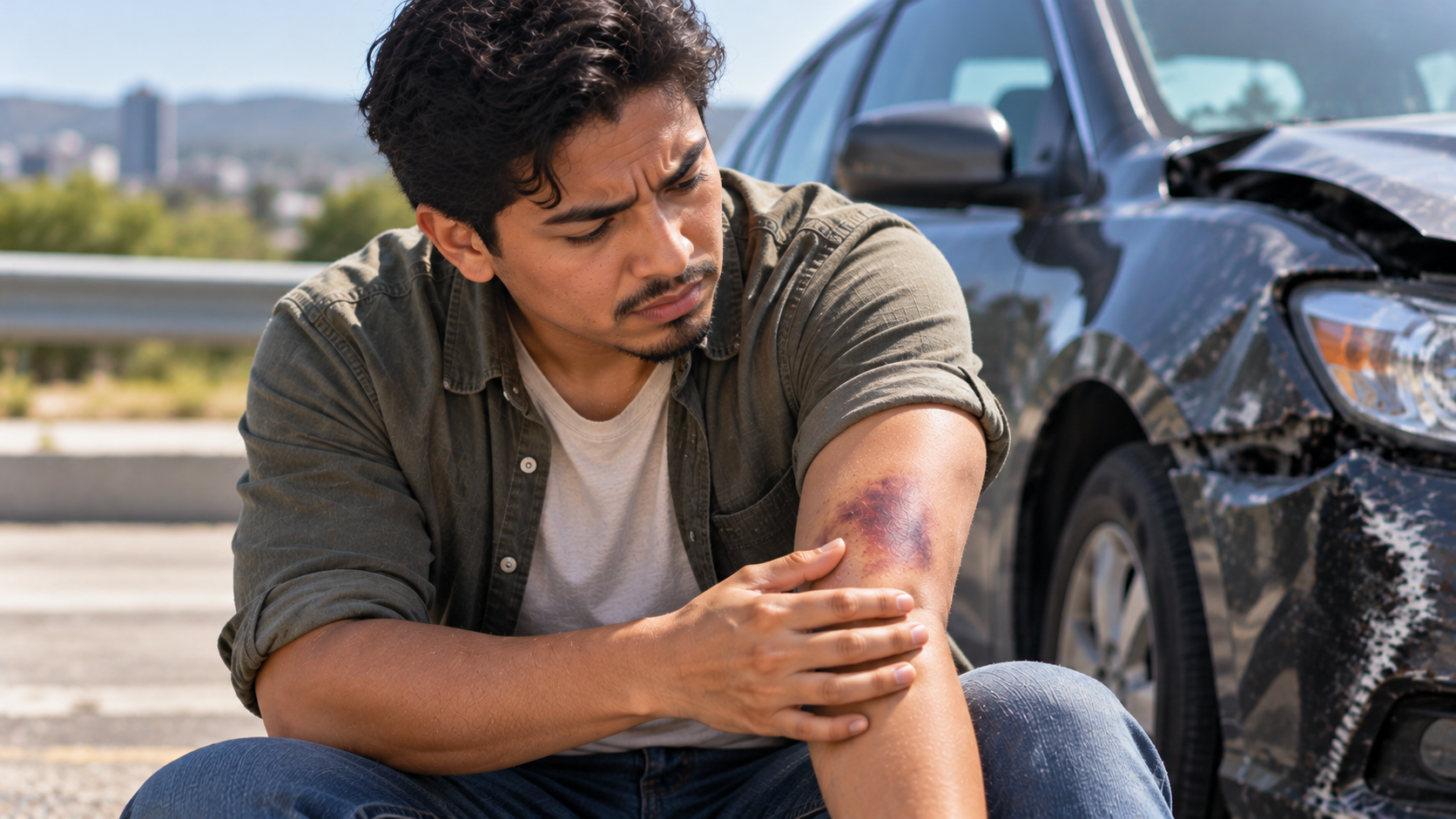
Bruising After a Car Accident: What It Can Mean
Bruising after a car accident may appear where a seat belt, airbag, steering wheel, door, or dashboard pressed against the body. These marks develop when small blood vessels leak into surrounding tissue. Although many bruises involve minor soft-tissue injury, large, rapidly spreading, severely painful, or chest and abdominal bruises can accompany serious internal injuries. New bruising after a collision deserves assessment based on its location, severity, and associated symptoms.
Why Do Bruises Appear After a Car Accident?
Impact and restraint forces can cause contusions (bruises) and other injuries. Common causes include:
- Seat belt pressure: The shoulder or lap belt may leave marks across the chest, abdomen, or pelvis.
- Airbag contact: Rapid deployment can cause bruising, abrasions, or superficial irritation.
- Direct impact: Contact with a steering wheel, dashboard, door, or console can bruise muscles and skin.
- Joint or limb trauma: Falls, twists, or blunt force may cause swelling and bruises around arms, knees, ankles, or other joints.
- Medication or bleeding factors: Blood-thinning medicines and certain medical conditions can affect the extent of bruising.
Bruising often occurs alongside swelling after a car accident, full body soreness after a car accident, or muscle spasms after a car accident.
When Is Bruising After a Crash an Emergency?
Seek emergency medical care for bruising with severe chest or abdominal pain, difficulty breathing, fainting, confusion, rapid enlargement or severe swelling, a tight and extremely painful limb, new weakness or numbness, or a cold, pale, or blue hand or foot. Severe pain out of proportion to the injury can signal acute compartment syndrome. A significant collision may also cause internal bleeding even when little external bruising is visible.
Review pain when breathing after a car accident, weakness after a car accident, and numbness and tingling after a car accident for related red flags. Do not schedule routine chiropractic care instead of emergency evaluation.
What Do Seat Belt Bruises on the Chest or Stomach Mean?
A seat belt can leave a distinct mark during a crash, often called a seat belt sign. Although seat belts protect occupants from severe injuries, abdominal bruising after significant blunt trauma can be associated with injuries to internal organs or the bowel. Chest bruising may coexist with rib or other chest injuries. Seat belt marks plus abdominal pain, tenderness, vomiting, dizziness, or fainting require prompt emergency evaluation, and significant abdominal seat belt bruising merits medical assessment even when initial symptoms seem mild.
Learn more about seat belt injuries after a car accident and pelvic pain after a car accident.
Can Airbag Deployment Cause Bruises or Burns?
Yes. Airbag contact may cause bruises, scratches, or superficial burns. Persistent eye pain, vision changes, facial injury, or substantial skin injury needs medical evaluation. See facial pain after a car accident, vision problems after a car accident, and burning pain after a car accident.
Why Do Bruises Show Up the Next Day?
Bruises sometimes become visible hours or days after tissue injury as blood spreads and skin discoloration evolves. Delayed appearance does not determine whether the underlying injury is serious. Increasing swelling, spreading pain, weakness, or substantial loss of movement should prompt evaluation. Read about delayed pain after a car accident.
What Do Purple, Blue, Green, or Yellow Bruises Mean?
Bruises often change color as the body breaks down blood beneath the skin. Blue or purple may gradually shift toward green or yellow. Color alone cannot accurately date a bruise or determine injury severity. Location, size, the force of impact, pain, swelling, and other symptoms are more useful to a clinician.
Why Are My Arms or Legs Bruised After a Crash?
Direct impact may injure muscles or joints in an arm or leg, sometimes causing pain, stiffness, or difficulty bearing weight or gripping objects. Relevant guides include arm pain after a car accident, wrist and hand pain after a car accident, calf pain after a car accident, and ankle and foot pain after a car accident.
Unexplained, painful, one-sided leg swelling also requires prompt medical attention because a blood clot is another possible cause. If chest pain or breathing difficulty accompanies leg swelling, seek emergency care.
Can a Large Bruise Mean a Fracture or Internal Injury?
Sometimes. Severe bruising with deformity, inability to use a limb, marked tenderness, or significant swelling can accompany a fracture or serious soft-tissue injury. External bruising cannot reliably exclude deeper damage. The same principle applies to chest, abdominal, and pelvic trauma. Learn about difficulty walking after a car accident and difficulty standing after a car accident when movement is affected.
How Do Doctors Evaluate Bruising After an Auto Accident?
A healthcare professional may review the crash mechanism, seat belt or airbag contact, medication use, bruising pattern, pain, swelling, and functional limitations. Examination may include checking the skin, bones, joints, abdominal tenderness, circulation, and neurological function. Imaging or additional testing may be needed when fracture, internal injury, or significant bleeding is suspected.
For follow-up preparation, see questions to ask at a personal injury care visit and medical documentation after an injury.
Should You Ice, Massage, or Exercise a Bruised Area?
For a medically assessed minor contusion, a clinician may recommend protecting the area, carefully applied cold therapy, or modifying activity. Avoid aggressive massage, forceful stretching, or heavy exercise if the extent of injury is unknown. Do not apply tight compression over severe swelling or a limb with altered circulation. Use home exercise safety guidelines and returning to activity after an injury once medically cleared.
How Can You Document Bruising for a Medical Visit?
Photographs over time can show how visible bruises change, but images are not a substitute for examination. Note the date, affected area, pain level, swelling, and any changes in walking, lifting, sleeping, or work. If activity is affected, consider related guides on difficulty lifting after a car accident and difficulty sleeping after a car accident.
Chiropractic Rehabilitation After Bruising Has Been Evaluated
Chiropractic rehabilitation does not replace emergency evaluation for internal bleeding, vascular problems, fractures, or serious chest and abdominal injury. Once dangerous conditions are excluded or treated, T98 Rehab may assess appropriate musculoskeletal pain, stiffness, and movement limitations that accompany a bruise. An individualized rehabilitation care plan may focus on mobility and function, with recovery milestones based on clinical findings rather than promises of recovery.
When to Contact T98 Rehab in Austin
If urgent medical conditions have been addressed and neck, back, or joint symptoms persist, T98 Rehab may be able to evaluate suitable musculoskeletal injuries. Patients can review when to see a chiropractor after a car accident and how to choose an auto accident chiropractor in Austin. New severe bruising or symptoms suggesting deeper injury should be medically evaluated first.
Frequently Asked Questions
Is bruising normal after a car accident?
Bruising can occur from seat belts, airbags, or direct impact, but extensive or rapidly expanding bruising and bruising with severe pain or other warning signs warrant evaluation.
Can bruises appear a day or two after a crash?
Yes. Discoloration may develop over time. New or worsening symptoms should still be assessed.
Is a seat belt bruise on my stomach dangerous?
It can be a sign of deeper injury, especially after high-force impact or with abdominal pain and tenderness. Significant abdominal seat belt bruising should receive medical assessment.
Does bruise color show how old an injury is?
No. Color can change during healing but cannot reliably determine the precise age or seriousness of a bruise.
Can a chiropractor treat bruising after a car accident?
Conservative rehabilitation may address associated musculoskeletal symptoms after serious injuries have been ruled out. Chiropractic care is not a substitute for evaluation of internal bleeding, fractures, or vascular injury.
Related T98 Rehab Resources
- Seat Belt Injuries After a Car Accident
- Swelling After a Car Accident
- Full Body Soreness After a Car Accident
Sources
MedlinePlus — Bruises, U.S. National Library of Medicine.
National Highway Traffic Safety Administration — Seat Belts.
MedlinePlus — Abdominal Trauma.
Medical Disclaimer
This article is educational and does not diagnose injuries or replace individualized medical or emergency care. T98 Rehab does not provide emergency services or guarantee treatment outcomes. Seek emergency care for significant abdominal or chest symptoms, rapidly expanding bruising, severe swelling, cold or discolored limbs, breathing difficulty, fainting, or other serious symptoms after a collision.