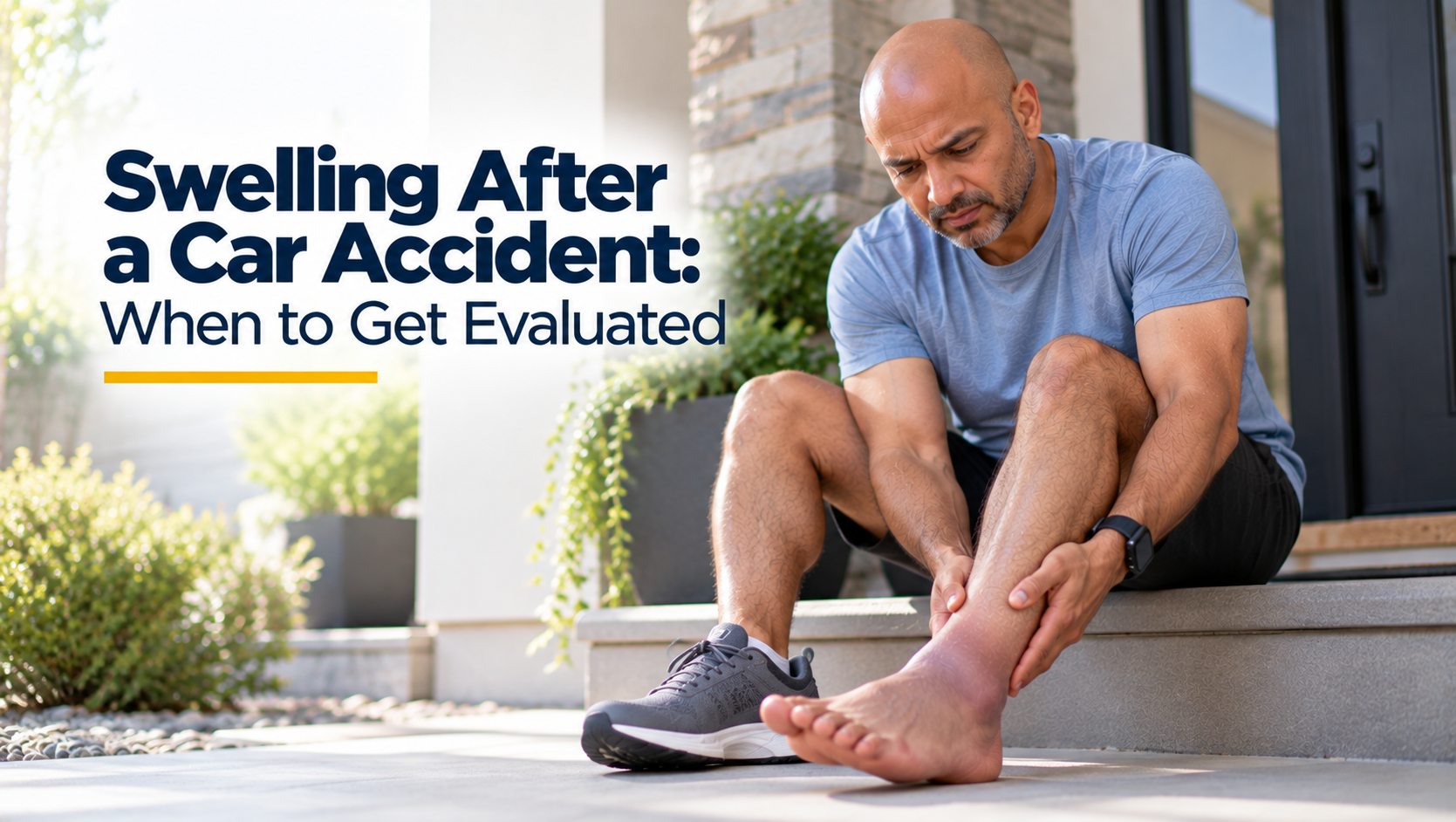
Swelling After a Car Accident: When to Get Evaluated
Swelling after a car accident may affect the knees, ankles, hands, face, or other areas injured during a collision. Swelling can develop when tissues are bruised, stretched, or inflamed, but it can also signal a fracture, internal bleeding, blood vessel damage, or a blood clot. The location, timing, severity, and accompanying symptoms matter. Rapidly increasing swelling, severe pain, a cold or discolored limb, breathing difficulty, or chest pain requires immediate medical evaluation.
Why Does Swelling Happen After a Car Accident?
Impact and sudden forces can damage small blood vessels and surrounding tissues. Fluid and blood may collect near the injured area, producing puffiness, stiffness, or tenderness. Possible causes include:
- Bruises (contusions): Blood leaking into tissue may cause discoloration and localized swelling.
- Sprains or strains: Injured ligaments, muscles, or tendons may become inflamed and painful.
- Joint injuries: Knee, ankle, wrist, or other joint trauma may lead to swelling and restricted movement.
- Fractures: Broken bones may cause marked tenderness, deformity, bruising, and swelling.
- Bleeding or vascular injury: Significant trauma can injure blood vessels, affecting circulation.
- Blood clots: A painful swollen leg, particularly with warmth or redness, may indicate deep vein thrombosis (DVT), which needs prompt medical assessment.
Patients can also read about bruising after a car accident, full body soreness after a car accident, and delayed pain after a car accident for related symptoms.
When Is Swelling After a Crash an Emergency?
Seek emergency care if swelling is rapidly expanding; an injured area is extremely painful, tight, or deformed; or an arm or leg becomes cold, pale, blue, numb, or weak. Severe pain disproportionate to the visible injury, especially with a tense swollen limb, may indicate acute compartment syndrome, which is a surgical emergency. Difficulty breathing, chest pain, fainting, or coughing blood can indicate a serious medical emergency, including a pulmonary embolism.
Severe swelling following a high-impact collision, major head or neck injury, or signs of internal bleeding also requires emergency evaluation. Do not attempt forceful massage, stretching, compression, or chiropractic manipulation before potentially serious injuries are evaluated.
Can Swelling Appear Hours or Days After a Car Accident?
Yes. Inflammation and bruising can become more noticeable over the hours following trauma. However, delayed swelling is not always harmless. New, progressive, or unexplained swelling should be assessed, especially when accompanied by increasing pain, altered sensation, weakness, or changes in skin temperature or color.
For injury timing and related symptoms, see delayed pain after a car accident and numbness and tingling after a car accident.
Why Is My Leg or Calf Swollen After a Car Accident?
A swollen leg may result from a bruise, strain, fracture, or other injury. However, one-sided calf or leg swelling with pain, warmth, or redness can also indicate a blood clot. DVT requires prompt medical assessment; if symptoms occur with chest pain or shortness of breath, seek emergency care immediately. Do not massage a leg if a blood clot is suspected.
Read calf pain after a car accident: causes and red flags, ankle and foot pain after a car accident, and difficulty walking after a car accident for relevant lower-extremity symptoms.
What Does Knee or Ankle Swelling Mean After a Collision?
Swelling around a joint may involve a sprain, cartilage or ligament injury, fracture, or bleeding into the joint. Pain when bearing weight, reduced motion, instability, or significant tenderness calls for evaluation before exercise. Related functional concerns include difficulty climbing stairs after a car accident, pain when squatting after a car accident, and difficulty kneeling after a car accident.
Can Hand, Wrist, or Arm Swelling Follow an Airbag or Steering-Wheel Impact?
Yes. Direct force can cause bruising, sprains, joint injuries, or fractures involving the hands and upper limbs. Significant swelling, numbness, abnormal finger color, or inability to move the limb normally needs medical assessment. See wrist and hand pain after a car accident, elbow pain after a car accident, and arm pain after a car accident.
Is Facial or Neck Swelling After a Car Accident Serious?
Facial swelling can follow impact, dental trauma, or facial-bone injury. Rapidly increasing swelling in the neck or throat, particularly with voice changes, breathing difficulty, or trouble swallowing, is an emergency. Eye pain or vision changes also deserve prompt evaluation. Related guides include facial pain after a car accident, difficulty swallowing after a car accident, and vision problems after a car accident.
Can Seat Belt Injuries Cause Swelling or Internal Injury?
Seat belts can produce bruising and localized swelling where the restraint contacts the body. However, a seat belt mark with significant abdominal pain, increasing swelling, tenderness, dizziness, or fainting can indicate an internal injury requiring emergency assessment. External bruising does not reliably show the severity of internal trauma. Read seat belt injuries after a car accident and pain when breathing after a car accident for additional warning signs.
How Do Doctors Evaluate Swelling Following a Car Crash?
A healthcare professional may ask about the collision, symptom onset, how quickly swelling progressed, and whether pain, numbness, or weakness is present. Assessment can include examining skin, bruising, tenderness, joint stability, motion, pulses, limb temperature, sensation, and strength. Imaging may be needed for suspected fractures or joint injuries; ultrasound or other tests may be considered for possible blood clots or vascular injuries.
For nonemergency follow-up, medical documentation after an injury and questions to ask a personal injury care provider can help patients explain their symptoms clearly.
Should You Use Ice, Compression, or Exercise for Swelling?
Management depends on the cause. In some uncomplicated soft-tissue injuries, a clinician may recommend protecting the area, appropriate cold therapy, or limited elevation. Do not apply tight compression to a limb with suspected circulation problems, severe unexplained swelling, or possible compartment syndrome. Do not stretch or exercise aggressively through major swelling before the injury has been assessed.
Learn more about home exercise safety and when to stop and returning to activity after an injury when your treating clinician has cleared activity.
Chiropractic Rehabilitation After Swelling Has Been Evaluated
Chiropractic rehabilitation cannot replace treatment for fractures, blood clots, vascular injury, or internal bleeding. Once urgent conditions are excluded or medically managed, T98 Rehab may evaluate suitable musculoskeletal complaints, including stiffness or limited movement following an injury. An individualized rehabilitation care plan can address mobility and function with appropriate recovery milestones.
How T98 Rehab Can Help After a Car Accident in Austin
For patients whose urgent medical concerns have already been assessed, T98 Rehab may help evaluate musculoskeletal pain, joint mobility, and activity limitations. Read when to see a chiropractor after a car accident and how to choose an auto accident chiropractor in Austin. Rapid swelling, suspected blood clots, circulation changes, or severe traumatic injuries require medical care first.
Frequently Asked Questions
Is swelling normal after a car accident?
Mild swelling can occur with bruises and sprains, but rapidly worsening, severe, or unexplained swelling should be evaluated. Swelling with breathing difficulty, a cold limb, or major neurological symptoms requires emergency care.
Can swelling start the day after an accident?
Yes. Inflammation may develop over time. New or worsening swelling should be assessed, especially when accompanied by significant pain, weakness, or circulation changes.
Why is only one leg swollen after a car accident?
A localized injury may cause swelling, but one-sided leg swelling can also indicate DVT. Prompt medical assessment is important, especially with calf pain, warmth, or redness.
Should I massage a swollen calf after a crash?
Do not massage a swollen calf if a blood clot is possible. Seek medical assessment first.
Can I see a chiropractor for swelling after an accident?
Persistent musculoskeletal symptoms may be appropriate for rehabilitation after serious injuries have been excluded. Chiropractic care is not a substitute for emergency evaluation or blood clot and fracture management.
Related T98 Rehab Resources
- Calf Pain After a Car Accident: Causes and Red Flags
- Bruising After a Car Accident
- Seat Belt Injuries After a Car Accident
Sources
MedlinePlus — Swelling, U.S. National Library of Medicine.
Centers for Disease Control and Prevention — About Blood Clots.
American Academy of Orthopaedic Surgeons — OrthoInfo, information on sprains and fractures.
Medical Disclaimer
This article is for general educational purposes and does not provide an individual diagnosis or replace personalized medical or emergency care. T98 Rehab does not provide emergency services or guarantee treatment outcomes. Seek emergency help for rapidly increasing swelling, severe pain with a tight limb, loss of circulation, chest pain, breathing difficulty, or other serious symptoms after trauma.