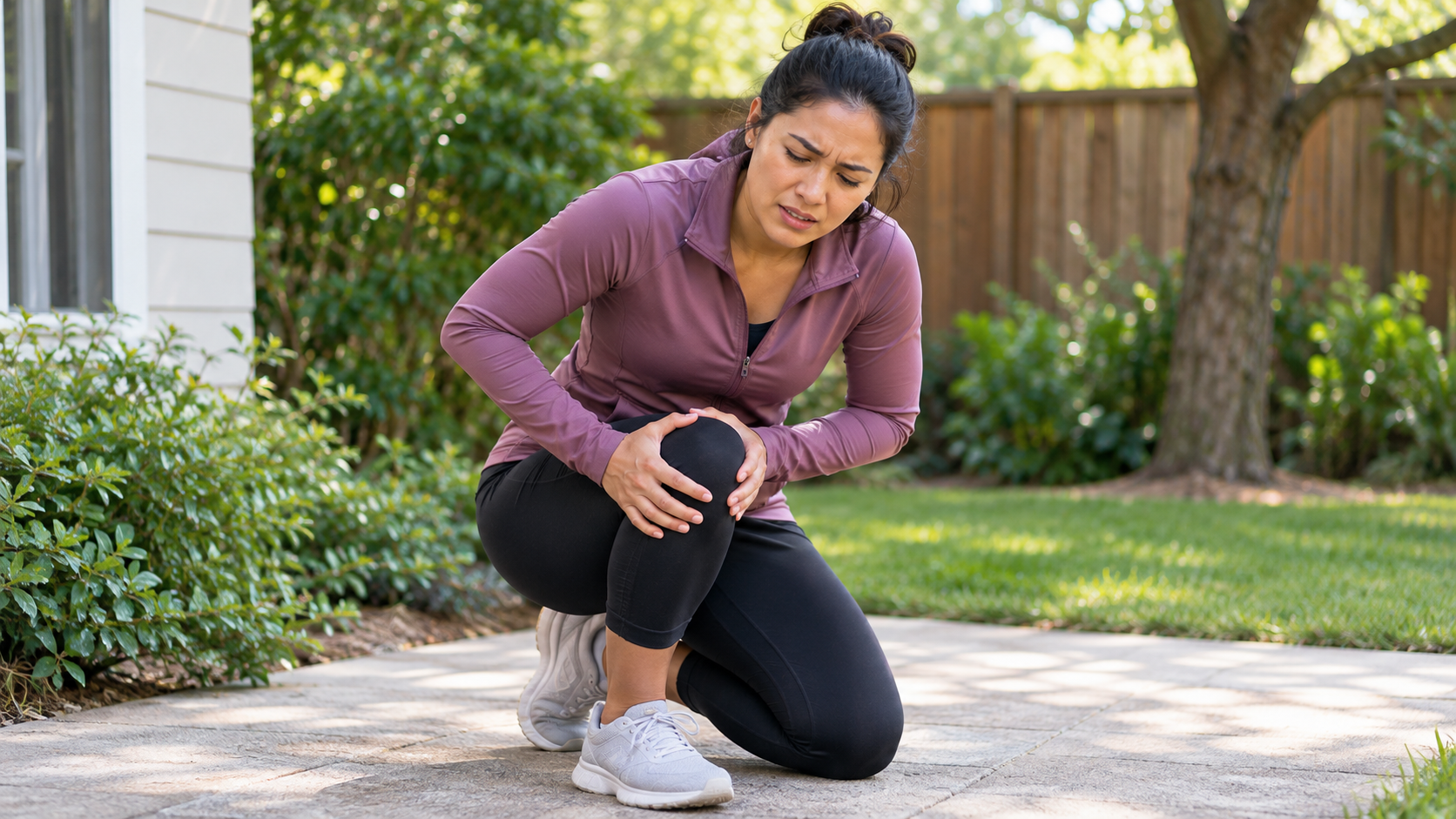
Difficulty kneeling after a car accident can result from knee bruising, swelling, joint irritation, muscle weakness, or pain in other parts of the lower body. Kneeling places direct pressure on the front of the knee and requires coordinated movement through the hips, knees, ankles, and trunk.
Why Can Kneeling Hurt?
- Direct impact with the dashboard or interior
- Bruising or swelling around the knee
- Joint or soft-tissue irritation
- Reduced knee flexion
- Hip or ankle limitations
- Weakness or protective guarding
Symptoms to Report
Tell your clinician about swelling, locking, catching, instability, inability to bear weight, numbness, or a feeling that the knee gives way. Also note whether the problem is pressure on the kneecap, bending deeply, or getting back up from the floor.
When Should You Seek Prompt Care?
Prompt medical evaluation is appropriate for major swelling, deformity, inability to bear weight, a locked knee, significant instability, or severe pain after trauma. New leg weakness or neurological symptoms also require appropriate assessment.
How Is the Problem Evaluated?
A clinician may assess knee motion, strength, swelling, tenderness, stability, gait, and related hip or ankle function. Imaging may be considered depending on the mechanism and examination.
Returning to Kneeling
Do not repeatedly force a painful kneeling position to test recovery. When appropriate, rehabilitation can progressively restore mobility, strength, balance, and tolerance for floor-level tasks.
How T98 Rehab Fits Into Care
T98 Rehab can assess lower-body musculoskeletal limitations after an auto accident and develop functional rehabilitation goals based on individual findings.
Frequently Asked Questions
Why can I walk but not kneel? Kneeling requires deeper knee motion and direct pressure that walking does not.
Should I use padding? Padding may reduce direct pressure in some cases, but persistent post-traumatic pain should still be evaluated.
Can swelling limit bending? Yes. Swelling can restrict motion and increase discomfort.
Related Patient Resources
This article is educational and is not a diagnosis or substitute for medical care.