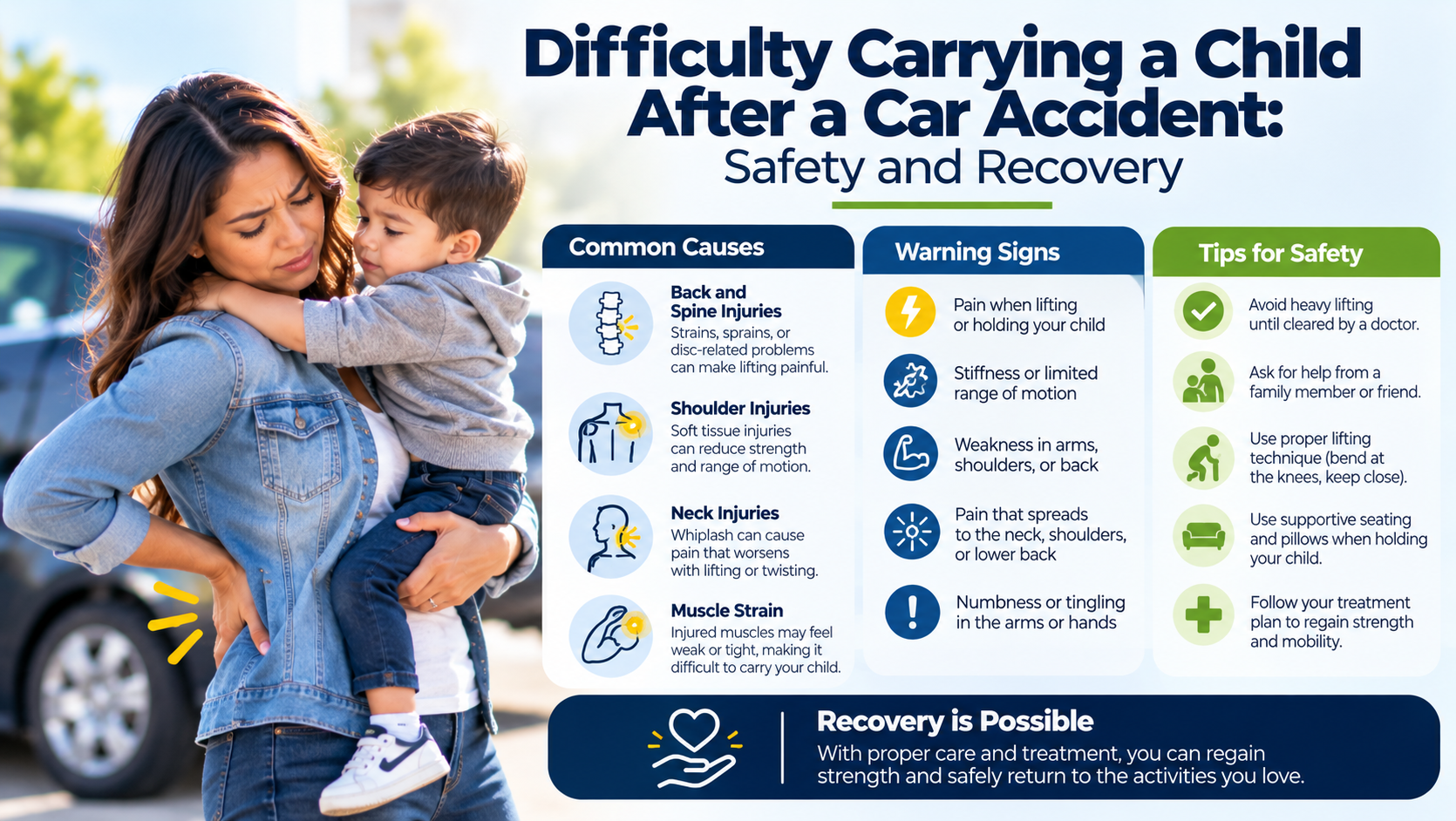
Difficulty Carrying a Child After a Car Accident: Safety and Recovery
Difficulty carrying a child after a car accident can result from pain or weakness in the back, neck, shoulders, arms, wrists, hips, or legs. Carrying a child is different from lifting a fixed object because the load can shift unexpectedly and often requires prolonged holding, walking, reaching, and bending. If pain, weakness, numbness, dizziness, or poor balance makes the task unsafe, avoid carrying the child until the problem has been appropriately evaluated.
Why Can Carrying a Child Be Difficult After a Crash?
Several movements happen at the same time when you pick up and carry a child.
Possible limitations include:
- Lower back pain or hip pain while lifting from a crib, floor, or car seat
- Shoulder or arm pain while holding the child
- Wrist or hand pain that affects grip
- Neck pain when looking down or turning
- Leg pain or weakness while walking with added weight
- Reduced endurance during prolonged holding
- Dizziness or balance problems that make carrying unsafe
The child’s weight, carrying position, and how often lifting is required can all affect symptoms.
When Should You Avoid Carrying a Child?
Do not carry a child if you cannot maintain a secure grip, feel significantly unsteady, have major arm or leg weakness, or experience severe pain that interferes with control.
Seek prompt medical assessment for new weakness, significant numbness, severe dizziness or inability to bear weight after a crash. New bladder or bowel changes, numbness around the groin, rapidly worsening weakness or loss of coordination require emergency assessment. Call 911 for severe symptoms or if you cannot reach emergency care safely.
If symptoms begin while you are holding a child, stop walking and ask another capable adult to take over when possible. Do not continue on stairs or keep carrying while your grip or balance is failing. Arrange temporary help rather than testing your strength with the child.
Why Can Lifting From a Crib or Car Seat Be Especially Difficult?
These tasks often combine reaching, bending, twisting, and lifting with the child positioned away from your body. That increases the physical demand compared with lifting an object from waist height.
Discuss safe lifting with your clinician using the actual crib and car-seat tasks you need to manage. A movement that is comfortable without added weight may still be unsafe with a child who moves unexpectedly. General lifting advice does not establish that you are ready to resume caregiving transfers.
How Can Caregiving Tasks Be Modified Temporarily?
When medically appropriate, another adult may handle heavier or awkward transfers while you recover. Keeping needed items within comfortable reach and avoiding unnecessary carrying distances may also reduce strain.
Do not improvise a carrying technique that compromises the child’s safety. Keep using the crib, car seat and any carrying equipment according to the manufacturer’s instructions. A different carrying position or device does not remove the need for reliable grip, balance and movement control.
Tell your clinician if getting up from the floor or squatting is difficult too. Those movements may be part of picking up toys or caring for a child at floor level, and should be considered separately from carrying.
How Is This Limitation Evaluated?
A clinician may assess grip, shoulder and arm strength, spinal and hip movement, leg strength, balance, and the specific lifting positions that reproduce symptoms. The goal is to identify the injured region and determine what activities are currently safe.
At your first chiropractic visit, describe the child’s weight, how long you usually hold them and which lifting positions cause symptoms. Bring relevant medical records and discuss questions to ask your chiropractor, including whether you need another medical assessment or specific lifting restrictions.
Carrying a Child Again: Recovery and Rehab
Rehabilitation may progress from basic mobility and strength to lifting, holding, carrying, and walking tasks that reflect caregiving demands. Progression should consider both the patient’s safety and the need to securely control the child.
Your treatment plan should set practical goals for lifting, holding and moving safely. Injury rehab may begin with supervised movement and suitable home exercises. Do not use the child as an exercise weight or as the first test of whether strength has returned.
Track recovery progress through steadier movement, secure grip and improved endurance. The clinician should guide returning to activity according to your examination and caregiving needs. Being able to lift once does not necessarily mean you can safely carry for a long time or handle an unexpected shift in weight.
How T98 Rehab Can Help
T98 Rehab can evaluate musculoskeletal limitations that interfere with caregiving after an auto accident and develop rehabilitation around practical family activities. Significant neurological symptoms, suspected fractures, or severe balance problems require appropriate medical evaluation first.
When appropriate, chiropractic care may be part of a broader rehabilitation plan. It does not replace medical evaluation for serious weakness, a suspected fracture or severe balance problems. After urgent concerns are addressed, book an appointment if ongoing symptoms limit safe caregiving.
Frequently Asked Questions
Why is carrying my child harder than carrying a grocery bag?
A child can move unexpectedly and may need to be held for longer periods, increasing demands on grip, balance, endurance, and trunk control.
Can wrist pain make carrying a baby unsafe?
Yes. Pain or weakness that reduces secure grip can create a safety concern.
Should I switch the child to my uninjured side?
Not automatically. One-sided carrying can change demands on the back, shoulder, and hip. The safest approach depends on the injury.
When can I resume normal lifting and carrying?
Return should be based on safe strength, movement, balance, and control rather than a fixed timeline.
When should I contact T98 Rehab?
After urgent injuries have been excluded, contact T98 Rehab if musculoskeletal symptoms continue to interfere with safe caregiving activities.
Sources
- NHS: Back pain
- NHS: Shoulder pain
- Health and Safety Executive: Reducing manual handling risks — general handling principles, not child-specific carrying instructions or medical clearance.
Medical Disclaimer
This article provides general education and does not diagnose an injury or replace an individual examination, treatment plan or emergency care. A clinician should assess your ability to lift and carry safely after an accident. Advice here concerns the injured caregiver and does not evaluate a child’s health. Seek appropriate medical care for an injured child. Call 911 for an emergency.