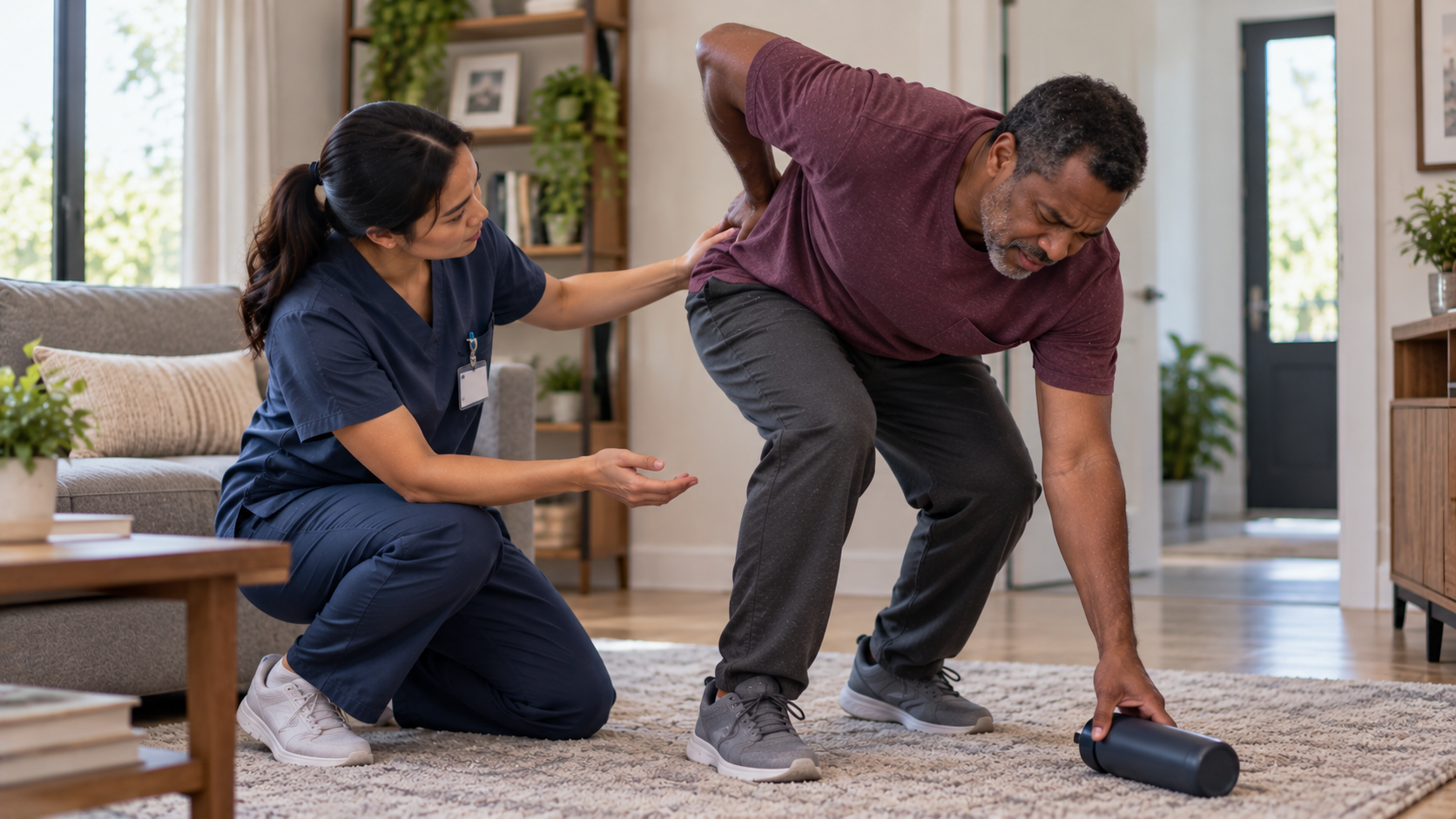
Difficulty Bending After a Car Accident: Causes and Recovery
Difficulty bending after a car accident can result from lower back pain, hip or pelvic injury, muscle strain, joint stiffness, bruising, or protective muscle guarding. Bending is used for dressing, lifting, sitting, getting into a vehicle, and many other daily tasks, so even a moderate restriction can affect normal function. Severe pain, major weakness or numbness, loss of bladder or bowel control, or inability to bear weight requires prompt medical evaluation.
Why Can Bending Hurt After a Crash?
Forward bending requires coordinated movement through the hips, pelvis, and spine. A collision can make one or several of these areas painful or stiff.
- Lower-back muscle or ligament injury
- Hip or pelvic pain
- Muscle spasm or guarding
- Bruising and soft-tissue soreness
- Joint stiffness
- Nerve-related symptoms
- Pain from another injured area that changes normal movement
The location and type of pain help guide the evaluation. Tell your provider if twisting or lifting also causes symptoms, because these tasks place different demands on the body.
When Is Difficulty Bending a Warning Sign?
Seek emergency assessment for new or rapidly worsening leg weakness, major numbness, new loss of bladder or bowel control, or numbness around the groin or saddle area. Severe pain after major trauma, inability to bear weight, or significant abdominal or pelvic symptoms also requires urgent medical evaluation. Call 911 for potentially life-threatening symptoms.
Do not repeatedly force bending when a fracture or significant neurological injury has not been excluded.
How Is Restricted Bending Evaluated?
A clinician may assess spinal and hip motion, strength, sensation, reflexes, walking, tenderness, and which movements reproduce symptoms. The pelvis, knees, and other regions may also be considered because normal bending uses more than the lower back.
Imaging may be appropriate when the history or examination suggests fracture, significant neurological involvement, or another structural problem. At your first chiropractic visit, describe the collision, symptom timing, and existing restrictions. Bring available medical records and emergency-care instructions.
Should You Stretch Through the Stiffness?
Gentle movement can be appropriate for many musculoskeletal injuries, but aggressive stretching through sharp, radiating, or worsening pain is not a good substitute for evaluation. The right exercises depend on the injured tissues and stage of recovery. Follow individualized home exercise safety advice rather than copying a stretch simply because someone else found it helpful.
How Does Bending Affect Daily Activities?
Restricted bending can interfere with tying your shoes, getting dressed, picking up objects, loading a vehicle, and household chores. Tracking which activities are limited gives useful information about functional recovery. Explain whether you need help, whether a light object changes symptoms, and which part of the movement is most difficult.
How Can You Modify Tasks While Bending Is Limited?
Ask your clinician which movements and loads are appropriate. Temporary changes may include placing frequently used items within easy reach, asking for help with low or heavy objects, and changing task height. A different technique does not automatically make a painful or restricted task safe.
Discuss safe lifting before resuming loaded bending. Avoid combining a heavy load with twisting, and do not repeatedly test how far you can bend through sharp or worsening pain. Follow any fracture, surgical, or weight-bearing restrictions.
Recovery From Difficulty Bending After a Car Accident
Once urgent conditions have been excluded, rehabilitation may gradually restore hip and spine mobility, trunk and leg strength, movement control, and tolerance for bending during daily tasks. An individualized rehabilitation care plan can guide progression according to examination findings and symptom response. There is no universal number of days for a safe return to normal bending.
What Changes Should You Track?
Record the task, where symptoms occur, when they start, and whether you need assistance. These observations help assess recovery progress. Avoid using a repeated painful toe-touch or heavy lift as a recovery test.
Report new symptoms, persistent loss of motion, or increasing difficulty with daily responsibilities. A useful goal is restoring the movements you need safely, rather than reaching an arbitrary bending distance.
How T98 Rehab Can Help
T98 Rehab can evaluate musculoskeletal causes of painful or restricted bending after an auto accident and develop a progressive rehabilitation plan. Significant neurological findings, suspected fracture, or major pelvic or abdominal symptoms require appropriate medical evaluation first.
For non-emergency concerns, request an appointment to discuss an evaluation. Care recommendations depend on the history and examination; recovery is not guaranteed.
Frequently Asked Questions
Why can I stand normally but have pain when bending?
Bending places different demands on the spine, hips, muscles, and other tissues than standing still, so an injury may become more noticeable with movement.
Can muscle spasms limit bending?
Yes. Protective muscle tightening can reduce comfortable motion, although other injuries can cause similar restrictions.
Should I keep bending to prevent stiffness?
Appropriate movement can be helpful, but do not repeatedly force sharp or worsening pain. Activity should match the diagnosis and symptom response.
Can hip injuries feel like back pain when bending?
Yes. Hip, pelvic, and lower-back symptoms can overlap, which is why examination of the surrounding regions can be useful.
When should I contact T98 Rehab?
After urgent conditions have been excluded, contact T98 Rehab if pain or stiffness continues to limit bending and daily activity.
Sources
Medical Disclaimer
This article is for general education and does not provide an individual diagnosis, treatment plan, or prognosis. It does not replace evaluation or advice from a qualified healthcare professional. Bending, lifting, and activity recommendations depend on your injury and examination findings. T98 Rehab does not provide emergency care or guarantee recovery. Seek urgent or emergency medical attention for serious or worsening symptoms after a car accident.