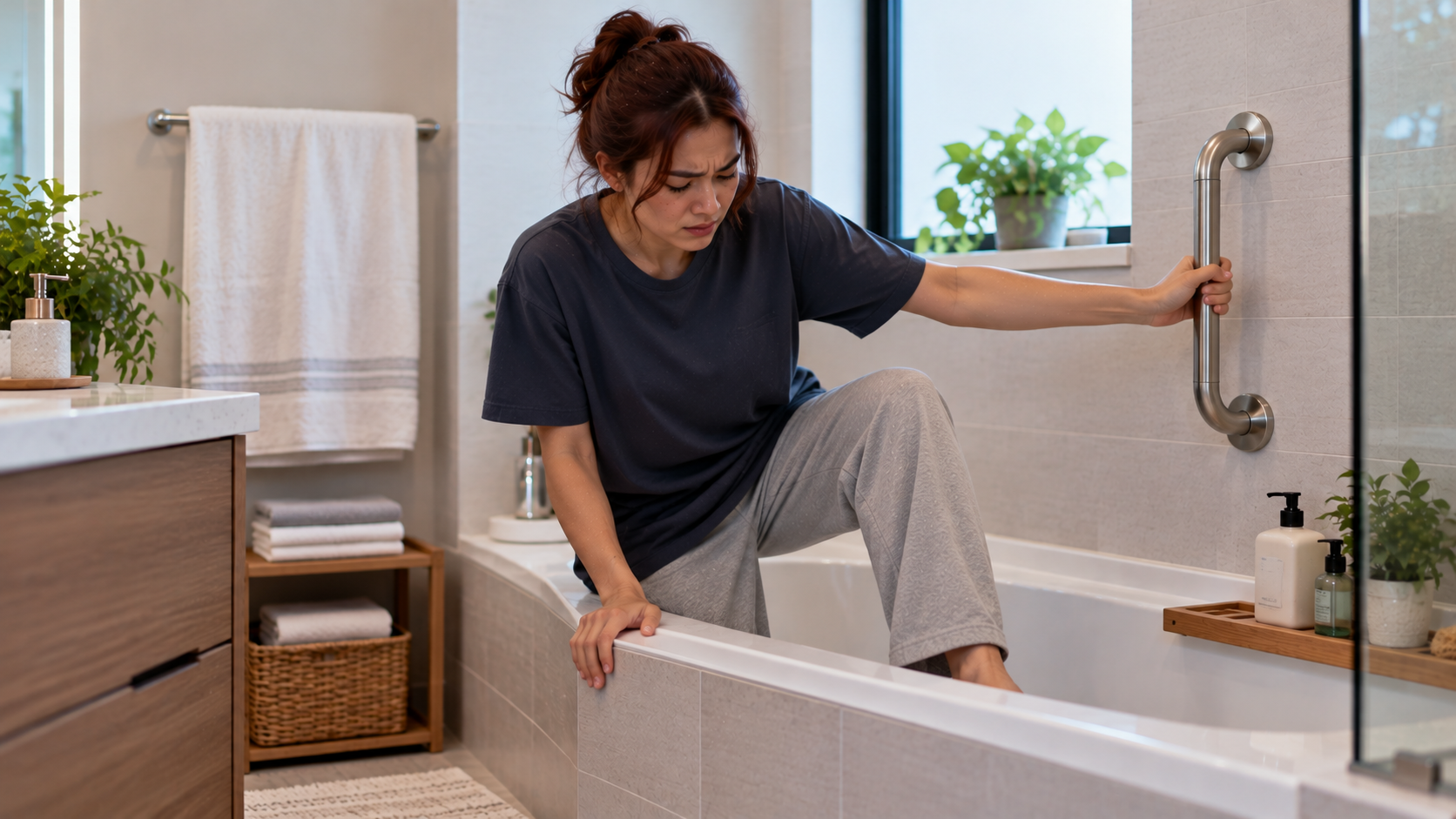
Difficulty Getting Into a Bathtub After a Car Accident: Safety and Mobility Considerations
Difficulty getting into a bathtub after a car accident can make bathing unsafe even when ordinary walking seems manageable. Stepping over a tub wall requires enough hip and knee movement, leg strength and balance to lift one leg while the other supports you. Pain, weakness or dizziness can change that ability.
Quick answer: If getting into a bathtub feels unsafe, do not attempt the transfer alone or use the tub as a test of your recovery. Seek appropriate evaluation and ask about safer bathing arrangements. Proper equipment and an individual plan may help, but new weakness, significant dizziness or an inability to bear weight needs medical assessment first.
Why Is Getting Into a Bathtub Difficult After a Crash?
A tub transfer combines several demands: approaching the tub, lifting a leg over the wall, shifting weight and controlling the step onto another surface. Possible limitations include:
- Hip pain, stiffness or reduced movement.
- Knee pain, weakness or difficulty bending.
- Ankle or foot symptoms affecting support.
- Lower back pain or pelvic discomfort.
- Reduced balance while standing on one leg.
- General leg weakness or limited endurance.
- Dizziness or other post-accident balance changes.
- Fear of falling that makes the task harder to manage.
The height of the wall, wet surfaces and availability of secure support also matter. Being able to walk across a dry room does not establish that a bathtub transfer is safe.
When Is a Bathtub Transfer Unsafe?
Do not attempt an unsupported transfer when you have significant dizziness, major weakness, inability to bear weight, severe pain or poor balance. Have a qualified professional help determine what assistance and equipment are appropriate. Another person being nearby does not automatically make an unsafe transfer safe.
Seek prompt medical evaluation for new neurological symptoms, severe dizziness, worsening weakness or significant leg injury after trauma. Call 911 for sudden or rapidly worsening neurological changes, loss of consciousness, serious breathing difficulty or another potentially life-threatening symptom.
Do not keep practicing over the tub wall while trying to decide whether these symptoms have resolved. A bathroom combines hard surfaces, limited space and possible moisture, leaving little room to recover from a loss of balance.
Why Can You Walk but Struggle to Step Over a Tub?
Level walking and stepping over a barrier involve different demands. A tub wall may require more hip and knee movement and a period of support on one leg while the other clears the edge. Pain or limited control can become more noticeable during that movement.
Tell the provider whether the problem is lifting the leg, standing on the other side, shifting weight or lowering yourself. Getting out may also be difficult after bathing, so the assessment should consider both directions rather than entry alone.
Bathroom Safety Changes to Discuss With a Professional
The right setup depends on your injury, bathroom layout and current ability. Ask whether these options fit your situation:
- Securely installed grab bars intended to support the transfer.
- Appropriate nonslip surfaces and a dry approach to the tub.
- A properly selected and fitted tub-transfer bench or bathing seat.
- A planned level of assistance and a safe way to receive it.
- An alternative bathing arrangement while transfers remain unsafe.
Do not pull on a shower curtain rod, towel rack, loose furniture or an unstable fixture. Ask your healthcare provider whether an occupational or physical therapist can assess the bathroom and teach a suitable technique. Equipment should be chosen and fitted for the person and space.
If standing, reaching or washing is also difficult, review showering after a car accident. Explain each limitation so that a plan addresses the whole bathing task.
How Is Difficulty Getting Into a Bathtub Evaluated?
An evaluation may consider hip and knee movement, leg strength, ankle function, walking, balance and the ability to step over a controlled obstacle when safe. Significant dizziness or neurological symptoms may need medical assessment beyond a routine muscle and joint examination.
Bring relevant medical records, discharge instructions and weight-bearing or movement restrictions. Describe the tub height, available support and which part of the transfer is difficult. Do not recreate an unsafe transfer just to demonstrate the problem.
If chiropractic assessment is appropriate, learn what to expect at your first chiropractic visit and prepare questions to ask your chiropractor about findings, referrals and next steps.
Rehab for Safer Bathtub Transfers
An individual treatment plan may address lower-body movement, strength, balance and controlled stepping. Appropriate injury rehab should work toward safe independence rather than repeated trials in a slippery bathroom.
When medically appropriate, a provider may use a lower obstacle in a controlled setting with suitable support. Progression should reflect your movement, strength and control. Do not set up stepping drills on your own while your safety or medical restrictions remain unclear.
Track recovery progress through practical changes, such as steadier supported movement or better leg control. Ask which home exercises are appropriate and when to stop. A plan for exercise after an injury should follow your current findings and response.
How T98 Rehab Can Help
T98 Rehab evaluates non-emergency muscle and joint limitations affecting bathing and transfers after an accident. Significant dizziness, suspected fractures, neurological symptoms or unsafe balance require appropriate medical evaluation first.
If chiropractic care is proposed, discuss alternatives and chiropractic safety for your health and the technique. Coordinating care after an accident can help clarify referrals and authorized communication.
Call 512-614-2330 or book an appointment for persistent non-emergency limitations. Confirm chiropractic costs and bring available records and restrictions.
Frequently Asked Questions
Why can I walk normally but struggle to get into a bathtub?
Stepping over the wall adds a barrier, a larger leg movement and a balance challenge. Those demands may reveal limitations that are less noticeable during level walking.
Can hip stiffness make getting into a bathtub harder?
Yes. Limited hip movement may make clearing the wall difficult. Pain, knee movement, leg strength and balance should also be considered during evaluation.
Should I hold the shower curtain rod?
No. Curtain rods and towel racks are not designed to support your body weight. Use only suitable, securely installed equipment recommended for your needs.
Can a transfer bench help?
A suitable bench may help some people, but it needs to fit the person, tub and available space. Ask a qualified professional to assess the setup and teach safe use.
When should I contact T98 Rehab?
After urgent conditions have been addressed, seek evaluation when pain, stiffness, weakness or other non-emergency limitations continue to affect safe bathing. New or worsening warning signs require medical assessment first.
Sources
- MedlinePlus: Bathroom Safety for Adults — bathroom equipment, stable support and professional safety assessment.
- MedlinePlus: Recognizing Medical Emergencies — signs requiring immediate medical help.
Medical Disclaimer
This article provides general education and does not establish a clinician-patient relationship or replace emergency care, diagnosis or individualized medical advice. T98 Rehab provides non-emergency care. Equipment selection, transfer techniques and rehabilitation depend on your injuries, restrictions, bathroom layout and professional assessment. Do not attempt an unsafe transfer. Call 911 for serious or rapidly worsening symptoms.