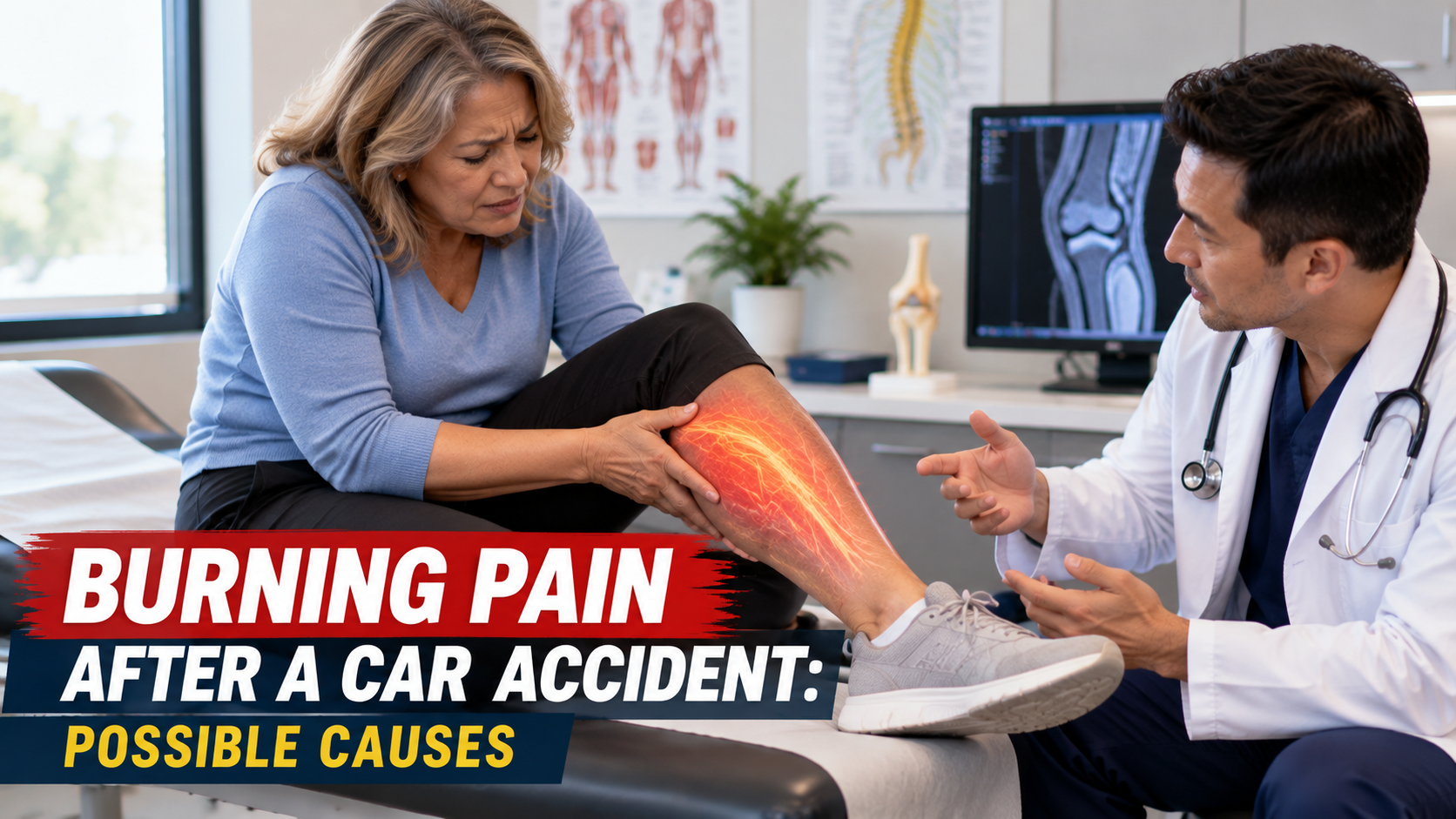
Burning Pain After a Car Accident: Possible Causes
Burning pain after a car accident may feel like heat, stinging, pins and needles, or an electric sensation in your neck, back, arms, legs, or skin. This pain can come from irritated nerves, bruised or inflamed tissues, or airbag-related skin injuries. Burning pain is a symptom rather than a diagnosis. New or worsening symptoms, especially when accompanied by weakness, numbness, or changes in circulation, require medical evaluation.
What Causes Burning Pain After a Car Accident?
Sudden forces during a collision can affect the skin, muscles, joints, spine, and nerves. Possible causes include:
- Peripheral nerve injury: Nerve trauma may produce burning, shooting pain, tingling, or altered sensation.
- Neck or lower-back nerve irritation: Some spine injuries may cause radiating pain into the arms or legs.
- Soft-tissue injury: Bruising and inflammation can create tenderness or a burning sensation.
- Airbag abrasions or burns: Friction, heat, or chemical exposure during deployment can irritate or damage skin.
- Circulation problems: Certain vascular injuries can cause severe pain with temperature or color changes in a limb.
Related reading includes numbness and tingling after a car accident, full body soreness after a car accident, and bruising after a car accident. These symptoms can overlap but do not confirm a particular diagnosis.
When Is Burning Pain After a Crash an Emergency?
Seek emergency medical care for rapidly worsening or major weakness, saddle-area numbness, loss of bladder or bowel control, inability to walk, a cold or pale or blue limb, severe swelling, significant burns, or other serious neurological or circulation changes. Sudden one-sided weakness, facial drooping, or speech changes are also emergency warning signs. Do not delay urgent assessment to try massage, stretching, or chiropractic manipulation.
For context on neurological red flags, review weakness after a car accident and when sciatica needs medical evaluation.
Does Burning Pain Mean Nerve Damage?
Not necessarily. Nerve irritation or injury can cause a burning, shooting, or electric sensation, sometimes alongside tingling, reduced sensation, or weakness. However, damaged skin and irritated soft tissue can produce similar descriptions. Clinicians examine where pain travels, whether it follows a nerve distribution, and whether strength, reflexes, or sensation have changed.
Can Whiplash Cause Burning Pain in the Arms or Hands?
Some neck injuries may irritate nerves that serve the shoulder, arm, or hand, leading to radiating discomfort. Symptoms may coexist with difficulty turning your head after a car accident, arm pain after a car accident, or difficulty lifting after a car accident. New weakness or progressive sensory loss requires medical evaluation before rehabilitation.
Why Do I Have Burning Pain Down My Leg After a Car Accident?
Burning pain that runs from the lower back or buttock into the leg may be associated with nerve irritation, including sciatica, but other leg, hip, or vascular injuries can also cause pain. Learn more about back pain after a car accident, calf pain after a car accident, and when sciatica needs medical evaluation. New leg weakness, changes in bowel or bladder control, or a discolored or cold leg needs immediate medical attention.
Can an Airbag Cause Burning Skin After a Collision?
Yes. Airbag deployment can cause abrasions and burn-like injuries to exposed skin. Skin irritation may feel hot or stinging even without a nerve injury. Significant burns, blisters, facial or eye injuries, or worsening symptoms should be evaluated by a healthcare professional. Do not apply unprescribed chemicals or harsh products to damaged skin. Related injuries may be discussed in facial pain after a car accident.
Can Burning Pain Start Hours or Days After a Car Accident?
Yes. Bruising, swelling, and tissue irritation may become noticeable later. However, delayed burning pain does not automatically mean an injury is mild. If symptoms spread, persist, or develop alongside weakness or numbness, contact a medical professional. Read delayed pain after a car accident for related timing considerations.
How Is Burning or Shooting Pain Evaluated?
A clinician may review the collision mechanism, timing, location, and pattern of pain, and examine skin condition, muscle strength, reflexes, sensation, range of motion, and circulation. Imaging or specialist testing may be indicated when findings suggest significant nerve, spinal, fracture, or vascular involvement. The appropriate treatment depends on which structure is injured.
For nonemergency follow-up, prepare using questions to ask a personal injury care provider and medical documentation after an injury.
Should You Stretch or Exercise Through Burning Pain?
Do not force movements that produce intense burning, spreading numbness, or loss of strength. Exercise recommendations should depend on an appropriate diagnosis, particularly when nerve injury is suspected. For general movement considerations, see home exercise safety and when to stop and returning to activity after an injury.
Chiropractic Rehabilitation for Musculoskeletal and Nerve-Related Symptoms
Once emergency, significant neurological, and vascular conditions have been ruled out or treated, selected musculoskeletal problems may be appropriate for conservative rehabilitation. An individualized rehabilitation care plan may address mobility, movement tolerance, strength, and return to daily tasks based on the clinician’s findings. Recovery milestones should reflect progress and safety, not guaranteed outcomes.
When to Contact T98 Rehab in Austin
T98 Rehab can evaluate appropriate accident-related neck, back, and joint complaints, while referring symptoms suggesting serious nerve, spinal cord, or circulation injury for medical assessment. Patients considering follow-up care can learn how to choose an auto accident chiropractor in Austin and what to discuss during an injury evaluation.
Frequently Asked Questions
Why does my skin or leg feel like it is burning after a car accident?
Possible causes include an abrasion, soft-tissue inflammation, peripheral nerve irritation, or a problem involving the spine. A medical examination can help distinguish these causes.
Is burning pain after a car crash a sign of nerve damage?
It can be, but burning sensations also occur with skin and soft-tissue injuries. New numbness, loss of strength, or spreading symptoms require assessment.
Can burning pain appear the next day?
Yes. Some symptoms develop or become more noticeable over time. Persistent or worsening symptoms should not be dismissed as ordinary soreness.
Should I massage or stretch an area with burning pain?
Avoid aggressive massage or stretching before unexplained neurological or vascular symptoms have been appropriately evaluated.
Can a chiropractor help with burning pain after an accident?
Conservative rehabilitation may be appropriate for certain diagnosed musculoskeletal problems after serious causes are excluded. Progressive neurological or circulation symptoms require medical evaluation first.
Related T98 Rehab Resources
- Numbness and Tingling After a Car Accident
- Weakness After a Car Accident
- Back Pain After a Car Accident
Sources
MedlinePlus — Peripheral Nerve Disorders.
American Academy of Orthopaedic Surgeons — OrthoInfo, patient education on neck, back, and nerve-related conditions.
Medical Disclaimer
This article is general educational information, not an individual diagnosis or a substitute for personalized medical or emergency care. T98 Rehab does not provide emergency services or guarantee treatment outcomes. Seek emergency evaluation for progressive weakness, bladder or bowel changes, saddle numbness, severe burns, or symptoms suggesting impaired blood circulation following an accident.