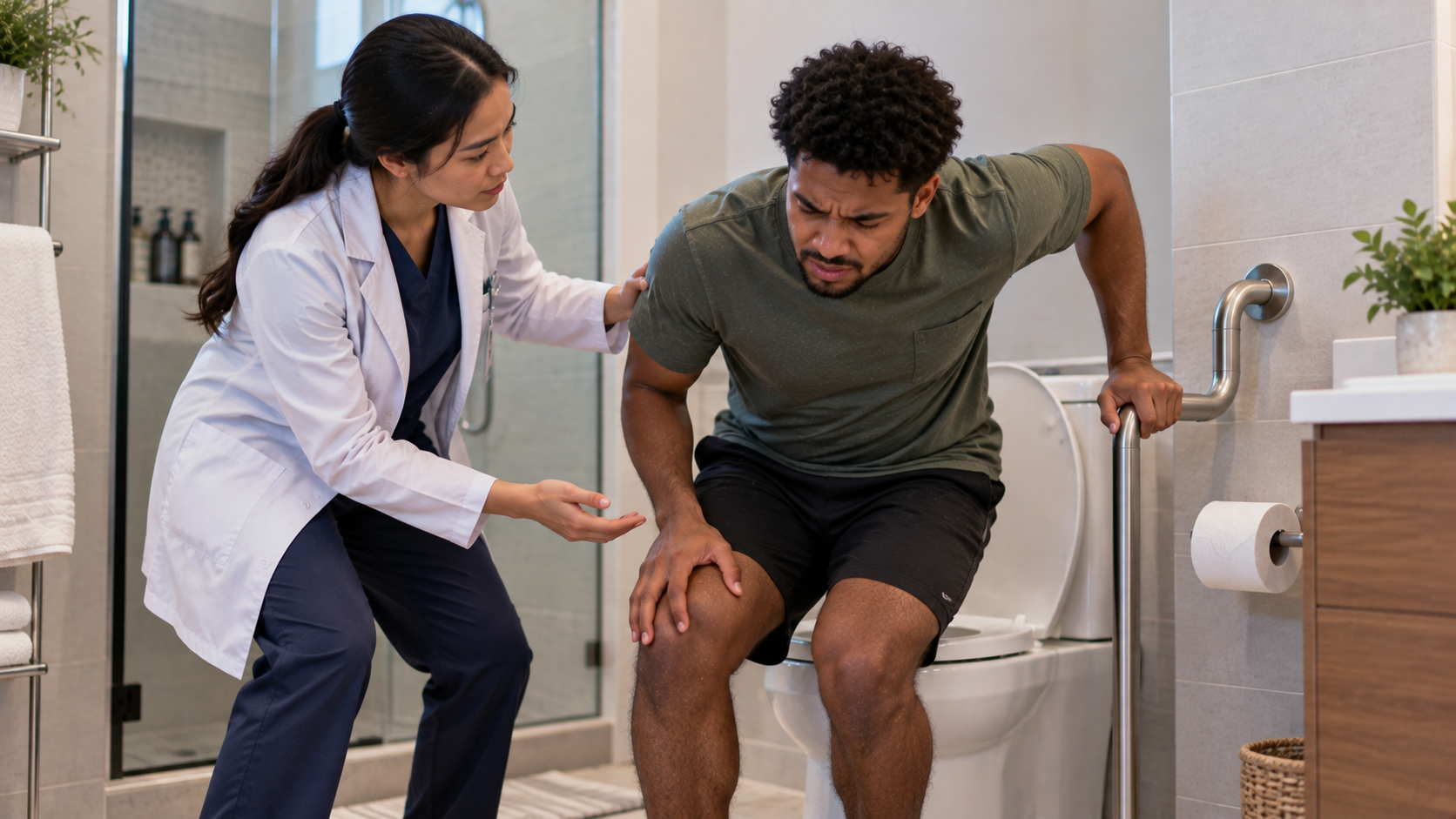
Difficulty Getting On and Off the Toilet After a Car Accident: Functional Recovery and Safety
Difficulty getting off the toilet after a car accident can reflect pain, weakness, stiffness or balance changes. Sitting down can also be difficult because the legs and trunk must control your body as you lower onto the seat. This everyday task can reveal limitations that are less noticeable when standing from a higher chair.
Quick answer: Do not repeatedly force a transfer that feels unsafe. After urgent injuries have been addressed, ask about an evaluation, suitable support and temporary bathroom changes. New difficulty passing urine, loss of bladder or bowel control, or numbness around the groin after a crash requires emergency evaluation, especially with back pain or leg symptoms. These symptoms are different from pain or difficulty sitting and standing.
Why Is Getting On and Off the Toilet Difficult After a Crash?
Lowering and rising combine hip and knee movement, leg strength, trunk control and balance. If you normally push through your arms, a shoulder, wrist or hand injury may also affect the task. Possible contributors include:
- Lower back pain during bending or movement.
- Hip or pelvic pain.
- Knee pain when bending or pushing up.
- Ankle or foot symptoms affecting support.
- Reduced leg strength or endurance.
- Difficulty controlling the movement while sitting down.
- Dizziness or poor balance.
- Arm or hand pain that limits safe use of support.
Describe which part has changed since the accident: positioning your feet, lowering yourself, staying balanced or rising. The movement helps explain your limitation, but does not identify a diagnosis on its own.
Why Is Getting Off the Toilet Harder Than Standing From a Chair?
A lower seat generally requires more hip and knee bending and more effort to stand. The toilet may also be in a confined space with fewer suitable handholds. A person who can rise from a higher chair may therefore have difficulty from the toilet.
The comparison depends on the actual furniture and bathroom. Seat height, firmness, foot placement, arm support and pain all matter. Do not use an unstable object to recreate a movement that is easier elsewhere.
Warning Signs That Need Medical Care
Seek emergency evaluation for new bladder or bowel control changes, trouble urinating or numbness around the genitals or anus after trauma, particularly with back pain, leg weakness or numbness. Call 911 for severe or rapidly worsening neurological symptoms, loss of consciousness, serious breathing difficulty or another potentially life-threatening problem.
Inability to bear weight, new or worsening weakness, major numbness, severe dizziness or substantial pain after injury also requires prompt medical assessment. Do not wait for routine rehabilitation or test the movement repeatedly while a serious injury remains possible.
If you cannot sit or stand safely, arrange appropriate help and medical guidance. Equipment may reduce the physical demand, but it cannot rule out a fracture, nerve injury or another cause that needs treatment.
Temporary Bathroom Changes to Discuss
After assessment, ask whether a stable raised toilet seat, properly installed grab bars or another suitable aid would help. Raising the surface may reduce the amount of bending required. Supports need to fit your abilities and bathroom layout.
- Use equipment designed for the task and fitted securely.
- Keep the route and floor clear and dry.
- Ask a professional what level of help you need.
- Do not use towel racks, unstable furniture or loose fixtures to support body weight.
- Follow any weight-bearing or movement restrictions already provided.
A healthcare provider may refer you to an occupational or physical therapist for a bathroom assessment and instruction. If bathing is also affected, review getting into a bathtub and showering after a car accident. Report each task separately so the setup addresses the full problem.
How Is Difficulty Getting Off the Toilet Evaluated?
A clinician may review the crash, prior medical care, medications, restrictions and the exact movement that is difficult. Bring available medical records and explain whether you need more arm support or assistance than before.
The examination may consider leg strength, hip and knee movement, spinal motion, sensation, walking and balance. Where appropriate, a controlled sitting and standing task can help identify limitations. Significant dizziness, neurological findings or suspected structural injury may need another level of care first.
If chiropractic assessment is appropriate, read what happens at your first chiropractic visit and prepare questions to ask your chiropractor about the findings, alternatives and referrals.
Rehab for Sitting Down and Standing Up
An individual treatment plan may address leg and trunk strength, movement, balance and controlled lowering. Appropriate injury rehab should match the injury and the daily activities you need to resume.
When medically appropriate, a provider may begin sit-to-stand practice from a higher, stable surface with suitable support. Height, repetitions and assistance should follow your current ability. Repeated attempts from a low toilet should not become an unsafe strength test.
Track recovery progress through steadier movement, better control and less need for help. Ask which home exercises are appropriate and when to stop. A plan for exercise after an injury should change if symptoms worsen or progress stalls.
How T98 Rehab Can Help
T98 Rehab evaluates non-emergency muscle and joint limitations affecting bathroom transfers and other daily activities after a collision. Significant neurological changes, suspected fractures, severe dizziness and unsafe transfers require appropriate medical evaluation first.
If chiropractic care is proposed, discuss alternatives and chiropractic safety for your health and the technique. A guide to care after an accident can help clarify referrals and authorized communication.
Call 512-614-2330 or book an appointment for persistent non-emergency limitations. Confirm chiropractic costs before care.
Frequently Asked Questions
Why can I stand from a chair but not the toilet?
Seat height and available support can change the movement and strength required. A lower toilet or confined space may make a limitation more noticeable.
Can knee pain make getting off the toilet difficult?
Yes. Both lowering and rising involve knee movement and force through the legs. An assessment can consider the knees alongside hip, back, strength and balance findings.
Should I use a raised toilet seat?
It may help some people, but the equipment needs to be appropriate, stable and securely fitted. Ask a qualified professional before relying on it for an unsafe transfer.
Is this difficulty important to report?
Yes. Needing help with basic self-care is meaningful functional information. Explain whether the greatest difficulty is lowering, rising, balance or using your arms for support.
Are bladder changes just part of toilet-transfer difficulty?
No. New trouble urinating, loss of bladder or bowel control or groin-area numbness after trauma needs emergency evaluation. Do not treat it as ordinary pain getting on or off a seat.
Sources
- MedlinePlus: Bathroom Safety for Adults — stable bathroom equipment and professional safety assessment.
- NHS: Back Pain — warning signs involving leg symptoms, groin sensation and bladder or bowel changes.
- MedlinePlus: Recognizing Medical Emergencies — signs requiring immediate medical help.
Medical Disclaimer
This article provides general education and does not establish a clinician-patient relationship or replace emergency care, diagnosis or individualized medical advice. T98 Rehab provides non-emergency care. Equipment, exercise and transfer techniques should reflect your injuries, medical restrictions and professional assessment. Call 911 for serious or rapidly worsening symptoms. New bladder or bowel changes or groin numbness after trauma require emergency evaluation.