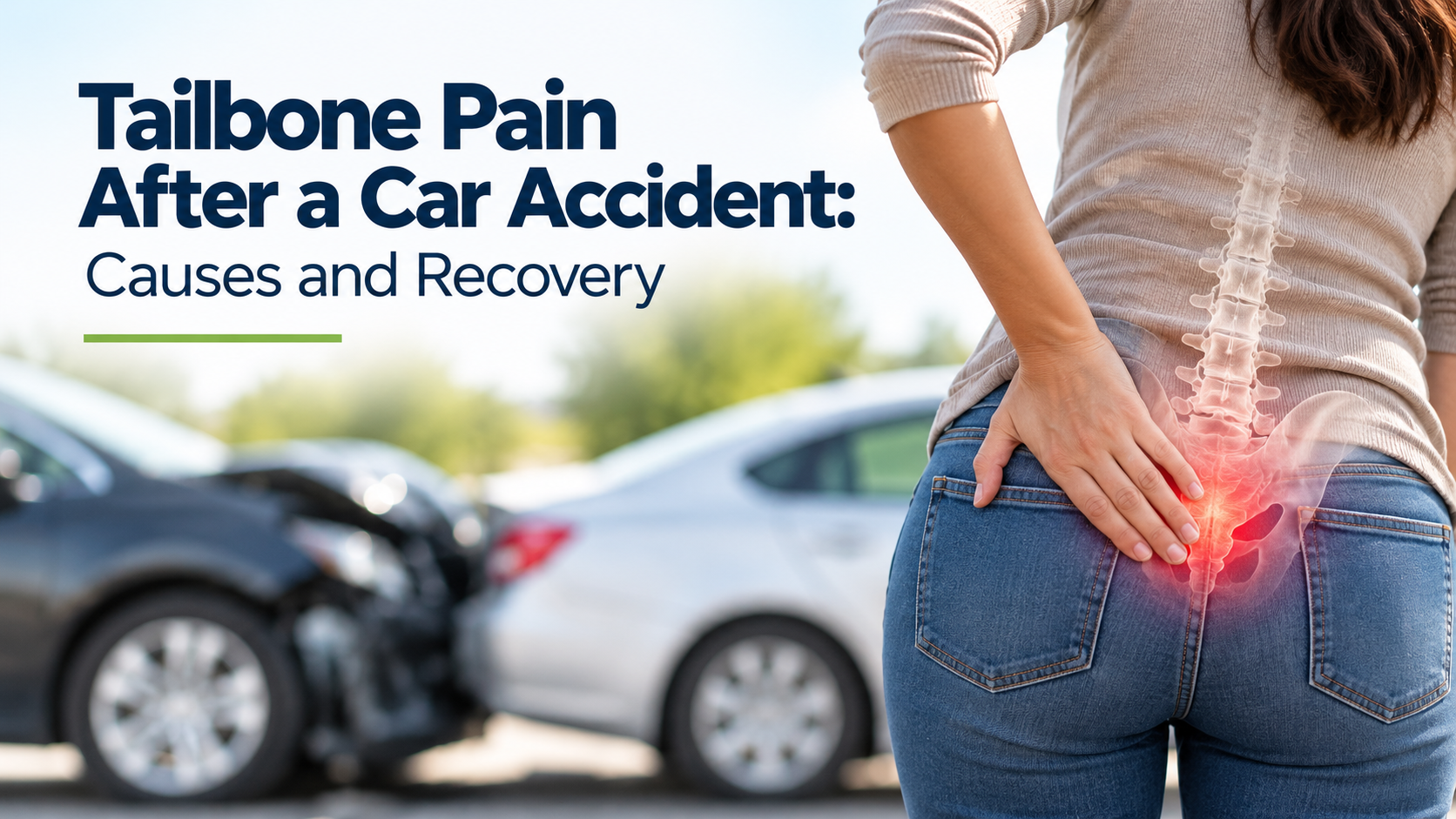
Tailbone pain after a car accident is often felt at the base of the spine and may be especially noticeable when sitting, changing from sitting to standing, or leaning backward. The coccyx can be irritated by direct impact, transmitted force, or surrounding soft-tissue injury.
What Can Cause Tailbone Pain?
- Direct impact on the seat or interior
- Bruising around the coccyx
- Soft-tissue strain
- Joint irritation
- Less commonly, fracture or displacement
Common Functional Problems
Patients may report pain during prolonged sitting, driving, getting up from a chair, bowel movements, or certain exercise positions. These details help identify how the symptom affects daily function.
When Should You Seek Prompt Medical Care?
Seek prompt evaluation for severe pain after major trauma, new leg weakness or numbness, loss of bowel or bladder control, numbness in the saddle region, fever, or other concerning neurological or systemic symptoms.
How Is Tailbone Pain Evaluated?
A clinician may review the collision mechanism and assess tenderness, sitting tolerance, nearby low-back and pelvic symptoms, neurological findings, and functional movement. Imaging may be considered when fracture or another structural problem is suspected.
Sitting and Daily Activity
Changing positions regularly and avoiding prolonged pressure on a painful area may help with comfort. Specialized cushions are sometimes used, but the best approach depends on the diagnosis and individual symptoms.
Recovery and Rehabilitation
When appropriate, rehabilitation may address surrounding hip, pelvic, and trunk function as well as gradual tolerance for sitting and daily activity. Recovery time varies with the nature and severity of the injury.
How T98 Rehab Fits Into Care
T98 Rehab can evaluate non-emergency musculoskeletal pain after an auto accident and determine whether rehabilitation is appropriate or further medical evaluation is needed.
Frequently Asked Questions
Can tailbone pain occur without a fracture? Yes. Bruising and soft-tissue irritation can be painful even without fracture.
Why does standing up from a chair hurt? The transition changes pressure and muscle activity around the pelvis and coccyx.
Should I sit through the pain? Repeatedly aggravating significant pain is not necessary. Modify activity and seek guidance for persistent symptoms.
Related Patient Resources
This article is educational and is not a diagnosis or substitute for medical care.