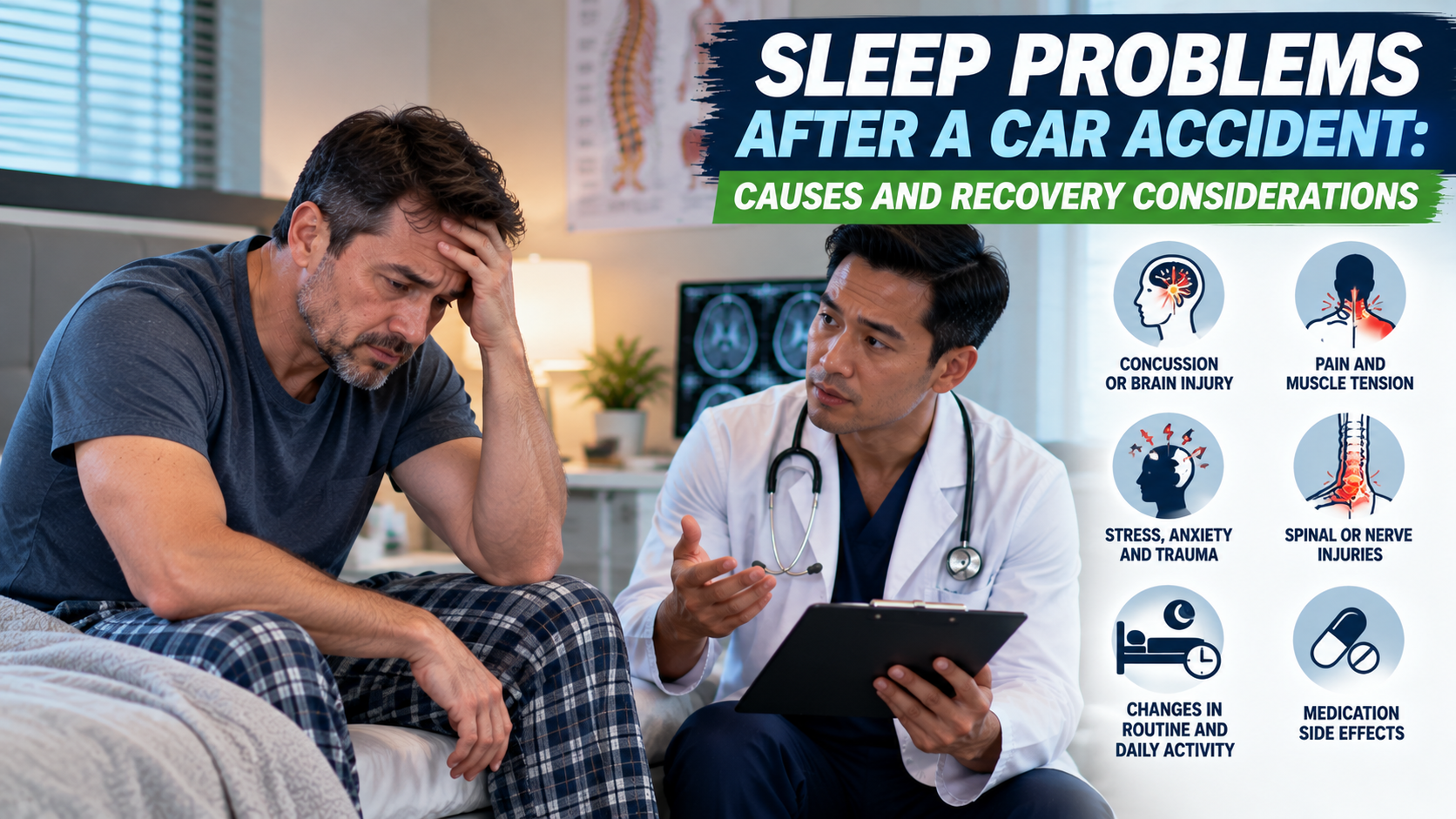
Sleep problems after a car accident can include trouble falling asleep, waking frequently, difficulty finding a comfortable position, sleeping more than usual, or feeling unrefreshed. Pain can disrupt sleep, but head injury, medications, stress, and changes in routine can also contribute.
Why Can Sleep Change After a Collision?
- Neck, back, shoulder, or other pain
- Headache or concussion symptoms
- Stress or anxiety
- Medication effects
- Reduced daytime activity
- Changes in normal sleep schedule
When Are Sleep Changes Concerning?
After a possible head injury, unusual difficulty waking, increasing confusion, worsening severe headache, repeated vomiting, seizure, weakness, or other neurological changes require urgent medical evaluation. Excessive sleepiness should not automatically be attributed to poor sleep after a collision.
How Pain Affects Sleep
Pain can make certain positions difficult and repeated waking can increase fatigue and reduce daytime function. Tell your clinician which positions aggravate symptoms and whether pain wakes you from sleep.
Sleep and Concussion
Changes in sleep can occur after concussion. If a head injury is suspected, follow medical guidance rather than relying on outdated rules about forcing someone to stay awake. Emergency warning signs require immediate evaluation.
Supporting Recovery
Consistent sleep and wake times, appropriate daytime activity, and following medication instructions may help. Avoid using alcohol or unprescribed sedating substances to manage sleep. Persistent insomnia, nightmares, or anxiety may warrant additional professional support.
How T98 Rehab Fits Into Care
T98 Rehab can address musculoskeletal pain that interferes with sleep and functional recovery. Suspected concussion, significant sleep disturbance, or psychological symptoms should be coordinated with the appropriate medical or mental-health professional.
Frequently Asked Questions
Why does my neck hurt more at night? Position, sustained loading, and reduced movement may make symptoms more noticeable. Persistent pain should be evaluated.
Is sleeping more after a crash always normal? No. Fatigue can occur, but unusual drowsiness after head trauma can be concerning.
Can stress from the accident affect sleep? Yes. Stress and anxiety can disrupt sleep and may require appropriate support.
Related Patient Resources
This article is educational and is not a diagnosis or substitute for emergency or medical care.