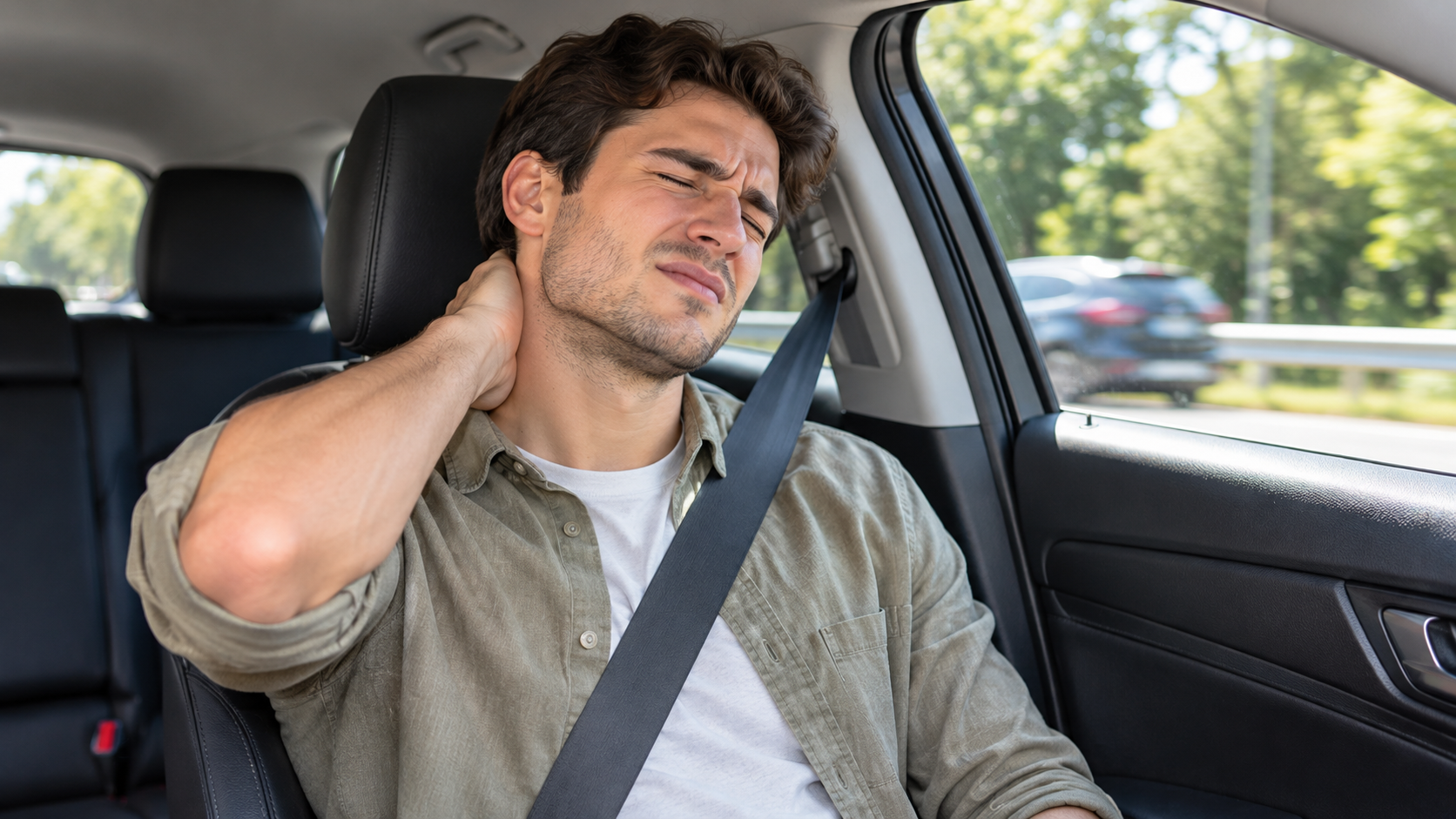
Riding as a passenger after a car accident can be uncomfortable when sitting, vibration, turning the head, getting in and out of the vehicle, or road movement aggravates injuries. Some people also experience anxiety after a collision. Physical and emotional responses can overlap, so persistent limitations should be assessed according to the symptoms involved.
What Can Make Riding Difficult?
- Neck or back pain while sitting
- Hip or pelvic discomfort
- Headache or dizziness
- Difficulty turning the head
- Pain getting into or out of the vehicle
- Anxiety or heightened alertness in traffic
Track the Specific Limitation
Note whether symptoms begin immediately or after a certain amount of time, whether bumps or turns aggravate them, and whether getting in and out is more difficult than sitting itself. Specific observations are more useful than simply reporting that riding hurts.
When Should Symptoms Be Evaluated Urgently?
Seek medical care for new neurological symptoms, severe or worsening headache, fainting, significant dizziness, new weakness or numbness, severe chest or abdominal symptoms, or other concerning changes after trauma.
Physical Versus Emotional Symptoms
Fear, anxiety, sleep disruption, or intrusive memories after a crash can make travel difficult even when physical symptoms are improving. These concerns are legitimate and may require support from an appropriate mental-health professional. Musculoskeletal rehabilitation does not replace that care.
Returning to Comfortable Travel
When medically appropriate, gradual increases in sitting and travel tolerance may be incorporated into recovery. Position changes, appropriate support, and planned breaks may help on longer trips, depending on the injury.
How T98 Rehab Fits Into Care
T98 Rehab can evaluate physical limitations that make vehicle travel difficult after an accident and build functional goals into rehabilitation. Other medical or psychological concerns should be coordinated with the appropriate professionals.
Frequently Asked Questions
Is it normal to feel worse on bumpy roads? Vibration and repeated movement can aggravate some musculoskeletal symptoms, but persistent or severe symptoms deserve evaluation.
Should I avoid cars completely? Activity recommendations depend on your injuries and symptoms. Follow individualized medical guidance.
What should I tell my clinician? Describe the position, duration, road movement, and specific symptoms that limit travel.
Related Patient Resources
This article is educational and is not a diagnosis or substitute for medical care.