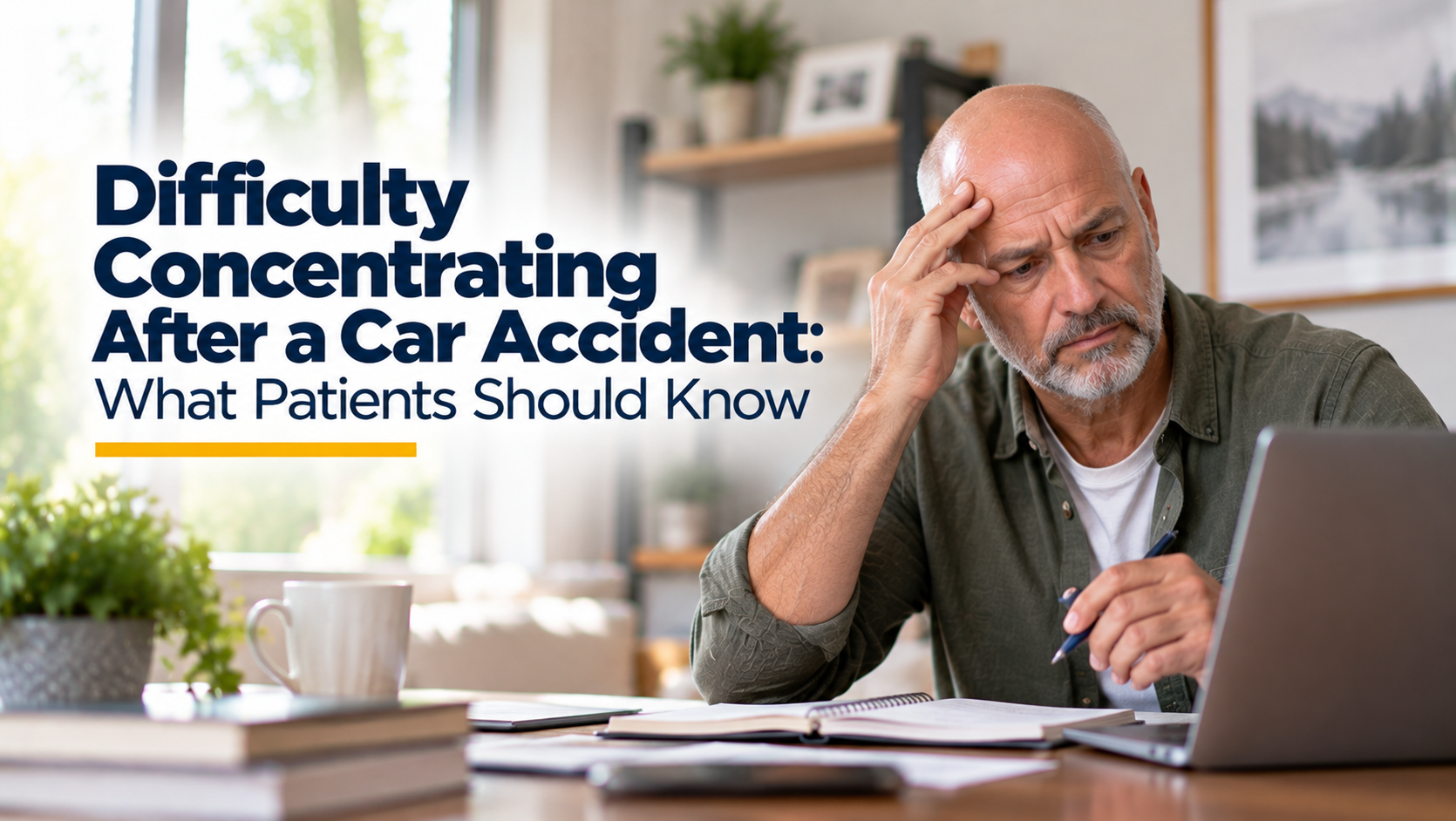
Difficulty concentrating after a car accident can occur for several reasons, including concussion, pain, poor sleep, stress, medication effects, or fatigue. Because concentration changes can accompany a head injury, new cognitive symptoms after a collision deserve appropriate assessment rather than being assumed to be stress alone.
What Can Cause Concentration Problems?
- Concussion or other head injury
- Headache or persistent pain
- Sleep disruption
- Stress or anxiety after the collision
- Medication side effects
- Fatigue
Could This Be a Concussion?
Concentration difficulty can occur with concussion, often together with headache, dizziness, nausea, light or noise sensitivity, memory problems, or feeling mentally slowed. A concussion can occur without a prolonged loss of consciousness. Symptoms alone do not establish a diagnosis, so appropriate medical evaluation matters.
When Should You Seek Emergency Care?
Seek emergency care for worsening severe headache, repeated vomiting, seizure, increasing confusion, unusual drowsiness, slurred speech, weakness or numbness, loss of consciousness, significant coordination problems, or other new neurological changes.
How Is It Evaluated?
A clinician may ask about the collision, head impact, memory gaps, sleep, medications, headaches, dizziness, vision, and changes in work or school performance. Neurological and cognitive findings may guide whether additional testing or referral is appropriate.
Work, Screens, and Driving
Tasks that require sustained attention may temporarily feel more difficult. Follow medical guidance about driving, screen use, work, school, and other cognitively demanding activities, particularly if symptoms include dizziness, slowed reaction time, visual disturbance, or confusion.
Tracking Recovery
Note which activities trigger symptoms, how long you can concentrate comfortably, whether symptoms improve with rest, and whether other neurological symptoms occur. This can help clinicians evaluate progress.
How T98 Rehab Fits Into Care
T98 Rehab can address musculoskeletal symptoms that accompany an auto accident. Suspected concussion or other neurological problems should receive appropriate medical evaluation, and rehabilitation should be coordinated with that guidance.
Frequently Asked Questions
Is brain fog normal after a crash? Cognitive symptoms can occur after trauma, but they should not simply be labeled normal without considering concussion and other causes.
Can pain affect concentration? Yes. Pain, poor sleep, stress, and medication effects can all interfere with attention.
Should I drive if I cannot concentrate normally? Avoid driving when symptoms could impair attention, reaction time, vision, or coordination, and seek professional guidance.
Related Patient Resources
This article is educational and is not a diagnosis or substitute for emergency or medical care.