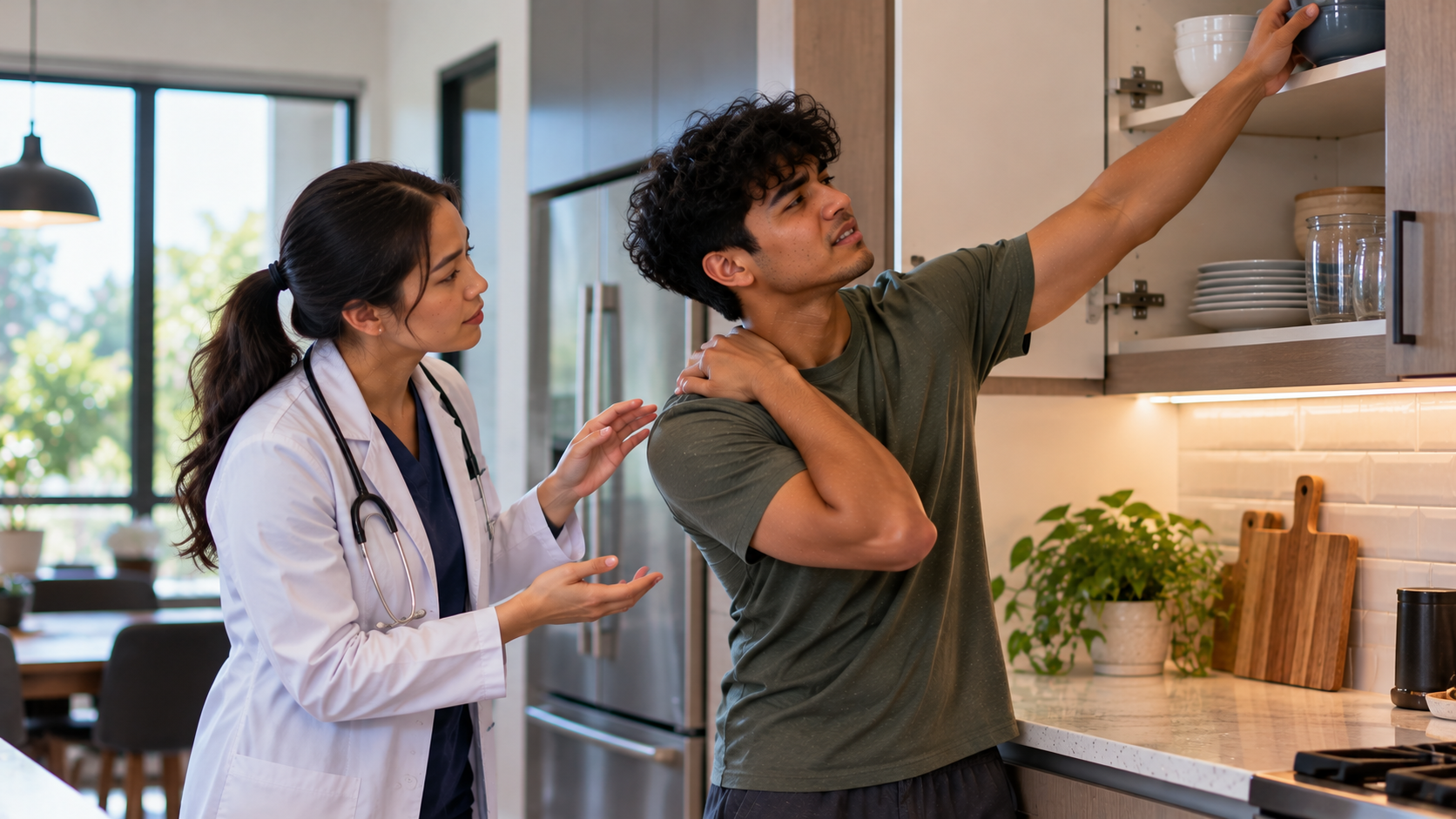
Difficulty Reaching Into Cabinets After a Car Accident: Shoulder, Neck, and Back Considerations
Difficulty reaching into cabinets after a car accident can involve the shoulder, neck, arm, wrist, hand, upper back or trunk. The task combines lifting the arm, reaching away from the body and gripping an object. Persistent changes deserve evaluation, while major weakness, numbness, deformity or severe swelling after trauma needs prompt medical care.
Why Can Reaching Into Cabinets Hurt After a Car Accident?
Possible contributors include:
- Shoulder pain or restricted motion
- Neck pain
- Nerve-related arm symptoms
- Elbow, wrist, or hand injury
- Upper-back pain
- Pain with trunk rotation
- Muscle guarding after injury
- Weakness when the arm is held away from the body
The height and depth of the cabinet and the weight of the object can change the demand. A higher shelf requires more arm elevation, while a deeper cabinet can require the shoulder to reach farther forward and the trunk to contribute more. Object weight adds another demand because the arm must not only reach the item but also control it while moving it toward the body. Describe whether pain occurs with an empty hand or only when holding an object. Shelf height, reach distance and object weight are useful details for your provider.
When Reaching Difficulty Needs Medical Care
Seek prompt medical care for new or worsening arm weakness, significant numbness, obvious deformity, severe swelling, a cold or discolored hand, or severe neck pain with neurological symptoms. Shoulder pain after an accident, especially with inability to move the arm normally, also needs medical assessment. Call 911 for sudden or rapidly worsening neurological changes, loss of consciousness, serious breathing difficulty, chest pain or another potentially life-threatening symptom.
Do not repeatedly reach overhead with a heavy object when a fracture or significant shoulder or nerve injury has not been excluded. A heavy object increases the load on the shoulder, arm, wrist, and hand while the body may already be working near the limit of comfortable reach. Repeated overhead testing can therefore place additional demand on an area that may be painful, weak, swollen, numb, or structurally injured.
Why Does Reaching Overhead Hurt More?
Raising the arm overhead requires more shoulder motion and muscular control. Reaching into a deep cabinet may also require the trunk and shoulder blade to contribute more. Overhead reaching places the arm farther from the resting position and generally requires more coordinated shoulder and shoulder-blade motion.
How Is Difficulty Reaching Into Cabinets Evaluated?
A clinician may assess shoulder and neck motion, arm strength, sensation, reflexes, grip, upper-back movement, and the specific reaching position that reproduces symptoms. The assessment can relate these findings to the exact cabinet movement that has become difficult. Shoulder and neck motion may affect the ability to elevate the arm, while upper-back and trunk movement can contribute when the cabinet is high or deep. Bring available medical records and describe which reaching directions have changed. If chiropractic assessment is appropriate, review your first chiropractic visit and prepare questions to ask your chiropractor.
Should You Stretch Through Shoulder Pain?
Avoid forcing the arm through sharp, severe, spreading or worsening pain. Once serious injury has been excluded, a provider may guide gradual mobility and strength work that matches the findings. Ask which movements to modify and what changes mean you should stop.
Rehab for Reaching Into Cabinets
An individual treatment plan may address shoulder and upper-back movement, arm strength, shoulder-blade control, grip and functional reaching. Appropriate injury rehab can progress from comfortable positions toward higher or farther reaches as your ability improves. Track recovery progress through the height, distance and load you can manage safely, rather than a guaranteed recovery date. Ask which home exercises fit your condition. A plan for exercise after an injury should change if symptoms worsen or progress stalls.
How T98 Rehab Can Help
T98 Rehab evaluates non-emergency muscle and joint limitations affecting reaching after an accident. Significant neurological symptoms, suspected fractures or major joint injuries need appropriate medical assessment first. If chiropractic care is proposed, discuss alternatives and chiropractic safety for your health and the technique.
Frequently Asked Questions
Why can I reach forward but not overhead?
Different reaching directions require different amounts of shoulder and upper-back motion and muscular control. Forward reach can often be performed below shoulder height, while overhead reach requires greater elevation of the arm and more coordinated movement of the shoulder blade and upper back. The arm may also need to remain elevated while the hand searches for or grips an object, adding an endurance demand that is less noticeable during a brief forward reach.
Can neck problems affect overhead reaching?
Yes. Some neck and nerve-related conditions can produce arm pain, numbness, or weakness, although local shoulder injuries can cause similar symptoms. Neck-related symptoms and local shoulder symptoms can overlap during reaching because both regions contribute to normal upper-extremity function.
Should I move frequently used items to lower shelves?
Moving frequently used items to a comfortable shelf height may reduce unnecessary overhead reaching while you recover. Ask for help with heavier or awkward items, and do not climb on unstable furniture or use a difficult reach as a test of strength. Discuss safe lifting with your provider before resuming heavier tasks.
Can a wrist or hand injury affect cabinet reaching?
Yes. Reaching often ends with gripping and controlling an object, so hand and wrist function matter. Hand and wrist function can become especially important once the arm reaches the shelf because the object still has to be grasped, controlled, and moved safely.
When should I contact T98 Rehab?
After urgent injuries have been excluded, contact T98 Rehab if pain, weakness, or restricted motion continues to interfere with normal reaching tasks. Continued difficulty with cabinet reaching is useful to report because it reflects how pain, weakness, restricted motion, grip, and trunk control are affecting a common daily task. Describing whether symptoms occur during overhead reach, forward reach, trunk rotation, gripping, or lowering an object can help focus the evaluation on the functions that remain limited. Call 512-614-2330 or book an appointment, and confirm chiropractic costs before care.
Sources
- AAOS OrthoInfo: Shoulder Pain and Common Shoulder Problems — assessment, possible causes and treatment options.
- NHS: Shoulder Pain — post-injury symptoms and urgent warning signs.
- MedlinePlus: Recognizing Medical Emergencies — signs requiring immediate medical help.
Medical Disclaimer
This article provides general education and does not establish a clinician-patient relationship or replace emergency evaluation, diagnosis or individualized medical advice. Reaching difficulty alone does not identify a diagnosis. T98 Rehab provides non-emergency care. Treatment, exercise and activity changes should follow your injuries, restrictions and professional assessment. Call 911 for serious or rapidly worsening symptoms.