Difficulty Pushing a Shopping Cart After a Car Accident: What It Can Reveal
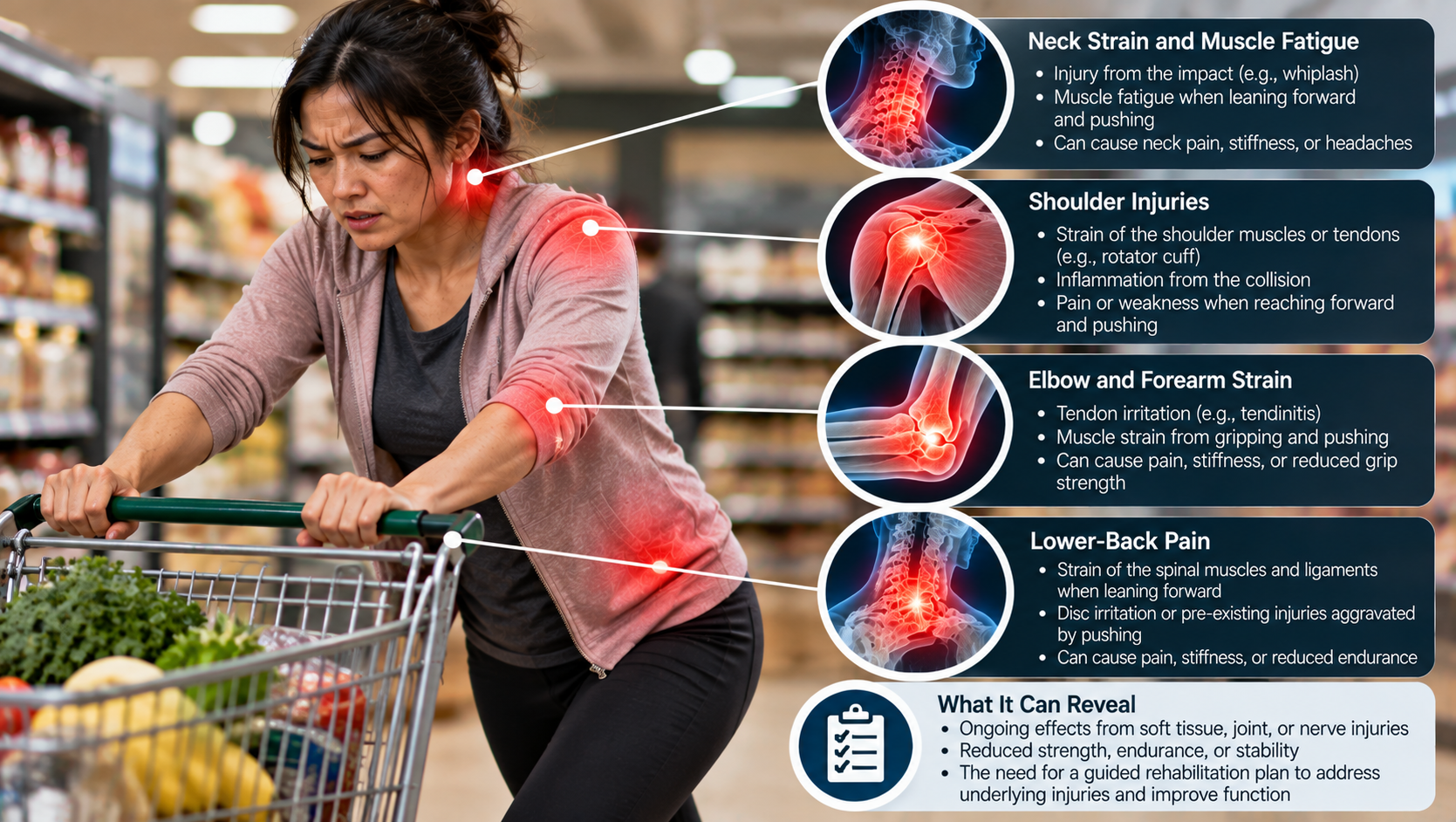
Difficulty pushing a shopping cart after a car accident can show how an injury affects everyday activity. Shopping combines grip, arm force, trunk control, walking and steering. You may be able to walk through a store but notice symptoms when you start moving a cart, turn a corner or add groceries.
Quick answer: Identify which part of pushing a shopping cart has become difficult and report persistent changes to a healthcare professional. The task alone cannot diagnose an injury. New weakness, significant numbness, inability to bear weight, severe pain or unsafe balance needs medical assessment. Do not load a cart heavily to test an injury that has not been evaluated.
Why Can Pushing a Shopping Cart Hurt After a Crash?
The hands maintain contact with the handle, the shoulders and arms apply force, the trunk helps control the body and the legs keep moving. Pain or weakness in any of these areas can change the task. Possible contributors include:
- Shoulder or arm pain while pushing or steering.
- Wrist or hand pain affecting grip.
- Neck pain or upper-back discomfort.
- Lower back pain during pushing.
- Hip, knee, ankle or foot symptoms while walking.
- Reduced leg or trunk endurance.
- Balance problems.
- Weakness or numbness that needs evaluation.
Describe whether symptoms begin at the handle, during the first push, on turns or after walking for a while. The difference can help explain your functional limitation without assuming which tissue is injured.
Why Do Starting and Turning Feel Different?
Starting a stationary cart requires force to get it moving. Steering changes its direction and may place different demands on each arm and on trunk control. A cart that rolls easily in a straight line may still be difficult to turn or stop.
Load is only part of the picture. Wheel condition, the floor, slopes, obstacles and the route can change the effort needed. A lighter cart is not necessarily easy to control if its wheels stick or the path is uneven.
When Is Pushing Difficulty a Warning Sign?
Seek prompt medical care for new or worsening arm or leg weakness, major numbness, inability to bear weight, substantial balance loss, severe swelling or a cold or discolored hand or foot. Do not dismiss these changes as ordinary shopping fatigue.
Call 911 for severe or rapidly worsening neurological symptoms, loss of consciousness, chest pain, serious breathing difficulty or another potentially life-threatening condition. Serious symptoms take priority over finishing a shopping trip or arranging routine rehabilitation.
Do not repeatedly add groceries or push harder to find your limit while a significant injury remains possible. A heavy cart should not be used as an informal strength test.
Why Does a Heavier Shopping Cart Change Symptoms?
A heavier load can increase the force needed to start, steer and control the cart, depending on the cart and surface. This may add demand through the hands, shoulders, trunk and legs. A longer trip also challenges endurance.
You might tolerate a short distance with low resistance but develop symptoms later. Tell the provider about weight, distance, turns and the timing of symptoms. If carrying items is also difficult, describe that separately; carrying a bag after a car accident involves a different combination of grip and load demands.
How Is Difficulty Pushing a Shopping Cart Evaluated?
A clinician may review the crash, previous treatment, current restrictions and activities that have changed. Bring relevant medical records and describe whether symptoms are improving, stable or worsening.
The examination may consider grip, shoulder and arm strength, spinal and hip movement, leg strength, walking, balance and sensation. A controlled pushing movement may be considered only when appropriate for your condition.
If chiropractic assessment is appropriate, learn what to expect at your first chiropractic visit. Bring questions to ask your chiropractor about the findings, alternatives and reasons for referral.
Can You Use a Shopping Cart for Walking Support?
A shopping cart is not a substitute for a properly selected walking aid. It can roll, turn or move away unexpectedly. If you need substantial support to walk safely, ask a healthcare professional to assess the underlying problem and your mobility needs.
After medical assessment, ask whether shorter trips, help from another person, reduced loads or another shopping arrangement would be appropriate. These changes may reduce demand, but they do not make an unsafe activity suitable or rule out an injury.
Rehab for Pushing, Walking and Steering
An individual treatment plan can address the movements and activities that remain limited. Appropriate injury rehab may work on grip, pushing strength, trunk control, walking tolerance and controlled changes of direction.
Track recovery progress through practical changes rather than a guaranteed recovery date. Resistance and duration can be adjusted separately under guidance so that several demands do not increase at once.
Ask which home exercises fit your findings and what symptoms mean you should stop. Plans for exercise after an injury should follow your current ability and response. New weakness, numbness or a lasting increase in symptoms calls for reassessment.
How T98 Rehab Can Help
T98 Rehab evaluates non-emergency muscle and joint limitations affecting shopping and other daily activities after a collision. Significant neurological changes, suspected structural injury or unsafe balance require appropriate medical evaluation first.
If chiropractic care is proposed, discuss alternatives and chiropractic safety for your health and the technique. Coordinating care after an accident can help clarify referrals and authorized communication.
Call 512-614-2330 or book an appointment for persistent non-emergency limitations. Confirm chiropractic costs before care.
Frequently Asked Questions
Why can I walk through a store but struggle to push a cart?
Pushing adds grip, upper-body force, trunk control and steering to walking. The combined task can reveal limitations that are less noticeable while walking alone.
Can shoulder pain affect pushing a shopping cart?
Yes. The shoulder helps apply and control force through the arms. Pain, weakness or reduced movement may become noticeable during starting, steering or sustained pushing.
Can back pain make pushing harder?
Yes. Pushing involves trunk control. Greater resistance or a longer trip may make back symptoms more noticeable, but an examination is needed to identify the cause.
Should I try an empty cart first?
Only when medically appropriate. Lower resistance may reduce effort, but an empty cart is not a test that rules out serious injury or proves that shopping is safe.
When should I contact T98 Rehab?
After urgent injuries have been addressed, seek evaluation when pain, weakness or reduced endurance continues to interfere with shopping. New or worsening warning signs require medical assessment first.
Sources
- Health and Safety Executive: Pushing and Pulling Loads — general factors affecting pushing effort and musculoskeletal risk; not a post-injury exercise prescription.
- NHS: Shoulder Pain — assessment and warning signs after injury.
- MedlinePlus: Recognizing Medical Emergencies — symptoms requiring immediate medical help.
Medical Disclaimer
This article provides general education and does not establish a clinician-patient relationship or replace emergency care, diagnosis or individualized medical advice. T98 Rehab provides non-emergency care. Activity changes, equipment and rehabilitation should reflect your injuries, medical restrictions and professional assessment. Do not use a loaded cart to test an unassessed injury or as a substitute for a prescribed walking aid. Call 911 for serious or rapidly worsening symptoms.