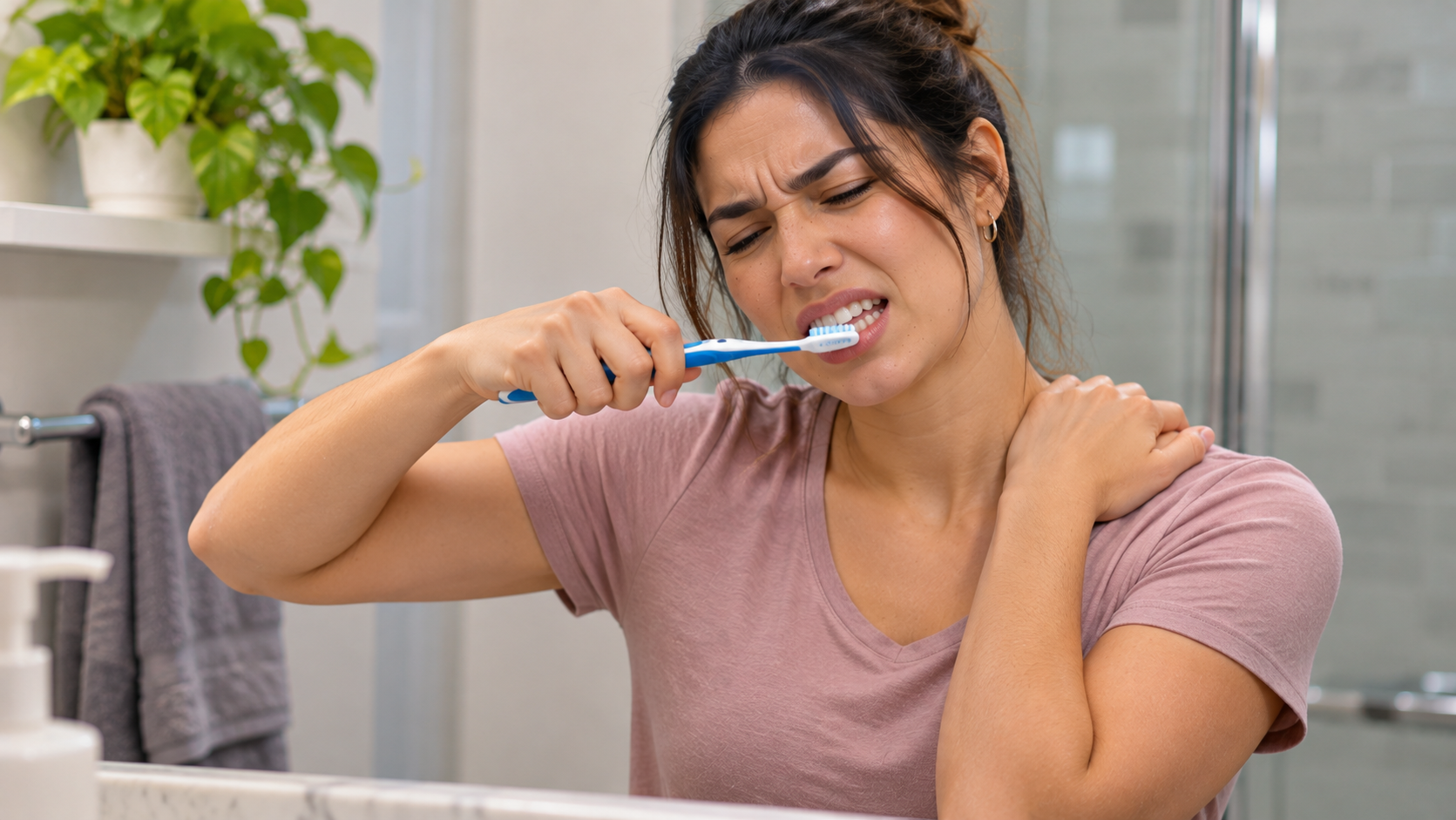
Difficulty Brushing Your Teeth After a Car Accident: What It Can Reveal About Recovery
Difficulty brushing your teeth after a car accident can reveal a change in everyday function. The task combines reaching, gripping, repeated hand movement, looking down and standing or sitting near a sink. Pain or weakness in the neck, shoulder, back, wrist or hand can make those movements harder.
Quick answer: Notice which part of brushing your teeth is difficult and report that change to your provider. Persistent problems may help guide an evaluation and recovery goals, but the task alone cannot diagnose an injury. New weakness, major numbness, severe dizziness or facial trauma needs appropriate medical assessment. Tooth or jaw injuries may require a dentist or another medical professional.
Why Can Brushing Your Teeth Hurt After a Car Accident?
A routine activity may become uncomfortable when it combines several movements that were easier before the crash. Possible contributors include:
- Shoulder or arm pain while raising the toothbrush.
- Wrist or hand pain that affects grip and control.
- Neck pain when looking down.
- Lower back pain while leaning toward the sink.
- Jaw pain after a car accident or facial discomfort.
- Weakness or numbness in the arm or hand.
- Dizziness, balance problems or difficulty standing comfortably.
- General soreness or reduced endurance.
These possibilities can overlap. For example, lifting the arm and gripping the toothbrush may both be difficult. Describe what happens rather than assuming that a particular joint, muscle or nerve is responsible.
When Is Difficulty Brushing Your Teeth a Warning Sign?
Seek prompt medical assessment for new or worsening arm weakness, significant numbness, severe dizziness, loss of normal hand function or symptoms that are getting worse. Facial trauma, a changed bite, significant jaw pain or dental injury needs appropriate medical or dental evaluation.
Call 911 for sudden neurological changes, loss of consciousness, uncontrolled bleeding, serious breathing difficulty or another potentially life-threatening symptom. Significant mouth swelling or difficulty breathing or swallowing also requires emergency care. Do not treat these changes as a routine grooming problem.
A knocked-out tooth needs emergency dental attention. Do not wait for a chiropractic appointment to address an injured tooth, serious jaw injury or facial deformity.
What Should You Tell the Provider?
Explain whether the difficulty comes from looking down, raising your arm, gripping the handle, moving your wrist, leaning forward or keeping your balance. Note whether it starts immediately or develops as you continue the task.
Bring relevant medical records, medication information and any emergency discharge instructions. A short record of symptoms can show whether the limitation is improving, stable or worsening. Report changes in both comfort and independence.
During an appropriate first chiropractic visit, the provider may assess neck and shoulder movement, strength, grip, sensation, posture and task tolerance. Facial, dental, severe balance or neurological findings may require another clinician. Prepare questions to ask your chiropractor about the findings and next steps.
Why Can Leaning Over a Sink Increase Pain?
Looking down and leaning forward can add sustained demand on the neck and back. Reaching toward the sink also involves the shoulder and arm while the hand repeats brushing movements. Holding these positions may make symptoms more noticeable than standing upright without reaching.
Describe which position causes the difficulty and how long you can tolerate it. Avoid repeatedly forcing a painful movement to prove that it hurts. The aim is to understand the limitation and choose an appropriate next step.
Temporary Changes That May Make Brushing Easier
Once urgent conditions have been addressed, ask your provider which changes are suitable:
- Keep the toothbrush and other supplies within easy reach.
- Avoid maintaining a forward-leaning position for longer than you comfortably tolerate.
- Use stable seating if sitting is appropriate and safe for your condition.
- Consider the less symptomatic hand if you can control the toothbrush safely.
- Ask a dentist how to maintain oral hygiene when mouth or tooth injuries limit brushing.
These changes may reduce demand, but they do not treat every possible cause. Do not rely on changing hands or sitting down to manage new weakness, severe dizziness or a significant injury without evaluation. Avoid forcing severe or worsening symptoms.
How Brushing Your Teeth Can Help Track Recovery
An individual treatment plan can use self-care tasks as practical goals. Appropriate injury rehab may address movement, arm and grip strength, posture and tolerance for daily activities, depending on the findings.
Measure recovery progress through greater independence, a more secure grip, easier reaching or less difficulty maintaining a comfortable position. A single good or bad attempt does not establish the full recovery pattern.
Ask which home exercises are appropriate and when to stop. Plans for exercise after an injury should follow your current ability and response rather than a fixed recovery date.
How T98 Rehab Can Help
T98 Rehab evaluates non-emergency muscle and joint limitations affecting grooming and other daily activities after a collision. Significant neurological symptoms, facial injuries, dental problems or severe dizziness require the appropriate medical or dental evaluation first.
If chiropractic care is proposed, discuss alternatives and chiropractic safety for your health and the technique. Coordinating care after an accident can help clarify referrals and authorized communication.
Call 512-614-2330 or book an appointment for persistent non-emergency limitations. Confirm chiropractic costs before care.
Frequently Asked Questions
Why does brushing my teeth make my neck hurt?
Looking down, leaning and reaching may place sustained demand on an injured or stiff neck. Tell the provider which movement causes symptoms and whether the difficulty is changing.
Can wrist pain make brushing your teeth difficult?
Yes. Holding and moving a toothbrush involves grip and repeated hand or wrist movement. Report pain, weakness, numbness or difficulty controlling the toothbrush.
Is difficulty with basic grooming important to report?
Yes. A change in a routine self-care activity is useful functional information. Explain whether you need help, have to change position or cannot complete the task as you normally would.
Should I push through the task if it hurts?
Do not force severe or worsening symptoms. Ask about suitable modifications and appropriate evaluation. New weakness, numbness, severe dizziness or facial symptoms need attention first.
Can chiropractic care treat an injured tooth or a serious jaw injury?
Dental injuries need dental care, and serious jaw or facial trauma may need emergency or specialist assessment. T98’s role is appropriate non-emergency musculoskeletal evaluation and referral.
Sources
- NHS: Whiplash — post-injury neck, shoulder and arm symptoms and urgent warning signs.
- NHS: Dental Abscess — dental infection symptoms and emergency mouth or facial warning signs.
- NHS: Knocked-out Tooth — the need for emergency dental treatment.
- MedlinePlus: Recognizing Medical Emergencies — emergency warning signs and when to call for help.
Medical Disclaimer
This article provides general education and does not establish a clinician-patient relationship or replace emergency evaluation, diagnosis, individualized medical advice or dental care. Symptoms during brushing do not identify a diagnosis. T98 Rehab provides non-emergency care, and treatment suitability and recovery vary. Call 911 for serious or rapidly worsening symptoms and seek appropriate dental care for tooth injuries.