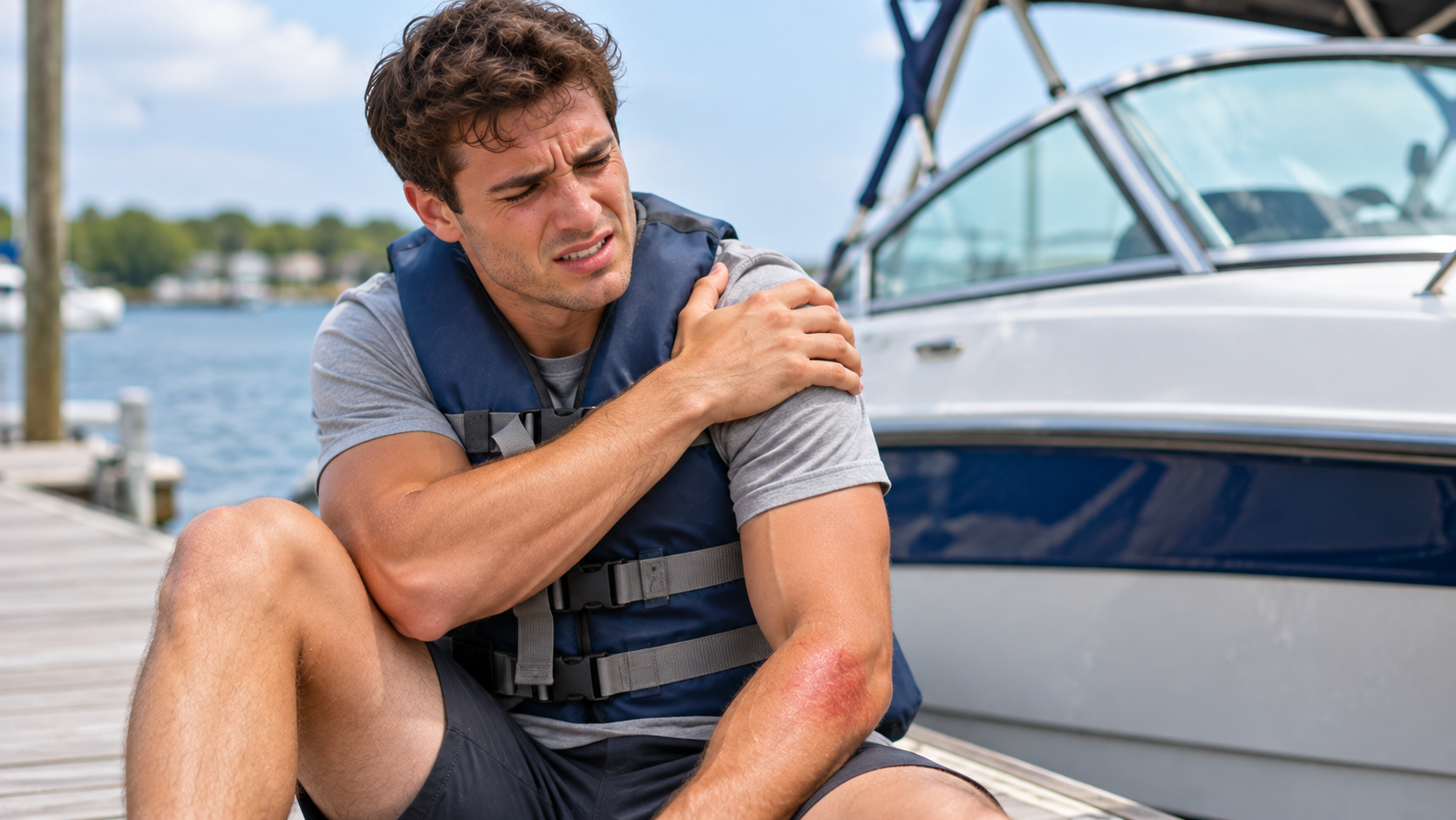
Boating Accident Injuries: When to Seek Evaluation
Boating accident injuries can involve sudden impacts, falls, neck or back pain and water-related emergencies. This guide explains when to seek immediate medical help and when a follow-up evaluation for persistent movement problems may be appropriate.
Boating Accident Injuries: What to Do First
After a boating accident, emergency evaluation comes first for submersion with breathing impairment, inhaled water, loss of consciousness, breathing difficulty, significant bleeding, severe head or spine pain, confusion, weakness or worsening symptoms. Once urgent injuries have been addressed, a clinician can assess persistent neck, back, shoulder or joint symptoms and determine whether non-emergency rehabilitation is appropriate.
Why Boating Accident Injuries Need a Full Safety Check
A boating injury may involve several hazards: a fall on deck, impact against a seat or railing, equipment striking the body or a sudden jolt when the vessel crosses a wake. Water exposure may also involve drowning, breathing complications, cold exposure or wound contamination that need medical evaluation. Tell the clinician about any head impact, submersion, water inhalation and the sequence of events rather than focusing only on the area that hurts.
Boating Accident Injuries: When to Call 911
- The person was submerged, inhaled water or has trouble breathing.
- There is loss of consciousness, seizure, confusion, repeated vomiting or a worsening headache.
- There is heavy bleeding, a suspected fracture, severe chest or abdominal pain, or a deep or large open wound.
- There is new weakness, numbness, loss of coordination or severe neck or back pain.
- The person cannot safely stand, walk or remain awake.
Do not move someone with a suspected head, neck or spine injury unless remaining in place creates immediate danger. Follow emergency responders’ instructions. New warning signs after the initial event still require medical attention; do not wait for a routine rehabilitation appointment.
Neck, Back and Joint Pain After a Boating Accident
After urgent problems have been ruled out, patients may notice neck pain or stiffness, lower back pain, upper-back pain, shoulder discomfort, bruising or reduced motion. Pain may affect lifting, walking, sleep and ordinary work. Symptoms can arise from direct contact, bracing during impact or rapid body movement. Headache, dizziness and concentration changes require medical consideration rather than being assumed to be routine muscle soreness.
Can Boating Accident Symptoms Appear Later?
Some symptoms become noticeable after the immediate event or change over the following hours. Record when they begin, what changes them and which activities are affected. Delayed symptoms do not establish a diagnosis. New or progressive weakness, numbness, coordination changes, breathing difficulty or other warning signs need medical assessment rather than waiting for a routine appointment.
What Happens During a Boating Injury Evaluation?
A clinician may review the accident mechanism, any submersion or head impact, emergency medical records, medications and changes in daily function. The exam may assess motion, strength, reflexes, sensation, balance and task tolerance. Imaging is not automatic; trauma history, warning signs, previous testing and examination findings guide that decision. If appropriate, your first chiropractic visit can establish a starting point for symptoms and function. Bring questions to ask your chiropractor about findings, referrals and alternatives.
Rehab After Boating Accident Injuries
When conservative care is appropriate, an individual treatment plan may include education, gradual movement, strengthening, activity changes and selected hands-on techniques. Injury rehab should track recovery progress through sleeping, walking, lifting, driving and work rather than a guaranteed timetable. Ask which home exercises fit your condition. A gradual return to exercise after an injury should follow your medical restrictions and response. If symptoms worsen or progress stalls, the provider should reassess before increasing activity.
Organize Medical Records and Coordinate Care
Keep emergency reports, incident details, medication lists, restrictions and appointment records together. A symptom timeline should describe what changed and which activities became difficult. Coordinating care after an accident can help clarify the roles of clinicians, insurers and legal representatives. T98 can organize clinical documentation and communicate through appropriate authorization processes. It does not determine fault, value a claim or provide legal advice.
Boating Injury Care at T98 Rehab
T98 Rehab & Chiropractic provides non-emergency musculoskeletal evaluation and rehabilitation following boating and vehicle accidents at North Austin, South Austin and Pflugerville. Urgent medical concerns must be addressed first. If chiropractic care is proposed, discuss chiropractic safety, relevant risks, alternatives and whether another provider is needed. The number of chiropractic visits should reflect your findings, goals and response.
Book an Injury Evaluation in Austin or Pflugerville
- North Austin — 1139 Braker Lane #101, Austin, TX
- South Austin — 2512 S. I-35 Frontage Road #260, Austin, TX
- Pflugerville — 201 N. Heatherwilde Boulevard #104, Pflugerville, TX
Call 512-614-2330 or book an appointment for non-emergency symptoms after urgent medical needs are addressed. Confirm chiropractic costs and insurance coverage, and bring available records and restrictions.
Boating Accident Injuries: Frequently Asked Questions
Should I be evaluated if I fell on a boat but did not hit my head?
An evaluation may be appropriate if pain, swelling, reduced motion, numbness or daily limitations develop. Severe or worsening symptoms need urgent assessment. Not hitting your head does not rule out other injuries.
Can a wake cause whiplash-like symptoms?
A sudden jolt can rapidly move the neck and trunk, but symptoms alone do not establish whiplash or another diagnosis. A clinician should review the accident and examine movement, symptoms and function.
Can T98 treat water inhalation or a concussion?
No. Water inhalation, breathing problems, possible drowning complications and suspected concussion need appropriate medical evaluation. T98 provides non-emergency musculoskeletal care and referral; rehabilitation may be considered later for suitable persistent movement problems.
Sources
- MedlinePlus: Recognizing Medical Emergencies — warning signs and emergency response considerations.
- CDC: Symptoms of Mild TBI and Concussion — symptoms and head-injury danger signs.
- CDC: Drowning Prevention — information about drowning and water safety.
Medical Disclaimer
This article is for general education and does not establish a clinician-patient relationship or replace emergency evaluation, diagnosis or individualized medical advice. T98 Rehab provides non-emergency care. Water inhalation, breathing problems and suspected head or spine injuries need appropriate medical evaluation. Treatment suitability, activity progression and recovery vary by patient. Call 911 for serious or rapidly worsening symptoms.