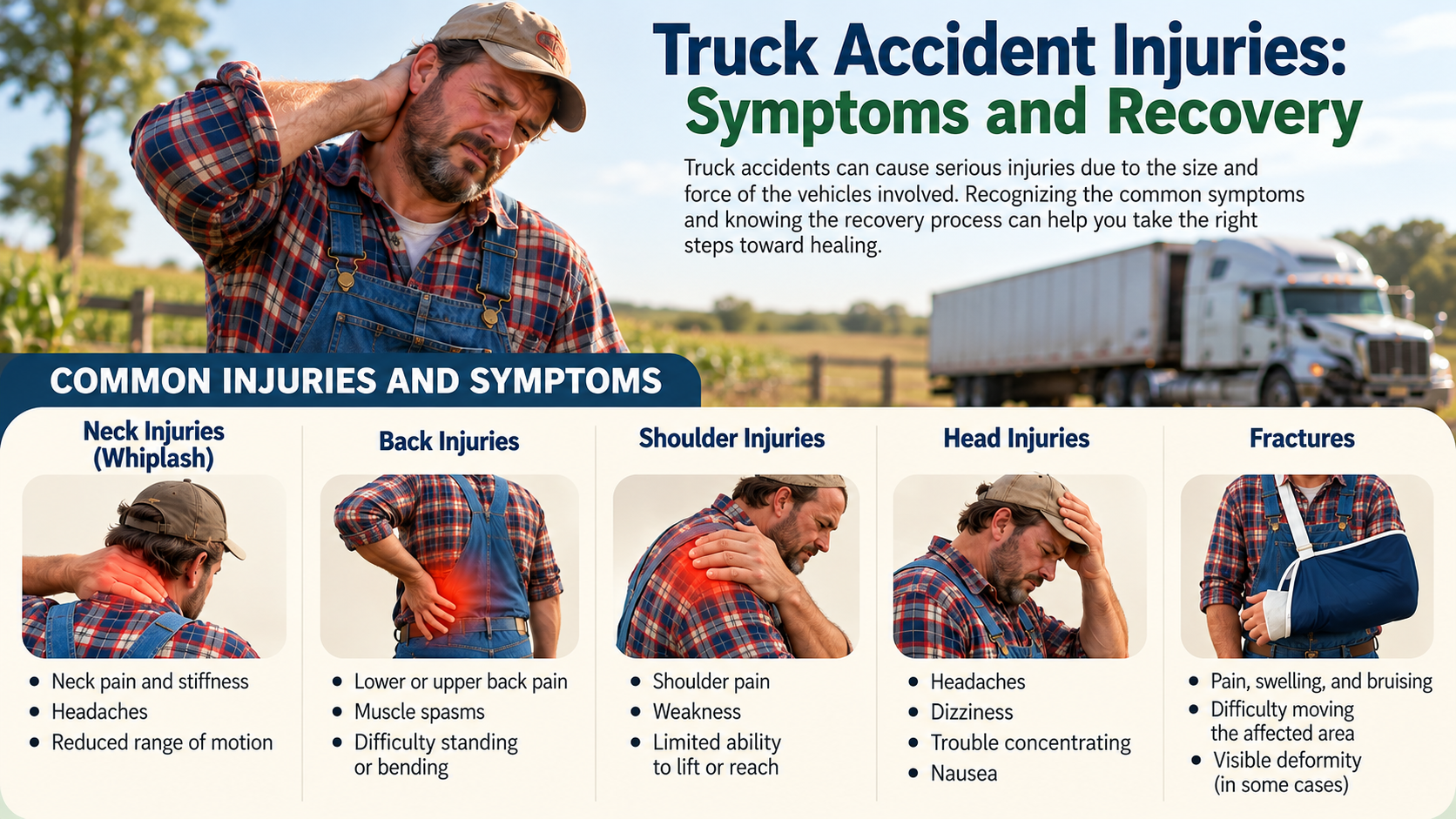
Truck Accident Injuries: Symptoms and Recovery
Truck accident injuries can affect the head, neck, back, joints and daily movement. Learn which symptoms need emergency care, what to bring to a follow-up evaluation and how an individual rehabilitation plan may support recovery after urgent injuries are addressed.
Truck Accident Injuries: What to Do First
Truck collisions can expose drivers and passengers to substantial forces, multiple impacts and complex injury patterns. Call 911 for serious symptoms or significant trauma. After emergency conditions are addressed, persistent neck, back, shoulder, joint or movement problems may benefit from a focused musculoskeletal evaluation and individualized rehabilitation plan.
The appropriate next step depends on the crash, symptoms and findings from medical evaluation. Emergency problems should be addressed first. Non-emergency rehabilitation is considered only after urgent conditions have been evaluated and when the remaining musculoskeletal problems are appropriate for conservative care.
Why Truck Accident Injuries Need an Individual Evaluation
A collision may involve a passenger vehicle and a much larger commercial vehicle, a truck occupant striking the cab interior, cargo movement or secondary impacts. Injury severity cannot be judged from visible vehicle damage alone. Seat-belt use, airbag deployment, position, speed change and direction of force all help clinicians understand the mechanism.
These details help explain why two people involved in the same collision may report different symptoms or limitations. The specific sequence of events matters: where the person was seated, how the body moved, whether there was more than one impact and what happened immediately afterward can all be relevant to the clinical history.
Visible damage is only one piece of information. A healthcare evaluation should consider the crash mechanism together with symptoms, examination findings and any prior emergency testing.
Truck Accident Injuries: Emergency Warning Signs
- Loss of consciousness, seizure, confusion, repeated vomiting or worsening headache.
- Difficulty breathing, chest pain, severe abdominal pain or uncontrolled bleeding.
- Suspected fracture, major deformity or inability to bear weight.
- Severe neck or back pain with weakness, numbness or loss of coordination.
- Loss of bladder or bowel control, saddle-area numbness or rapidly worsening neurological symptoms.
Emergency departments are equipped to evaluate potentially life-threatening injuries. A chiropractic office is not a substitute for emergency care.
A person should not delay emergency evaluation in order to arrange rehabilitation, insurance paperwork or another non-emergency appointment. Serious neurological, breathing, bleeding, head-injury or fracture concerns require the level of assessment available in an emergency setting.
If emergency care has already occurred, follow the discharge instructions and restrictions that were provided. New or rapidly worsening symptoms should be reported through the appropriate medical channel rather than assumed to be a normal part of recovery.
Common Symptoms After a Truck Accident
Patients may develop neck pain or stiffness, headache, upper-back pain, lower back pain, shoulder or knee discomfort, bruising, muscle spasm, fatigue or difficulty sleeping. Numbness, tingling or pain traveling into an arm or leg may indicate nerve involvement and should be evaluated.
Symptoms can affect function as well as comfort. Turning the head, sitting for longer periods, walking, reaching, lifting, sleeping, driving or completing work duties may become more difficult. Describing these functional changes can help a provider understand how the symptoms are affecting daily activity.
Numbness, tingling, radiating pain or weakness deserves particular attention because these symptoms may involve nerves. They do not establish a diagnosis by themselves, but they are important information for the evaluating clinician.
Can Truck Accident Symptoms Appear Later?
Some symptoms become noticeable after the immediate stress response decreases. Others evolve as swelling and muscle guarding develop. The safest approach is to document the timing and progression without assuming the diagnosis or waiting for severe disability.
A useful symptom timeline can include what was noticed immediately after the collision, what appeared later and whether each problem is improving, stable or worsening. This gives the provider a clearer history without requiring the patient to guess which structure is responsible.
Delayed symptoms should still be evaluated according to their severity and character. The fact that discomfort was not obvious at the scene does not determine whether it is important, and the appearance of neurological or other emergency warning signs should prompt appropriate medical attention.
What Happens During a Truck Injury Evaluation?
The provider should review emergency care, imaging, medications, prior conditions and the specific crash sequence. Examination may include motion, strength, reflexes, sensation, balance and functional tasks. Additional testing or referral is appropriate when findings exceed the provider’s scope or suggest a condition requiring medical management.
Relevant medical records can help prevent unnecessary confusion about what has already been evaluated. Patients may bring discharge papers, imaging reports, medication information and restrictions when available. The provider can then focus the non-emergency examination on current symptoms and functional limitations while remaining alert for findings that require referral.
The purpose of the examination is not simply to assign a label to a painful area. It is also to determine whether conservative rehabilitation is appropriate, which activities are limited and how progress can be measured over time. If chiropractic evaluation is appropriate, review what to expect at your first chiropractic visit and prepare questions to ask your chiropractor.
Treatment and Recovery After Truck Accident Injuries
An individual treatment plan may use education, movement progression, therapeutic exercise, activity changes and selected hands-on care. Early goals may include stable symptoms and safe daily movement. Later goals may address driving, work tolerance, lifting and recreation. The number of chiropractic visits should be reviewed according to clinical need and measurable progress.
An individualized plan can change as function improves. Early care may emphasize tolerable movement and practical activity modification. As the patient becomes more capable, injury rehab can place greater emphasis on strength, endurance and the specific demands of work, driving or recreation.
Measurable goals for recovery progress are more useful than promising a fixed recovery date. Examples may include improved range of motion, better tolerance for sitting or walking, increased ability to perform a work task, or greater confidence with ordinary movement. The relevant milestones depend on the patient’s actual limitations.
Reassessment is important. If progress stalls, symptoms change substantially or new findings appear, the plan may need to be modified or another provider may need to become involved. Ask which home exercises are appropriate and what changes mean you should stop.
Returning to Driving and Work After a Truck Accident
A patient should be able to turn the head, operate controls, react safely and remain alert before driving. Work decisions depend on job demands and may require temporary limits on lifting, prolonged sitting, vibration or repetitive movement. Restrictions should be specific, functional and reviewed as capacity changes.
Driving readiness is therefore not based on pain alone. Limited neck motion, difficulty using an arm or leg, impaired alertness or inability to react normally can affect safe vehicle operation. Patients should also follow medical instructions related to medications or other restrictions.
Work demands vary widely. A desk-based job may involve prolonged sitting, while a physical job may require lifting, carrying, climbing, vibration exposure or repeated movement. Temporary restrictions are most useful when they describe the functional demand that needs to be limited and are reviewed as the patient’s capacity changes. Discuss safe lifting and a gradual return to exercise after an injury as your ability improves.
Medical Records, Insurance and Coordinating Care
Keep accident reports, discharge papers, medication lists, imaging reports, work restrictions and symptom notes. T98 may coordinate authorized clinical records with insurers or legal representatives. Clinical staff do not determine liability, interpret legal deadlines or guarantee payment or settlement.
Keeping records organized can make communication more consistent when several parties are involved. Clinical records should accurately reflect symptoms, examination findings, care and progress. Insurance and legal questions should be directed to the appropriate professionals rather than treated as clinical decisions. A guide to care after an accident explains who handles treatment, coverage questions and legal advice.
Truck Accident Injury Care at T98 Rehab
T98 Rehab & Chiropractic provides non-emergency evaluation and rehabilitation for musculoskeletal symptoms following car and truck accidents. Care is individualized and referrals are made when another level of care is appropriate. If chiropractic care is proposed, discuss chiropractic safety, risks and alternatives before proceeding.
For patients whose symptoms are appropriate for non-emergency conservative care, the rehabilitation plan can focus on restoring movement and function and measuring progress toward daily, driving, work and recreation goals. Referral remains appropriate when findings require medical or specialty management.
Book an Injury Evaluation in Austin or Pflugerville
- North Austin – 1139 Braker Lane #101, Austin, TX
- South Austin – 2512 S. I-35 Frontage Road #260, Austin, TX
- Pflugerville – 201 N. Heatherwilde Boulevard #104, Pflugerville, TX
Call 512-614-2330 or book an appointment for non-emergency follow-up. Confirm chiropractic costs and insurance coverage before your visit. For billing questions after a collision, review health insurance after a car accident and ask the insurer which rules apply to your truck crash.
Truck Accident Injuries: Frequently Asked Questions
Do all truck accident injuries show up immediately?
No. Pain, stiffness and functional limitations can become clearer later. Seek prompt help for symptoms that appear, worsen or involve the nervous system.
Will I need imaging?
Not automatically. Imaging decisions depend on the trauma, warning signs, prior testing and physical examination.
How long will recovery take?
There is no universal timeline. Progress depends on the injury pattern, health history, job demands and response to care. Plans should use measurable milestones rather than guarantees.
What information should I bring to a follow-up evaluation?
Available discharge papers, imaging reports, medication information, work restrictions and a timeline of symptoms can help the provider understand what has already been evaluated and what remains limited.
What if numbness or weakness develops after the crash?
Numbness, tingling, radiating pain or weakness deserves particular attention because these symptoms may involve nerves. They do not establish a diagnosis by themselves, but they are important information for the evaluating clinician.
Sources
- MedlinePlus: Recognizing Medical Emergencies — symptoms requiring immediate medical help.
- CDC: Symptoms of Mild TBI and Concussion — symptoms that may appear later and head-injury danger signs.
- NCCIH: Spinal Manipulation: What You Need To Know — evidence, risks and questions before treatment.
Medical Disclaimer
This article provides general education and does not establish a clinician-patient relationship or replace emergency care, diagnosis or individualized medical advice. T98 Rehab provides non-emergency care. Treatment and return-to-driving or work decisions depend on your injuries, examination findings, medical restrictions and response. Clinical staff do not determine fault or guarantee insurance payment, settlement outcomes or a recovery timeline. Call 911 for serious or rapidly worsening symptoms.