Quick answer
A single-vehicle crash can cause serious injury even when no other driver is involved. Call 911 for loss of consciousness, confusion, worsening headache, repeated vomiting, breathing difficulty, heavy bleeding, severe chest or abdominal pain, weakness, numbness, or a suspected fracture. After urgent conditions are addressed, ongoing neck or back pain, headaches, stiffness, reduced movement, or difficulty with daily activities may warrant a non-emergency musculoskeletal evaluation.
How single-vehicle crashes happen
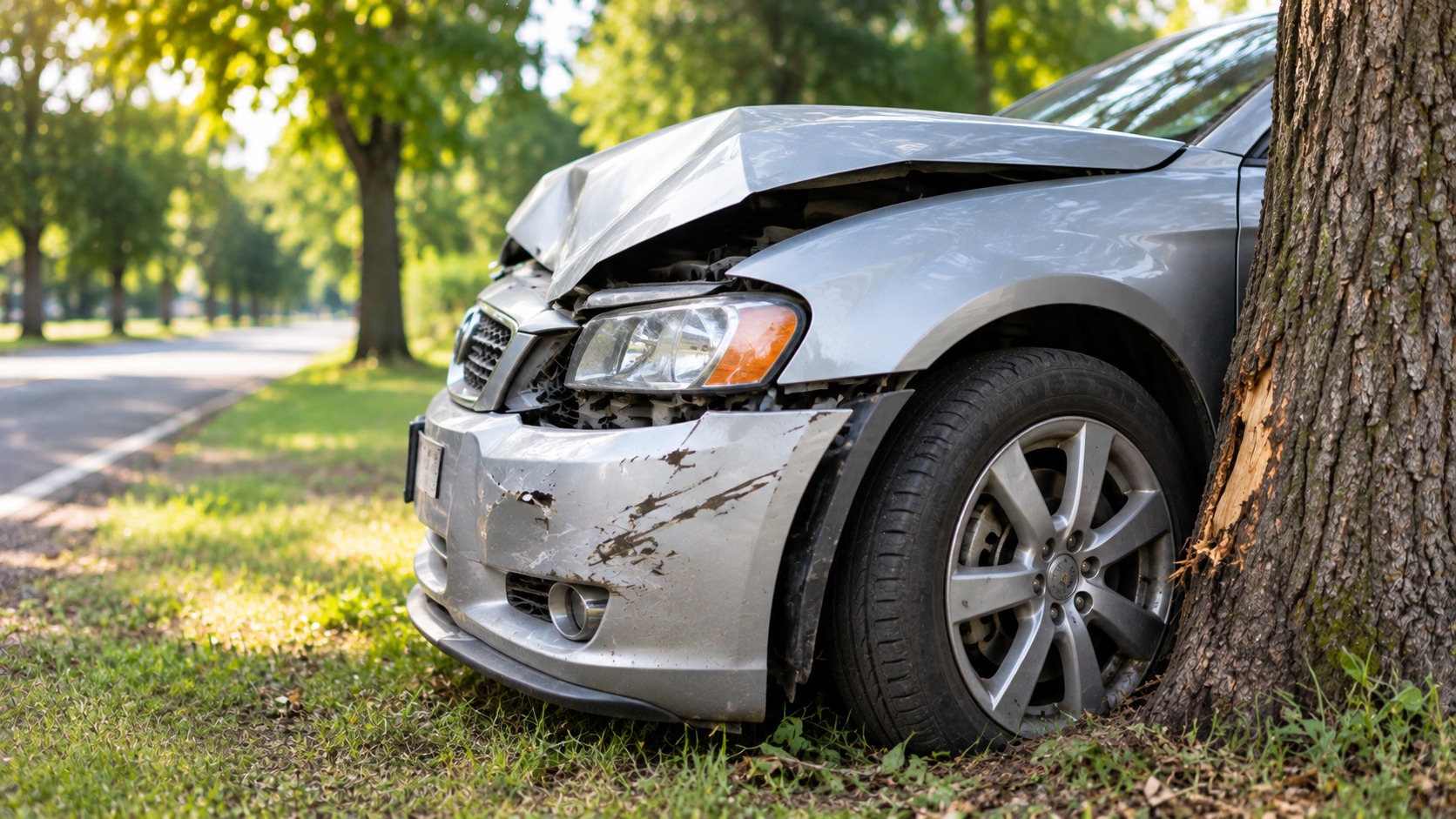
A vehicle may leave the roadway, strike a fixed object, roll, hydroplane, or stop abruptly while avoiding a hazard. Occupants can experience rapid deceleration, restraint loading, air-bag contact, or more than one impact. The absence of another vehicle does not establish how mild or severe an injury is.
First priorities
- Call 911 when anyone may be injured or the scene is unsafe.
- Stay away from traffic, fire, leaking fuel, unstable vehicles, and downed power lines.
- Do not move a seriously injured person unless an immediate danger requires it.
- Do not drive away when pain, dizziness, shock, or vehicle damage makes driving unsafe.
- Record scene facts and photographs only when doing so is safe.
Emergency warning signs
Seek immediate care for increasing confusion, inability to stay awake, seizure, worsening headache, repeated vomiting, shortness of breath, fainting, uncontrolled bleeding, severe chest or abdominal pain, new weakness or numbness, loss of bladder or bowel control, or severe neck or back pain.
Symptoms after medical clearance
Patients may later notice neck or back stiffness, headaches, shoulder or hip pain, bruising, muscle guarding, sleep disruption, or reduced tolerance for sitting, driving, lifting, and work. Symptoms should be assessed rather than assigned a diagnosis based only on the crash description.
What an evaluation may include
A clinician may review vehicle movement, restraint use, air-bag deployment, head contact, immediate symptoms, prior conditions, emergency care, and changes in function. The examination may assess movement, tenderness, strength, sensation, balance, and task tolerance. Imaging or referral depends on the history and findings.
Recovery and documentation
Useful milestones include improved sleep, comfortable movement, longer sitting or walking tolerance, safe driving, and progress toward normal work or exercise. Keep emergency instructions, imaging, referrals, medications, symptom notes, work restrictions, bills, and appointment records together.
T98 Rehab can document the care it provides and coordinate authorized clinical records with providers, insurers, or attorneys. It does not investigate the crash, determine fault, or promise a claim result.
Frequently asked questions
Can I be injured if the vehicle damage looks minor?
Yes. Vehicle appearance alone cannot establish whether a person is injured. Symptoms, examination findings, and function guide medical decisions.
Should I wait for insurance before seeking care?
No. Seek care according to medical urgency. Coverage questions can be addressed separately with the relevant insurer or qualified advisor.
When can I drive again?
Return depends on movement, strength, concentration, medication effects, and diagnosed injuries. Follow the treating professional’s guidance.
Centers for Disease Control and Prevention — Symptoms of Mild TBI and Concussion
MedlinePlus — Recognizing Medical Emergencies
T98 Rehab — Auto Accident Chiropractor
T98 Rehab locations
T98 Rehab provides non-emergency auto-injury evaluation and rehabilitation at three Central Texas clinics:
- North Austin — 1139 Braker Lane #101, Austin, TX
- South Austin — 2512 S. I-35 Frontage Road #260, Austin, TX
- Pflugerville — 201 N. Heatherwilde Boulevard #104, Pflugerville, TX
Call 512-614-2330 to request an appointment. Call 911 or use an emergency department when symptoms may be urgent.
Medical and legal disclaimer
This article provides general education, not a diagnosis, treatment plan, prognosis, insurance interpretation, or legal advice. Individual care requires evaluation by a qualified healthcare professional. T98 Rehab does not determine fault, value claims, decide coverage, or guarantee medical, insurance, or legal outcomes.