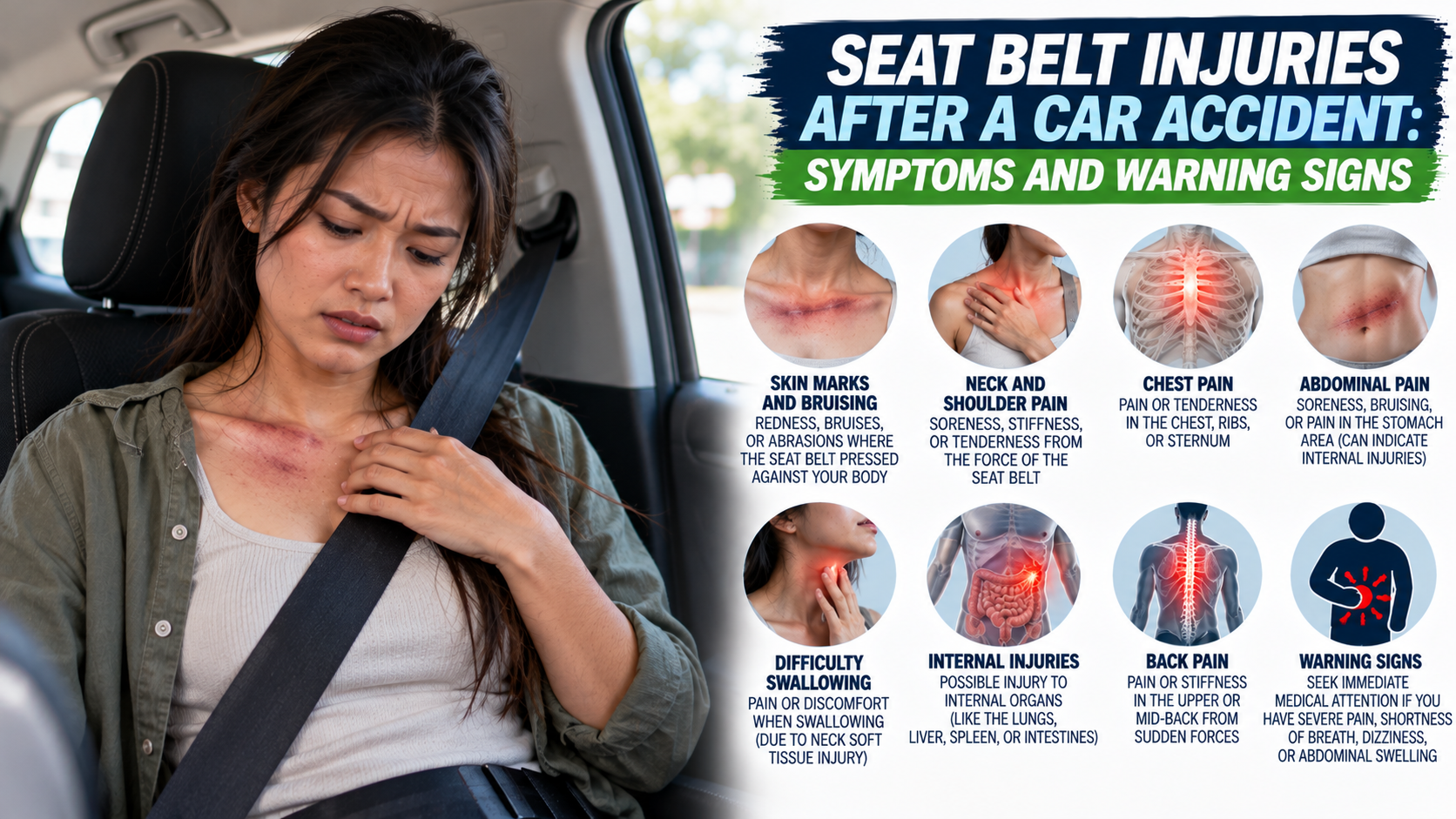
Seat belts save lives and reduce the risk of severe injury in a collision, but the force of a crash can still cause soreness, bruising, or other injuries where the belt restrains the body. Symptoms after a collision should be evaluated based on their severity, location, and progression rather than dismissed simply because they follow the path of the seat belt.
How Can a Seat Belt Cause Injury?
During sudden deceleration, the lap and shoulder portions of a seat belt distribute force across the chest, shoulder, abdomen, and pelvis. This restraint is protective, but substantial crash forces can still injure soft tissues or, in more serious collisions, deeper structures.
Common Symptoms
- Chest or shoulder soreness
- Bruising across the chest, abdomen, or hips
- Muscle tenderness
- Pain with movement or deep breathing
- Localized swelling
Visible bruising does not by itself determine how serious an injury is. Symptoms, examination findings, and the collision mechanism all matter.
When Is Emergency Care Appropriate?
Seek urgent or emergency medical care for severe or worsening chest or abdominal pain, difficulty breathing, fainting, confusion, vomiting, significant abdominal tenderness or swelling, coughing or vomiting blood, new weakness, or other rapidly worsening symptoms. A pronounced seat-belt mark accompanied by significant pain or systemic symptoms deserves prompt medical assessment.
How Are Seat Belt Injuries Evaluated?
A clinician may review the crash mechanism, belt position, airbag deployment, areas of impact, symptoms, vital signs, and physical findings. Imaging or additional testing may be appropriate when there is concern for fracture or internal injury.
What About Bruising?
Minor bruising can occur after restraint by a seat belt. Track whether bruising is expanding, becoming more painful, or accompanied by dizziness, abdominal symptoms, breathing difficulty, or other changes. Do not use the appearance of a bruise alone to rule serious injury in or out.
Recovery and Rehabilitation
When serious injury has been excluded, musculoskeletal soreness may be managed according to the diagnosis and individual findings. Rehabilitation may focus on restoring comfortable movement, strength, and normal daily activities. Progression should be based on symptoms and function rather than a fixed timeline.
How T98 Rehab Fits Into Care
T98 Rehab can evaluate non-emergency musculoskeletal symptoms after an auto accident and determine whether rehabilitation is appropriate. Symptoms suggesting internal, neurological, cardiopulmonary, or other urgent injury should receive medical evaluation first.
Frequently Asked Questions
Is a seat-belt bruise normal after a crash? Bruising can occur, but significant pain, abdominal or chest symptoms, or worsening symptoms warrant medical evaluation.
Can symptoms appear later? Some soreness becomes more noticeable over the first day or two. New or worsening symptoms should not be ignored.
Should I stop wearing a seat belt because it caused bruising? No. Seat belts are a critical safety device and substantially reduce the risk of death and serious injury.
Related Patient Resources
- Bruising After a Car Accident
- Pain When Breathing After a Car Accident
- Delayed Pain After a Car Accident
This article is educational and is not a diagnosis or substitute for emergency or medical care.