Quick answer
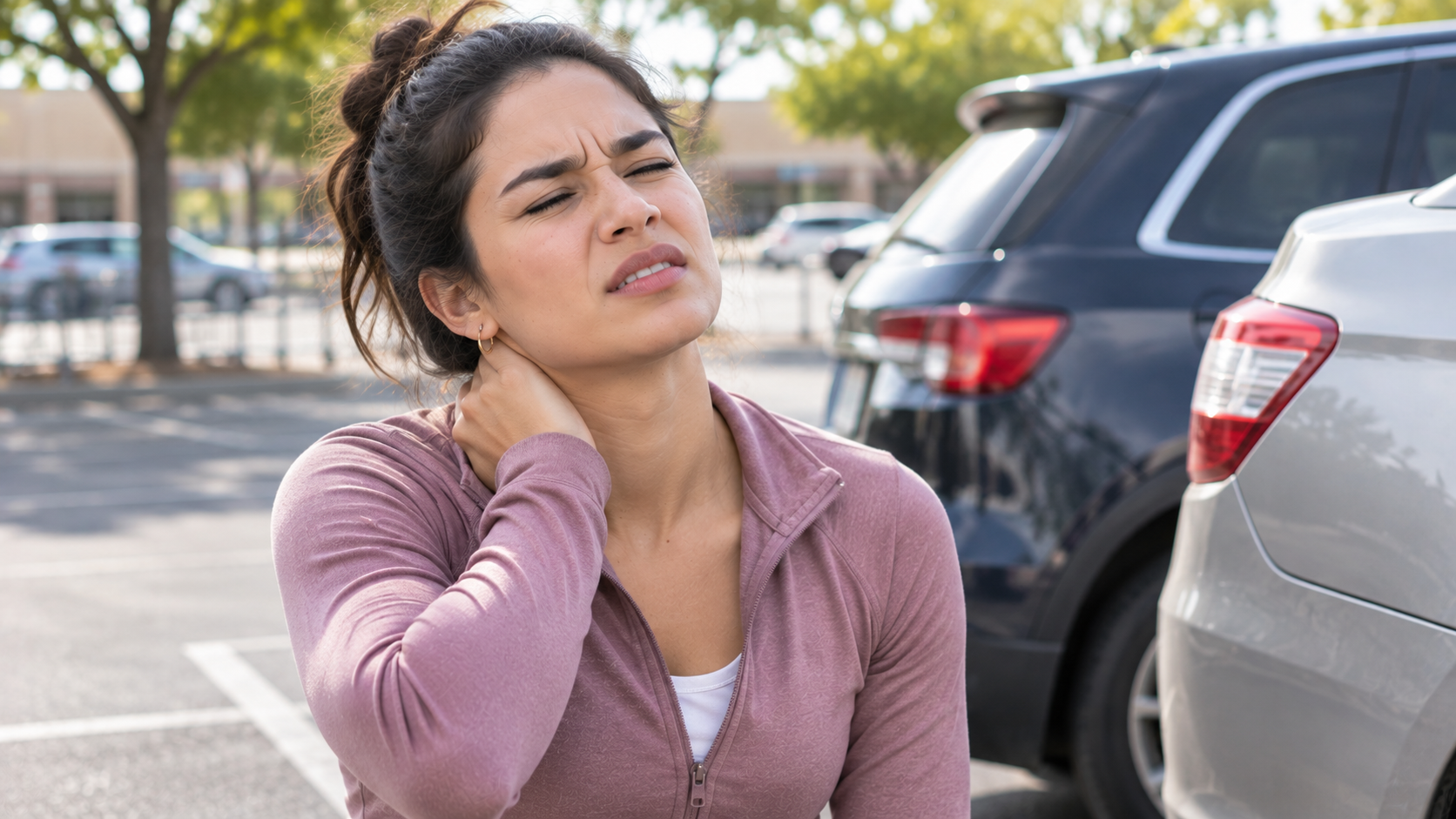
Parking lot crashes often occur at lower speeds, but speed alone cannot determine whether an injury occurred. Call 911 for head-injury signs, severe bleeding, breathing trouble, chest or abdominal pain, weakness, numbness, a suspected fracture, or a pedestrian who cannot safely stand or walk. Persistent pain, stiffness, headaches, dizziness, or limited activity deserves appropriate evaluation.
Common parking lot crash situations
Examples include a backing vehicle striking another car, two vehicles reversing at once, a side impact at an aisle, a door-area impact, or a vehicle striking a pedestrian or cyclist. The occupant’s head or body position at contact may affect the direction of force.
What to do at the scene
- Stop in a safe place and check for injuries.
- Call 911 when anyone may be injured or the scene remains hazardous.
- Do not ask a pedestrian or cyclist to test an injured limb.
- Exchange and record factual information without debating fault.
- Photograph positions, damage, signs, pavement markings, and visible injuries when safe.
Do not dismiss symptoms because the crash was slow
Vehicle damage, estimated speed, and immediate pain are incomplete indicators. A person may later notice neck or back stiffness, shoulder pain, headache, bruising, dizziness, or discomfort with driving and daily tasks. Delayed symptoms do not automatically mean a serious injury, but worsening or neurological symptoms need prompt attention.
Emergency warning signs
Use emergency care for loss of consciousness, increasing confusion, worsening headache, repeated vomiting, seizure, difficulty waking, uncontrolled bleeding, trouble breathing, severe chest or abdominal pain, new weakness or numbness, or severe spine pain.
Non-emergency evaluation
After urgent conditions are excluded, the clinician can review impact direction, seating position, head movement, restraint use, immediate symptoms, prior conditions, and functional changes. The examination may assess movement, tenderness, strength, sensation, balance, and tolerance for ordinary tasks.
Recovery milestones
- Turning the head comfortably for parking and lane checks
- Sitting and walking with improving tolerance
- Sleeping with fewer interruptions
- Completing work and household tasks without a substantial flare
- Returning to driving with safe movement and concentration
Progress should be individualized. New red flags, worsening symptoms, or stalled improvement may require reassessment or referral.
Frequently asked questions
Can a parking lot accident cause whiplash-like symptoms?
A sudden movement may be followed by neck pain or stiffness, but the diagnosis should come from an appropriate clinical evaluation.
What if I was walking when a vehicle hit me?
Pedestrians have less physical protection. Prioritize emergency screening, especially for head, spine, chest, abdominal, pelvic, or limb symptoms.
Can T98 provide records to an insurer or attorney?
With authorization, T98 can provide relevant clinical records. That is not legal representation or a coverage guarantee.
National Highway Traffic Safety Administration — Pedestrian Safety
Centers for Disease Control and Prevention — Symptoms of Mild TBI and Concussion
T98 Rehab — Auto Accident Chiropractor
T98 Rehab locations
T98 Rehab provides non-emergency auto-injury evaluation and rehabilitation at three Central Texas clinics:
- North Austin — 1139 Braker Lane #101, Austin, TX
- South Austin — 2512 S. I-35 Frontage Road #260, Austin, TX
- Pflugerville — 201 N. Heatherwilde Boulevard #104, Pflugerville, TX
Call 512-614-2330 to request an appointment. Call 911 or use an emergency department when symptoms may be urgent.
Medical and legal disclaimer
This article provides general education, not a diagnosis, treatment plan, prognosis, insurance interpretation, or legal advice. Individual care requires evaluation by a qualified healthcare professional. T98 Rehab does not determine fault, value claims, decide coverage, or guarantee medical, insurance, or legal outcomes.