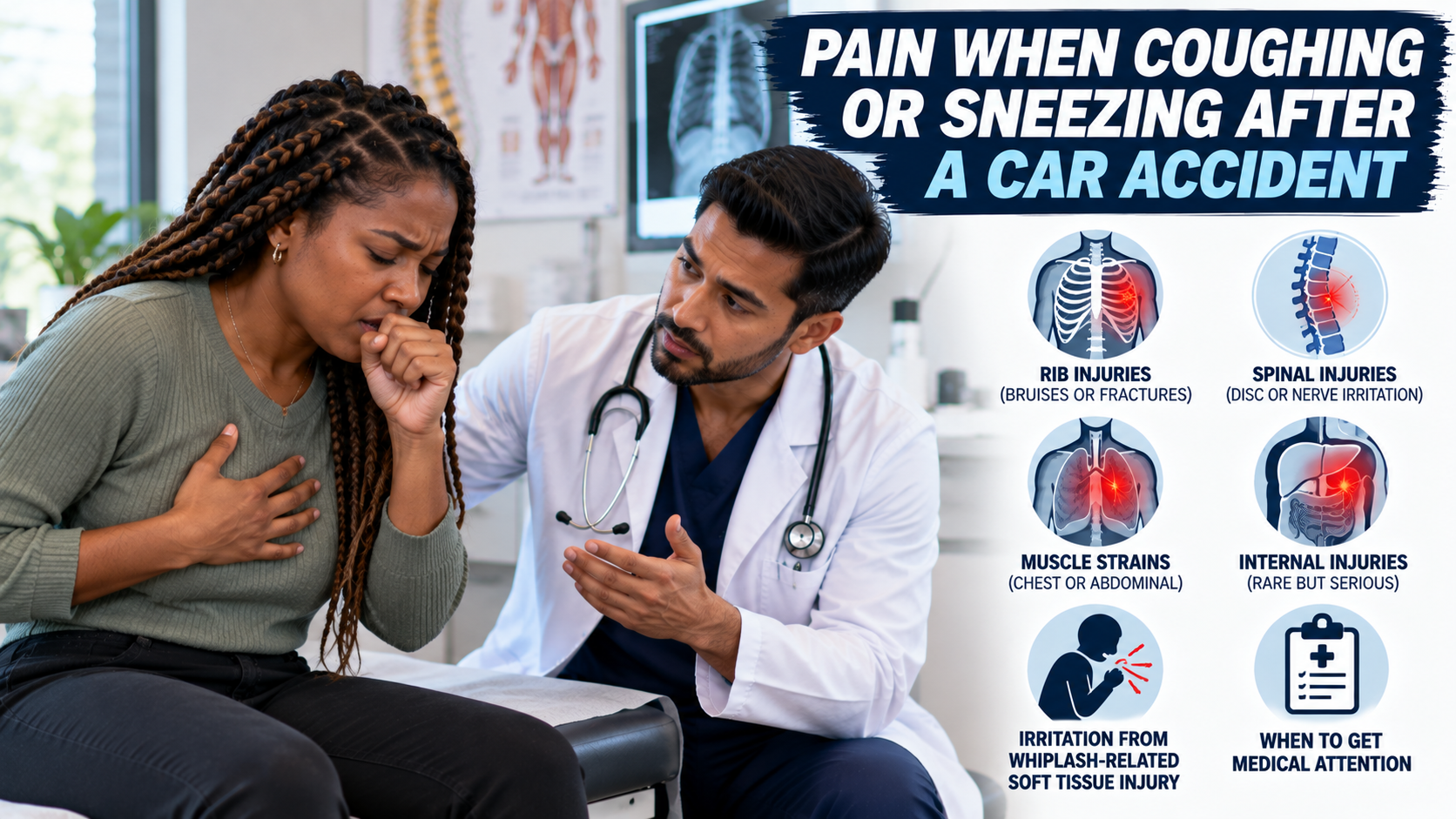
Pain when coughing or sneezing after a car accident may be felt in the ribs, chest, abdomen, neck, or back. A cough or sneeze briefly increases pressure and causes rapid muscle contraction, which can make an injured area more noticeable. The location, severity, and associated symptoms determine how urgently it should be evaluated.
Possible Reasons for Pain
- Chest-wall or rib injury
- Muscle strain
- Back or neck irritation
- Abdominal injury
- Disc or nerve-related symptoms in some cases
When Is Emergency Evaluation Important?
Seek urgent or emergency care for difficulty breathing, severe chest or abdominal pain, coughing blood, fainting, significant abdominal swelling, new weakness or numbness, loss of bowel or bladder control, or rapidly worsening symptoms.
Why Does a Cough or Sneeze Increase Pain?
The trunk muscles contract and pressure changes rapidly during coughing and sneezing. Injured ribs, muscles, spinal structures, or abdominal tissues may therefore become more symptomatic. This response alone does not identify the injured structure.
How Is It Evaluated?
A clinician will consider where the pain occurs, the collision mechanism, breathing symptoms, neurological findings, tenderness, movement, and other associated symptoms. Imaging or medical referral may be needed depending on the findings.
What Should You Avoid?
Do not repeatedly provoke coughing, sneezing, or straining to test the injury. Avoid aggressive self-manipulation when symptoms are unexplained after trauma.
How T98 Rehab Fits Into Care
T98 Rehab can assess musculoskeletal pain after serious medical causes have been excluded. Chest, abdominal, respiratory, or neurological warning signs require appropriate medical evaluation first.
Frequently Asked Questions
Does pain with sneezing mean I have a disc injury? Not necessarily. Many structures can hurt with sudden pressure or muscle contraction.
Can rib injuries hurt with coughing? Yes, but significant chest pain or breathing difficulty should receive medical evaluation.
Should I ignore mild pain if it only happens when sneezing? Persistent post-traumatic symptoms should be discussed with a clinician, particularly if they worsen or new symptoms appear.
Related Patient Resources
This article is educational and is not a diagnosis or substitute for emergency or medical care.