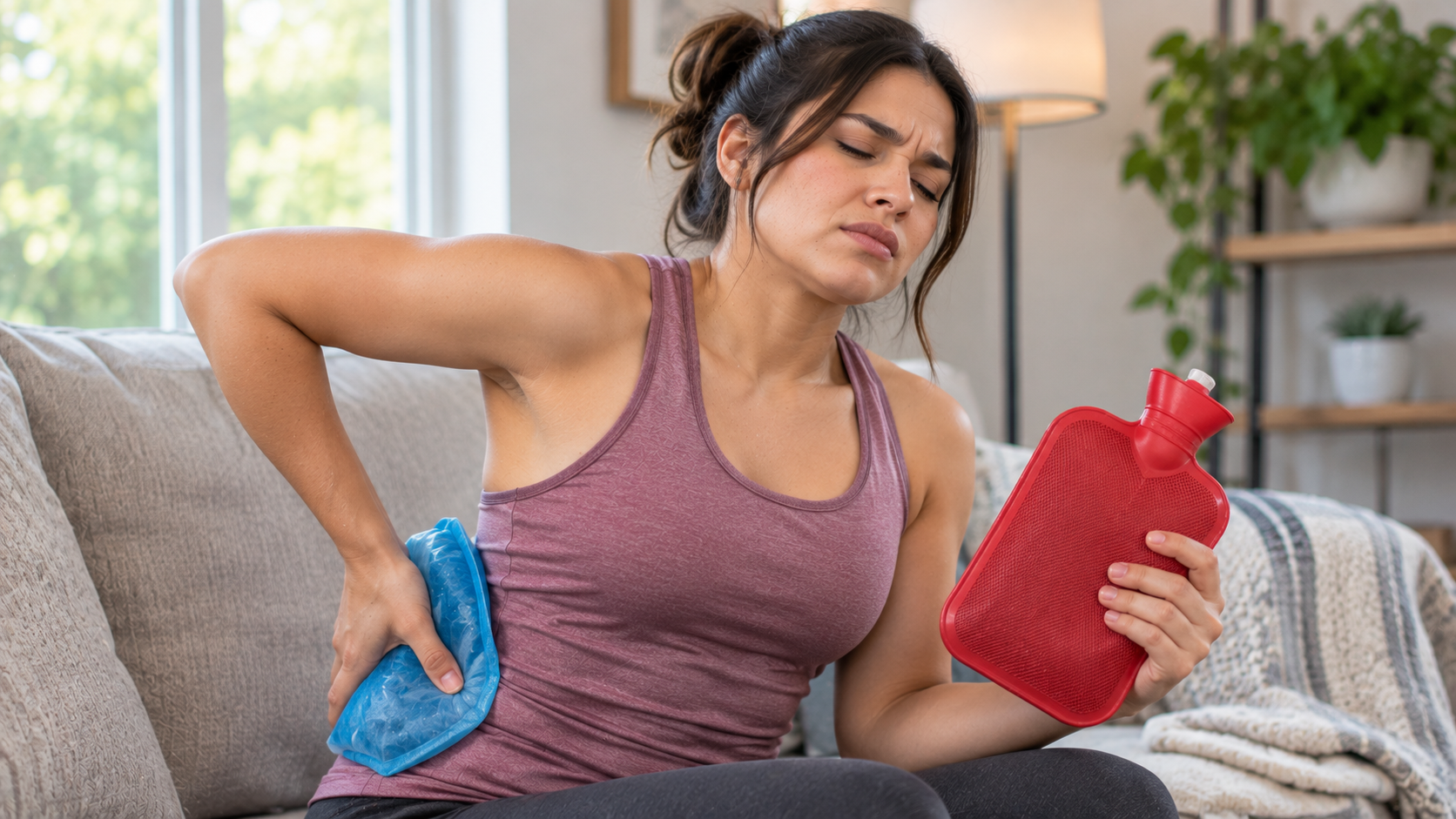
Back pain often leads to a practical question: should you reach for a heating pad or an ice pack? The honest answer is that either may temporarily improve comfort, but the better choice depends on how the pain started, how the area responds, your health history and whether warning signs are present.
Heat and ice do not diagnose an injury or cure every cause of back pain. If pain followed a serious accident, includes neurological symptoms or feels severe or unusual, seek an appropriate evaluation instead of relying only on home treatment.
Quick Answer: Heat or Ice?
Cold may be useful for short-term comfort after a recent strain, impact or activity-related flare—especially when the area feels swollen, warm or throbbing. Gentle heat may feel better when stiffness or muscle tightness is the main complaint. Some people prefer one, some use them at different stages, and others should avoid temperature-based care.
Use a protective barrier, choose a comfortable temperature, monitor the skin and stop if symptoms worsen. Never sleep with a heating pad or ice pack.
When Ice May Help Back Pain
Cold therapy temporarily reduces skin temperature and may reduce pain sensation. It is commonly used after a recent muscle strain or flare when swelling and soreness are present. It should be used for comfort rather than as proof that an injury is minor.
How to use an ice pack more safely
- Wrap the cold pack in a towel; do not apply ice directly to the skin
- Use a brief, monitored application rather than prolonged cooling
- Check the skin frequently
- Stop if the skin becomes very pale, blotchy, painful or persistently numb
- Allow the skin to return to normal temperature before another application
- Do not sleep with the pack in place
Avoid cold over an area with poor circulation, impaired sensation, damaged skin or an open wound unless an appropriate healthcare professional has given specific instructions.
When Heat May Help Back Pain
Gentle warmth may temporarily ease stiffness or muscle tightness and may make prescribed movement more comfortable. Heat should feel comfortably warm—not hot. More heat is not necessarily more effective and can cause burns.
How to use heat more safely
- Place a protective layer between the heat source and skin
- Use a controlled, comfortable setting
- Check the skin regularly
- Stop if redness, burning, dizziness, increased swelling or worse pain occurs
- Do not lie on or sleep with a heating pad
- Avoid heat over active bleeding, an open wound or an area with impaired sensation
Whole-body heat, including hot tubs and saunas, can affect hydration, blood pressure and body temperature. Ask an appropriate healthcare professional before use if you are pregnant or have cardiovascular, neurological or other relevant medical conditions.
Can You Alternate Heat and Ice?
Alternating heat and cold is not automatically better. Rapid temperature changes may irritate the skin or provide no added benefit. If both are used, each should have a clear purpose, a safe application method and enough time between applications for the skin to normalize.
After an evaluation, a provider may recommend warmth before certain movements and cold afterward for short-term comfort. That is different from repeatedly alternating extreme temperatures without guidance.
When Neither Heat Nor Ice Is the Right First Step
Temperature therapy should not delay urgent evaluation. Call 911 or go to an emergency department when back pain occurs with:
- Loss of bladder or bowel control
- Numbness around the groin, genitals, inner thighs or saddle area
- Rapidly worsening leg weakness, foot drop or inability to walk safely
- Major trauma, suspected fracture or severe unrelenting pain
- Chest pain, breathing difficulty, fainting or severe abdominal pain
- Fever, chills, immune suppression or signs of infection
- Unexplained weight loss, a history of cancer or significant night pain
A cold or pale limb, severe swelling, spreading redness, blistering or persistent loss of sensation also requires prompt medical attention.
Heat or Ice After a Car Accident?
After a car, truck or boating accident, back pain may involve muscles, joints, discs, nerves or other structures. An ice pack or heating pad may change comfort but cannot rule out fracture, concussion, internal injury or nerve damage.
Seek emergency care for serious symptoms. Otherwise, a timely evaluation can help determine whether home temperature therapy is appropriate and how it fits into a broader recovery plan. T98 Rehab specializes in auto and boating injury recovery and provides musculoskeletal and neurological screening at three Central Texas clinics.
With written patient authorization, T98 may coordinate relevant clinical records with healthcare providers, insurers or legal representatives. T98 is not a law firm, does not provide legal advice and cannot promise an insurance, settlement or legal outcome.
Who Should Ask Before Using Heat or Ice?
Professional guidance is especially important for people with diabetes, neuropathy, poor circulation, vascular disease, impaired temperature sensation, open wounds, recent surgery or conditions affecting temperature regulation. Children, older adults and anyone unable to monitor or remove a pack independently also need extra caution.
Heat and Ice Are Comfort Tools—not the Whole Plan
Back pain care often includes staying active within safe limits, gradually restoring movement and strength, modifying aggravating tasks and monitoring function. Prolonged bed rest is generally not the goal. The right plan depends on the clinical presentation.
If heat or cold helps you move more comfortably, that may be useful. If relief is brief while walking, sleep, strength or daily function continues to decline, an evaluation is more important than repeatedly applying the pack.
A Simple Decision Framework
Consider cold when
- Pain followed a recent strain, impact or activity flare
- Swelling, warmth or throbbing is present
- Cooling feels comfortable and skin sensation and circulation are normal
Consider gentle heat when
- Stiffness or muscle tightness is the primary complaint
- Warmth makes prescribed movement more comfortable
- There is no active bleeding, impaired sensation or other contraindication
Stop and seek evaluation when
- Symptoms are worsening or spreading
- Numbness, tingling or weakness develops
- Pain follows meaningful trauma
- Home care is not restoring function as expected
Patient preference matters, but safety matters more. If you cannot feel the temperature normally, cannot monitor the skin or are uncertain about the cause, ask a healthcare professional before applying heat or cold.
Frequently Asked Questions
Is heat or ice better for lower back pain?
Neither is universally better. Cold may be preferred after a recent flare with swelling or throbbing, while heat may feel better for stiffness or tightness. Use the option that is safe and improves comfort without worsening symptoms.
How long should I use a heating pad or ice pack?
Safe duration varies by device, body area, skin condition and health risks. Use brief, monitored sessions and follow individualized clinical or manufacturer instructions. Stop early if the skin reacts poorly.
Can I use heat for sciatica?
Heat may temporarily improve comfort for some people, but sciatica can involve nerve-root irritation and requires assessment when symptoms are severe, persistent or include weakness or numbness. Emergency neurological signs need immediate care.
Can I use ice after an auto accident?
Cold may help short-term comfort, but it cannot determine whether the injury is safe for home care. Significant trauma, severe pain, neurological symptoms or concussion danger signs require medical evaluation.
Should I stretch after using heat?
Only perform movements appropriate for your condition. Gentle prescribed activity may feel easier after warmth, but forcing a painful stretch can aggravate symptoms.
What if neither heat nor ice helps?
Persistent pain, worsening function or new neurological symptoms should be evaluated. Heat and cold are optional comfort measures, not tests of whether a condition is serious.
Related T98 Care
Heat and Cold Therapy
Lower Back Pain Treatment
Auto Accident Chiropractor
Sciatic Pain Treatment
These pages explain T98’s evaluation and treatment pathways. This article answers the informational “heat or ice” question and should not replace the canonical service pages.
Schedule an Evaluation
Call T98 Rehab & Chiropractic at 512-614-2330 or email support@t98rehab.com.
North Austin
1139 Braker Lane #101, Austin, TX 78758
Monday, Wednesday and Friday: 8:30 a.m.–1:00 p.m. and 3:00–6:30 p.m.
South Austin
2512 S. I-35 Frontage Road #260, Austin, TX 78704
Monday, Wednesday and Friday: 8:30 a.m.–1:00 p.m. and 3:00–6:30 p.m.
Pflugerville
201 N. Heatherwilde Boulevard #104, Pflugerville, TX 78660
Tuesday and Thursday: 8:30 a.m.–1:00 p.m. and 3:00–6:30 p.m.
Medical Sources
MedlinePlus — Muscle Strain Treatment
Gloucestershire Hospitals NHS Foundation Trust — Ice and Heat Treatment
National Institute of Arthritis and Musculoskeletal and Skin Diseases — Back Pain: Diagnosis, Treatment, and Steps to Take
Medical Disclaimer
This article provides general educational information and is not a diagnosis or a substitute for care from a qualified healthcare professional. Treatment suitability and results vary. Call 911 or seek emergency care for severe or potentially life-threatening symptoms.